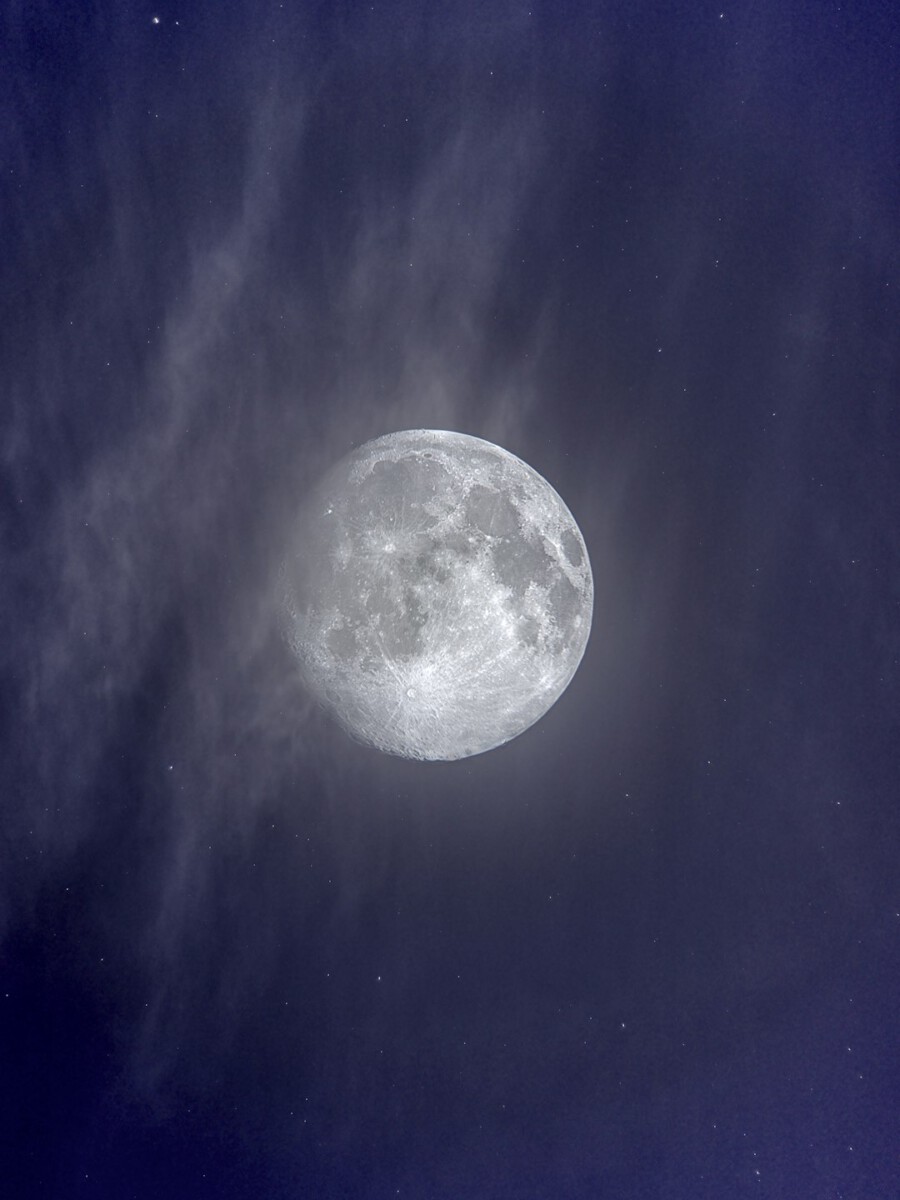
Why Full Moons Captivate the Night Sky (Image Credits: Unsplash)
Astronomy enthusiasts marked 2026 as a standout year for lunar observing, with 13 full moons punctuating the calendar alongside rare supermoons and eclipses.[1]
Why Full Moons Captivate the Night Sky
The full moon reaches peak illumination when Earth positions itself directly between the Sun and Moon, allowing sunlight to flood the lunar face visible from our planet. This alignment produces a brilliance rated at magnitude –12.7, outshining Sirius by more than 250,000 times. Observers noted how the moon rose at dusk and set at dawn during these phases, washing out fainter stars in its glow.[1]
Lunar phases cycle every 29.5 days, progressing from new moon through waxing crescent, first quarter, waxing gibbous, full, waning gibbous, last quarter, and waning crescent. Full moons appeared fully round for roughly three days centered on the exact moment. Their gravitational tug teamed with the Sun’s to generate spring tides, raising ocean levels higher than average.
Traditional Names Rooted in Seasons
Generations assigned evocative names to full moons based on natural rhythms observed by Native American, Colonial American, and European settlers. These monikers captured seasonal shifts, wildlife activity, and agricultural cycles. For instance, the January Wolf Moon evoked howling packs in winter hunger, while April’s Pink Moon celebrated spring wildflowers.
Other highlights included the Strawberry Moon signaling summer harvests and the Hunter’s Moon aiding fall pursuits. Such traditions added cultural depth to the astronomical routine, turning celestial events into shared stories across communities.
2026’s Full Moon Schedule at a Glance
All times listed below reflect Eastern Standard Time (EST), with the moon appearing full over several nights around each peak. Three supermoons amplified the display by coinciding with the moon’s closest approach to Earth.[1]
- Saturday, January 3 – 5:03 a.m. – Wolf Moon (supermoon)
- Sunday, February 1 – 5:09 p.m. – Snow Moon
- Tuesday, March 3 – 6:38 a.m. – Worm Moon (total lunar eclipse)
- Wednesday, April 1 – 10:12 p.m. – Pink Moon
- Friday, May 1 – 1:23 p.m. – Flower Moon
- Sunday, May 31 – 4:45 a.m. – Blue Moon (second full moon in May)
- Monday, June 29 – 7:57 p.m. – Strawberry Moon
- Wednesday, July 29 – 10:36 a.m. – Buck Moon
- Friday, August 28 – 12:19 a.m. – Sturgeon Moon (partial lunar eclipse)
- Saturday, September 26 – 12:49 p.m. – Corn Moon
- Monday, October 26 – 12:12 a.m. – Hunter’s Moon
- Tuesday, November 24 – 9:54 a.m. – Beaver Moon (supermoon)
- Wednesday, December 23 – 8:28 p.m. – Cold Moon (supermoon)
Highlight Reels: Supermoons, Blue Moons, and Eclipses
Supermoons occurred when full moons aligned near perigee, the moon’s closest orbital point to Earth, swelling their size and luster. January’s Wolf Moon, November’s Beaver Moon, and December’s Cold Moon qualified under this criterion. The May Blue Moon stood out as the second full moon in a single month, a rarity happening about every 2.7 years.[1]
Lunar eclipses added drama. A total eclipse shadowed the Worm Moon on March 3, turning it briefly red for viewers in certain regions. August’s Sturgeon Moon underwent a partial eclipse, dimming one edge while preserving most of its glow. These events drew global attention, blending science with spectacle.
Essential Tips for Observing Full Moons
Optimal viewing began at moonrise, shortly after sunset, when the moon hovered low against a darkening sky. Binoculars or telescopes revealed craters and maria despite the glare; sunglasses helped manage the intensity. Local moonrise times varied by latitude and longitude, so apps or sites like Astronomy.com proved invaluable.[1]
Clear horizons free of trees or buildings enhanced the experience. Full moons influenced photography too, demanding adjusted exposures to capture their subtle hues.
Key Takeaways
- 2026 hosted 13 full moons, exceeding the typical 12 due to May’s pair.
- Watch for three supermoons and two eclipses as prime highlights.
- Plan observations around local moonrise for the most striking views.
Full moons in 2026 reminded observers of the sky’s reliable wonders amid cosmic vastness. Which event will you chase first? Tell us in the comments.