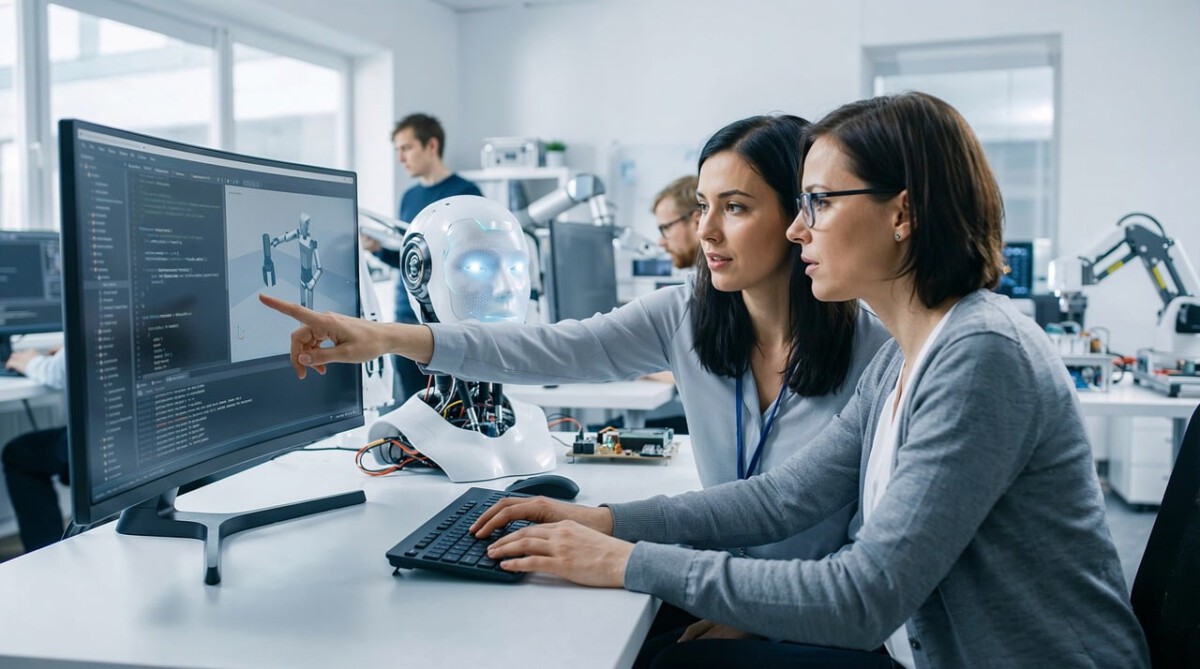
Agentic AI Ushers in Autonomous Teammates (Image Credits: Pexels)
Artificial intelligence dominates conversations among executives, yet technology’s influence extends far beyond it into ethics, workflows, and unexpected revivals. Leaders from the Fast Company Impact Council identified 24 trends gaining traction this year, spanning AI’s deepening integration across industries to regulatory pressures and human-centric counters. These developments promise to reshape operations, spark innovation, and challenge established norms in profound ways.
Agentic AI Ushers in Autonomous Teammates
Agentic AI represents a leap forward, evolving from simple assistants into systems that plan, execute multistep tasks, and integrate seamlessly into daily operations. This capability already prototypes user journeys where AI handles navigation independently, complete with trust mechanisms like audit trails. Experts anticipate these agents will collapse outdated user interfaces, prioritizing reversible actions and clear intent tracking.
Businesses stand to gain from specialized agents that optimize collaborations, such as in retail where they automate negotiations between suppliers and distributors. Developers now oversee AI rather than code manually, accelerating software lifecycles. Key examples include:
- Vertical AI agents streamlining retail workflows, as noted by Are Traasdahl of Crisp.
- AI agents acting as primary software developers, according to Alex Balazs at Intuit.
- AI embedded as a collaborative teammate in workflows, highlighted by Jacqui Canney of ServiceNow.
- Automation integrated into design processes, per Steven McKay of DLR Group.
- Prototyping for brand interfaces where AI completes tasks with human oversight, from Peter Smart at Fantasy.
Ethics, Security, and Regulatory Pressures Intensify
Concerns over exploitation and misinformation propel tools designed to enforce ethical boundaries, particularly as AI permeates creative fields like music. Platforms will embed copyright protections while aiding emerging artists with tasks from visuals to websites. Deepfakes, meanwhile, escalate risks of fraud and breaches, demanding proactive AI defenses across social media and beyond.
Accountability frameworks emerge as essential, assigning clear human responsibility to AI decisions. Regulations in regions like Europe threaten data access, potentially yielding biased models unless balanced carefully. Notable shifts involve:
- Ethical tools safeguarding artists’ rights, as predicted by Matt Mandrella of the City of Huntsville, Alabama.
- Enterprise defenses against deepfakes, emphasized by Scott Harrell of Infoblox.
- Mandates for AI accountability in deployments, from Tyler Perry at Mission North.
- Data collection hurdles impacting AI competitiveness, per Denas Grybauskas of Oxylabs.
- Trust infrastructure tailored for Global South communities, noted by Hala Hanna of MIT Solve.
Industry-Specific Applications Accelerate Innovation
Generative AI transforms drug discovery by designing molecules with built-in safety parameters, fostering collaborative ecosystems for antibiotics and beyond. Personalized learning tools augment educators, focusing on outcomes over automation. Health wearables deliver real-time insights into glucose and stress, empowering daily adjustments.
In marketing and SaaS, localization tools enable single assets to reach global audiences authentically. Niche software targets specific sectors, simplifying agent deployment. Highlights encompass:
- AI-driven molecule design in pharmaceuticals, as described by Akhila Kosaraju of Phare Bio.
- Augmented personalized education platforms, according to Alan Baratz of D-Wave.
- Conversational AI for creator marketing across languages, from Ben Jeffries of Influencer.
- Industry-tailored SaaS with intuitive agents, per Kalie Moore of High Vibe PR.
- Actionable personal health monitoring, highlighted by Logan Mulvey of GoDigital Music.
Deep Integration Reshapes Operations and Productivity
AI moves beyond overlays into core operating models, leveraging secure enterprise data for reliable automation in back-office and talent functions. Proprietary training data emerges as the new competitive moat, prioritizing quality over generic models. Outsourced services increasingly rely on AI, minimizing internal staffing needs.
Translating innovation into scaled productivity hinges on workforce reskilling and workflow redefinition. Contextual adaptation enhances experiences, like grocery sites learning preferences interactively. Critical areas include:
- AI reshaping governance and decisions, as outlined by Alice Mann of Mann Partners.
- Proprietary data as AI’s defensibility edge, from Shely Aronov of InnerPlant.
- AI-powered outsourcing across functions, noted by Larraine Segil of Exceptional Women Alliance.
- Reskilling for AI-driven productivity gains, per Steve Holdridge of Dayforce.
- Reasoning AI adapting to user contexts, according to Kevin Laymoun of Constructor.
Emerging Intersections and Analog Revivals
Blockchain pairs with AI to verify authenticity for agent transactions via stablecoins, addressing input validation and audits. Voice interfaces challenge screen dominance, positioning conversational AI as the next internet gateway. Human-centered design ensures ethical acceleration, blending technology with empathy for diverse users.
A counter-trend favors analog devices like flip phones and vinyl, appealing to those seeking untracked simplicity amid digital overload. These hybrids signal intentional tech use. Standouts feature:
- AI-blockchain fusion for programmable authenticity, as seen by Michael Tannenbaum of Figure.
- Voice emerging as the primary internet interface, from Khozema Shipchandler of Twilio.
- AI fused with inclusive design principles, per Ben Wintner of Michael Graves Design.
- Resurgence of analog tech among youth and parents, highlighted by Lindsey Witmer Collins of WLCM Studio.
These 24 trends illustrate technology’s dual path: profound AI embedding alongside safeguards and human priorities. Organizations that balance speed with responsibility will lead the transformation.
- Prioritize agentic AI with robust trust layers for workflow revolutions.
- Strengthen ethical tools and regulations to mitigate risks like deepfakes.
- Embed AI deeply while reskilling teams for sustainable productivity.
What trends are you monitoring most closely? Share your thoughts in the comments.