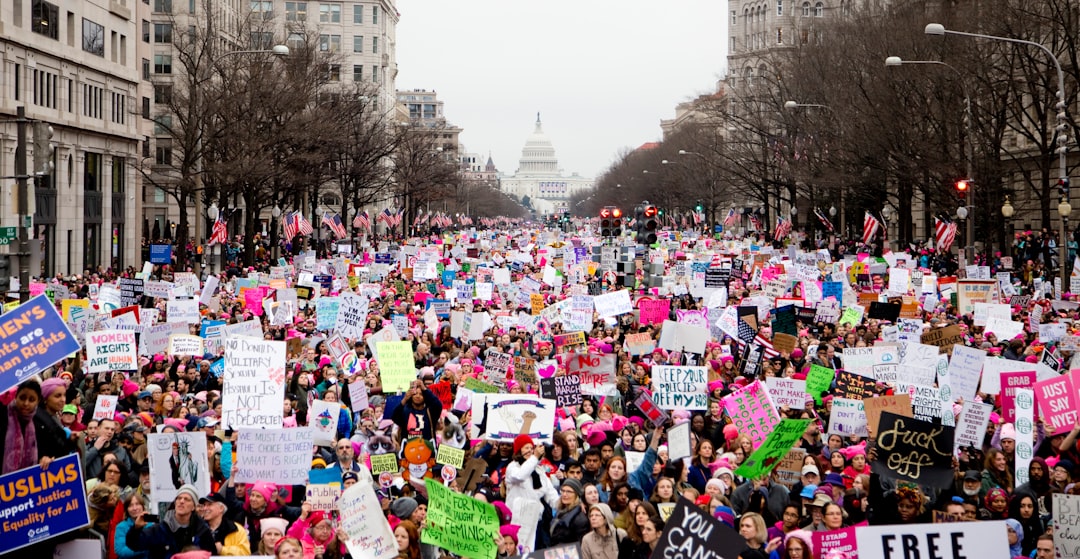
Outpacing Past Turnouts (Image Credits: Unsplash)
Organizers behind the “No Kings” movement anticipate a unprecedented wave of demonstrations on Saturday, March 28, with more than 3,000 events registered across all 50 states and every congressional district. This mobilization builds on earlier successes that drew millions to the streets, signaling deepening public unease over democratic backsliding and policy fallout from the Trump administration. Daily additions to the event roster underscore the growing momentum of this pro-democracy effort.
Outpacing Past Turnouts
Ezra Levin, co-executive director of Indivisible and a lead organizer, described the upcoming protests as “the largest in American history.” The scale already exceeds the October rally, which attracted seven million participants at over 2,700 locations. June’s inaugural “No Kings” day saw five million people join more than 2,100 gatherings nationwide.
These figures highlight a rapid escalation in participation. Levin emphasized coverage from “the bluest blue to the reddest red” districts, reflecting broad geographic reach. More events continue to register, amplifying expectations for record-breaking attendance.
Grievances Driving the Surge
Protesters cite a range of administration actions as threats to democratic norms and daily life. Mass furloughs during repeated government shutdowns disrupted federal operations. ICE raids targeted immigrants and citizens alike in places like Minnesota.
National Guard deployments into cities for crime control drew criticism, as did sweeping tariffs later invalidated by the Supreme Court, which burdened taxpayers. Ongoing conflicts in Venezuela and Iran have spiked gas prices, adding economic strain. Organizers frame these as symptoms of overreach, rejecting monarchical-style rule in a republic.
Broad Coalition Powers the Movement
A diverse alliance fuels the non-violent demonstrations, uniting progressives, educators, and labor groups. Key partners include Indivisible, the ACLU, American Federation of Teachers, Common Defense, 50501, Human Rights Campaign, League of Conservation Voters, MoveOn, National Education Association, National Nurses United, Public Citizen, SEIU, and United We Dream. Full details appear on their partners page.
Participants span ages, regions, and ideologies, converging on shared principles. “We are all united in this fight to save our democracy from this administration, and we will win,” Levin stated. AFT President Randi Weingarten added, “Americans may disagree on policy, but we agree on two fundamental values: that we should be governed by ourselves, not kings.”
Levin noted appeal in unexpected areas: “It’s not surprising ‘No Kings’ is taking off in rural and red areas.” Opposition to the Iran war, tariffs, and perceived authoritarianism unites the crowd. Weingarten highlighted economic fears: “People are afraid, and they can’t afford basic necessities.”
Event Details and Future Plans
Find a full list of March 28 locations at nokings.org. Levin views 2026 as pivotal for democracy, predicting heightened engagement. The protests emphasize constitutional rights over policy divides.
Following March 28 comes a one-day general strike on May 1. This sequence marks an intensifying campaign against perceived erosions of self-governance.
| Date | Events | Attendance |
|---|---|---|
| June (First) | 2,100+ | 5 million |
| October | 2,700+ | 7 million |
| March 28 | 3,000+ | Expected largest |
- Protests target democratic threats like shutdowns, raids, and foreign wars.
- Coalition spans major advocacy groups for maximum reach.
- March 28 events cover every congressional district, building to a May strike.
As “No Kings” rallies approach, they represent a critical test of public resolve. The movement’s expansion from urban centers to rural heartlands suggests a unifying call against perceived overreach. What do you think about this mobilization? Tell us in the comments.