You don’t have to cross an ocean to feel like you’ve landed somewhere in Europe. Cobblestone streets, windmills spinning in the breeze, centuries-old stone fortresses, and pastry shops with names you can barely pronounce – they’re all waiting for you, right here in the United States. It sounds almost too good to be true, but these four towns prove that America’s immigrant history has left behind something genuinely extraordinary.
From the Bavarian Alps of Washington State to the Danish lanes of coastal California, each of these destinations carries a different European heartbeat. Let’s dive in.
Leavenworth, Washington: Bavaria in the Cascades
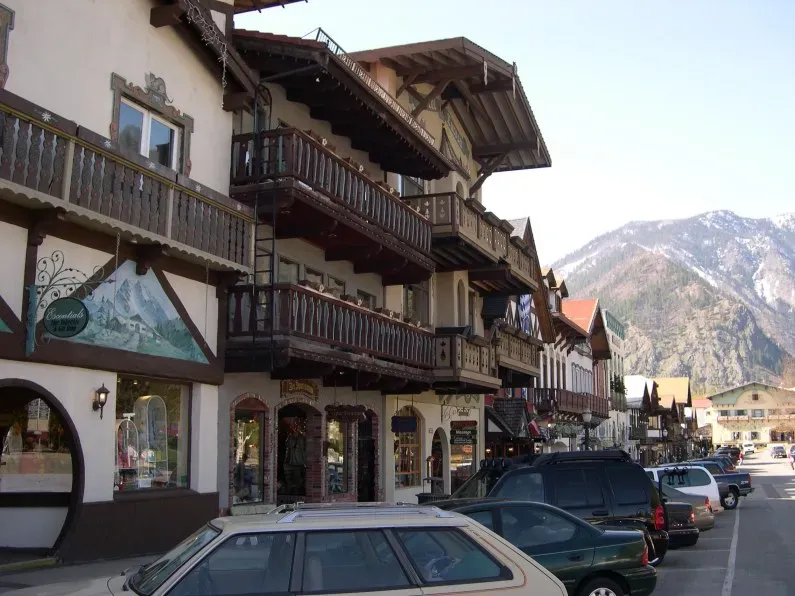
Imagine stepping off a winding mountain highway and suddenly finding yourself face to face with painted Alpine facades, flower-draped balconies, and the distant smell of bratwurst on the grill. That’s Leavenworth – and no, you haven’t left America. In the 1960s, after the town’s mines and sawmills closed, Leavenworth was on the brink of becoming a ghost town, so local business owners transformed it into a picturesque Bavarian village, borrowing a page from Germany’s charming alpine towns.
The city requires all buildings in Leavenworth to be built in a Bavarian style – this even includes the McDonald’s – and complementing the architecture, the city is adorned with hand-painted murals and hanging flower baskets from spring to fall. The result is something that feels genuinely theatrical, in the best possible way. Think of it like a perfectly curated stage set, except the food, the beer, and the mountain backdrop are entirely real.
Chamber of Commerce documents show the town hosted 3.6 million visitors in 2023, up from 2 million in 2021. Houston, Dallas, and Phoenix are among the town’s top feeder markets, bringing tourists for weeklong stays that some locals describe as full European vacations. Honestly, for anyone who has never set foot in Germany, Leavenworth might just be close enough – and for those who have, it’s still a fascinating curiosity worth the drive.
Solvang, California: Denmark Under the California Sun
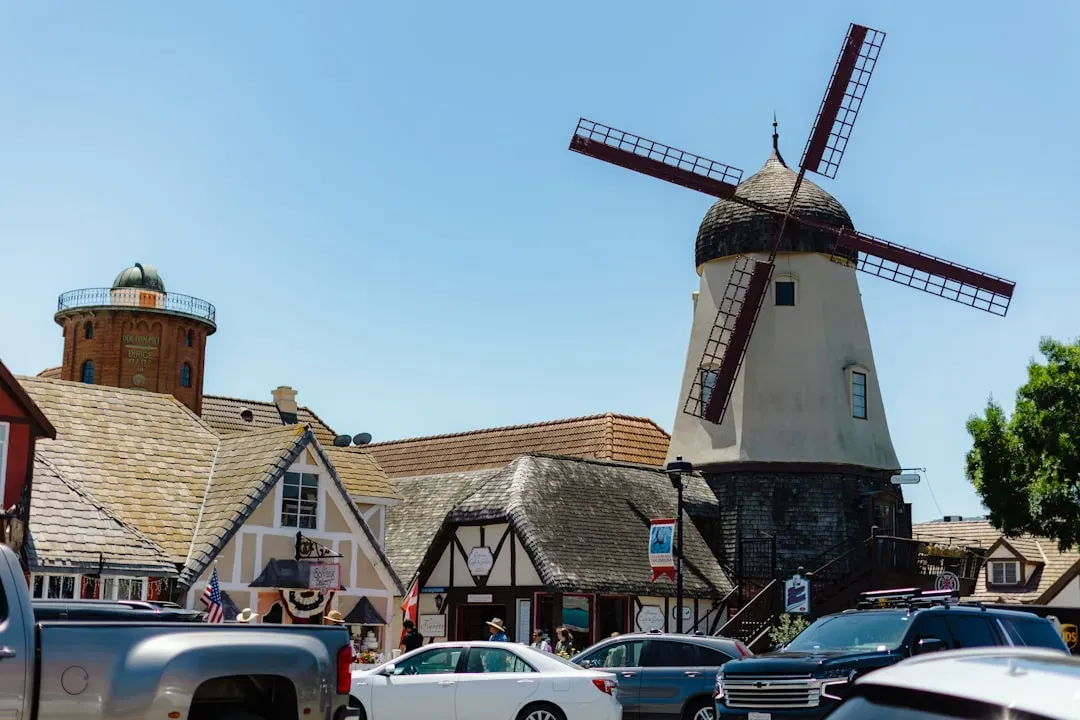
Located in the Santa Ynez Valley, Solvang was founded in 1911 by a group of Danish Americans who purchased around 9,000 acres of surrounding ranchland, to establish a Danish community far from the Midwestern winters. Over a century later, the dream has not only survived – it has flourished into something remarkable. Walking down Copenhagen Drive is like stepping into a Hans Christian Andersen illustration, with windmills, half-timbered houses, and the sweet scent of freshly baked aebleskivers drifting through the air.
The community began building Danish-themed architecture in 1947, and has since become a tourist destination with roughly 1.5 million visitors per year. In 2024, Solvang was voted second “Best Small Town in the West” in the USA Today 10Best Readers’ Choice Travel Awards. That kind of recognition doesn’t happen by accident – it reflects a town that has genuinely leaned into its cultural roots rather than simply coasting on nostalgia.
Sights include Danish windmills, statues of Hans Christian Andersen and a Little Mermaid replica, half-timbered houses, a Danish rural church, a Round Tower, as well as Danish music and folk dancing. Partly as a result of the 2004 film Sideways, which was set in the surrounding Santa Ynez Valley, the number of wine-related businesses in Solvang has increased significantly. So you get windmills and world-class Pinot Noir – not a bad deal, all things considered.
St. Augustine, Florida: The Oldest European Soul in America
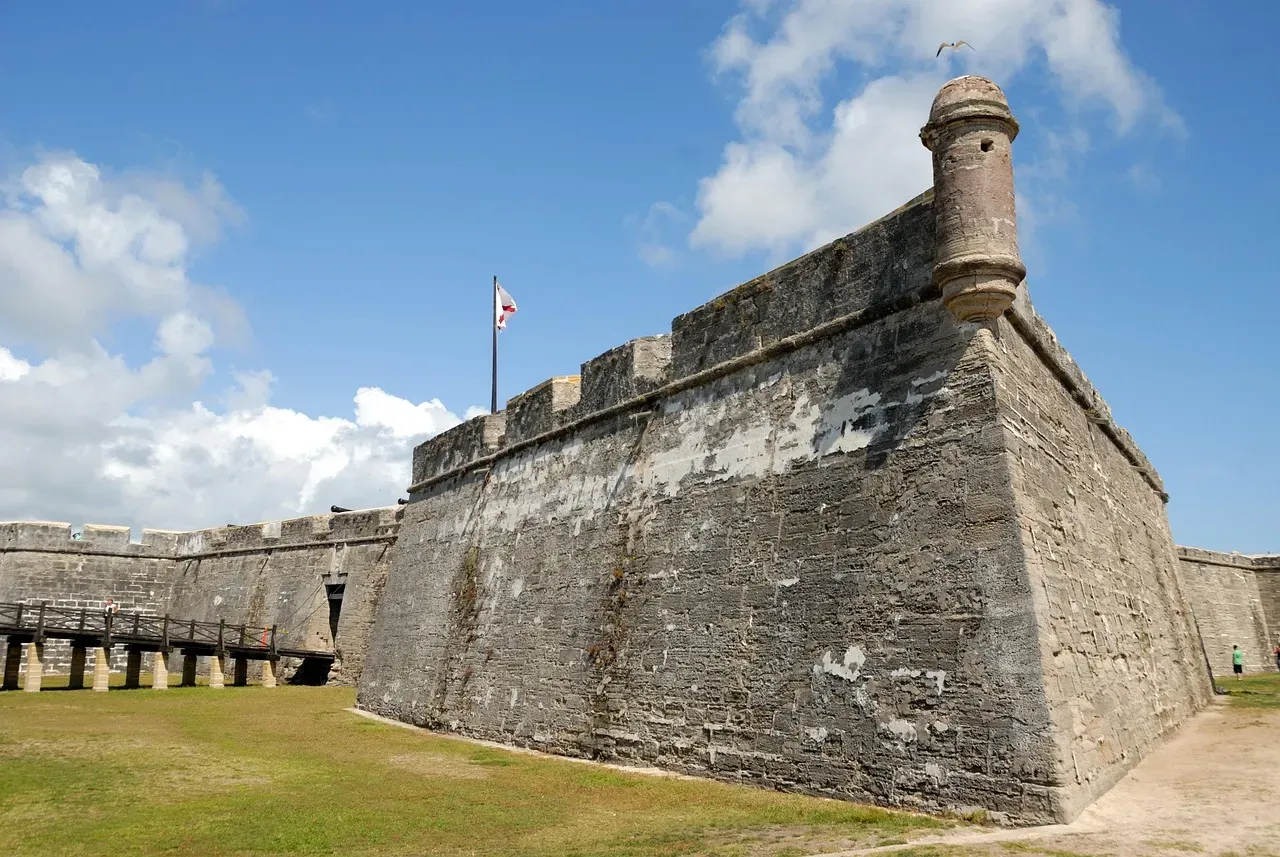
Here’s something that genuinely blows people’s minds when they hear it for the first time. Founded in 1565 by Spanish settlers, St. Augustine is the oldest continuously inhabited European-established settlement in what is now the contiguous United States. That means it predates Jamestown by more than four decades. Walking through its historic district is not themed tourism – it is the real, layered, occasionally complicated history of European colonization on American soil.
Significant landmarks include the Castillo de San Marcos National Monument, the oldest standing fort in the U.S., and the preserved Spanish colonial historic district, which reflects the city’s early architectural and cultural heritage. The city is a joy to wander, with narrow cobblestone streets lined with buildings in a mix of architectural styles, such as Spanish, French, and English. It feels less like a theme park and more like a European city that quietly got absorbed into Florida and never quite let go of its origins.
Its exceptional historic resources date back to 1565, with over 3,700 individual historic properties recorded by the State. Today, St. Augustine is a cultural hub, blending its storied past with a vibrant tourism industry that attracts visitors interested in its historical significance and beautiful architecture. For travelers who want European depth without a passport, St. Augustine is the most legitimate answer in the entire country – and it still feels under-celebrated relative to how extraordinary it actually is.
Holland, Michigan: Dutch Heritage in the American Midwest
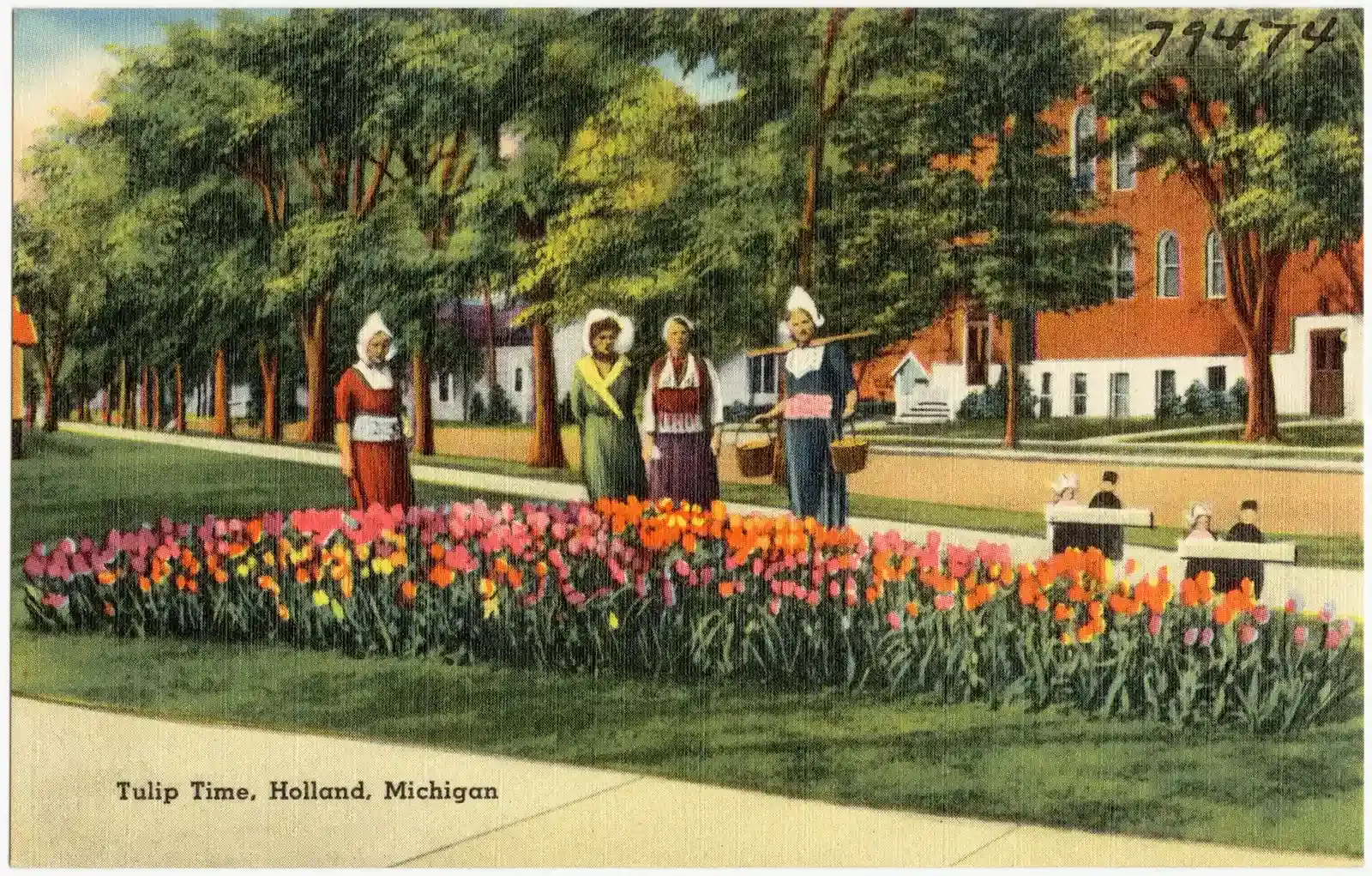
If you showed someone a photograph of Holland, Michigan in early May without any context, they might reasonably guess they were looking at the Dutch countryside. Millions of tulips in full bloom, wooden shoes clacking on the pavement, and authentic windmills rising above a charming lakeside town – it’s a scene that demands a double take. The Tulip Time Festival began in 1929, inspired by a civic beautification idea proposed in 1927 by a local biology teacher who suggested adopting the tulip as the city’s flower to honor Holland’s Dutch heritage. The city council responded by purchasing 100,000 tulip bulbs from the Netherlands in 1928, planting them throughout the city, and when the tulips bloomed in 1929, Holland invited visitors to celebrate.
Throughout the last 96 years, millions of people have gathered to enjoy Tulip Time in Holland, Michigan, and the festival is a ten-day experience like no other, with over six million tulips blooming throughout the city and area attractions. More than 1,400 dancers perform in authentic Dutch attire, bringing heritage to life with rhythmic precision. The scale of it is genuinely hard to grasp until you’re standing in the middle of it.
Tulip Time is an award-winning festival, named “Best Flower Festival” by USA Today, featured on Fodor’s Travel list of America’s Best Spring Flower Festivals, and honored as “Tulip Festival of the Year” by the World Tulip Summit. Visitors can climb to the fourth-floor deck of the DeZwaan Windmill, the only authentic Dutch windmill operating in the United States. That single detail – one real Dutch windmill, still turning – somehow says everything about what makes Holland, Michigan so special. It never settled for an imitation when the original was available.
A Final Thought
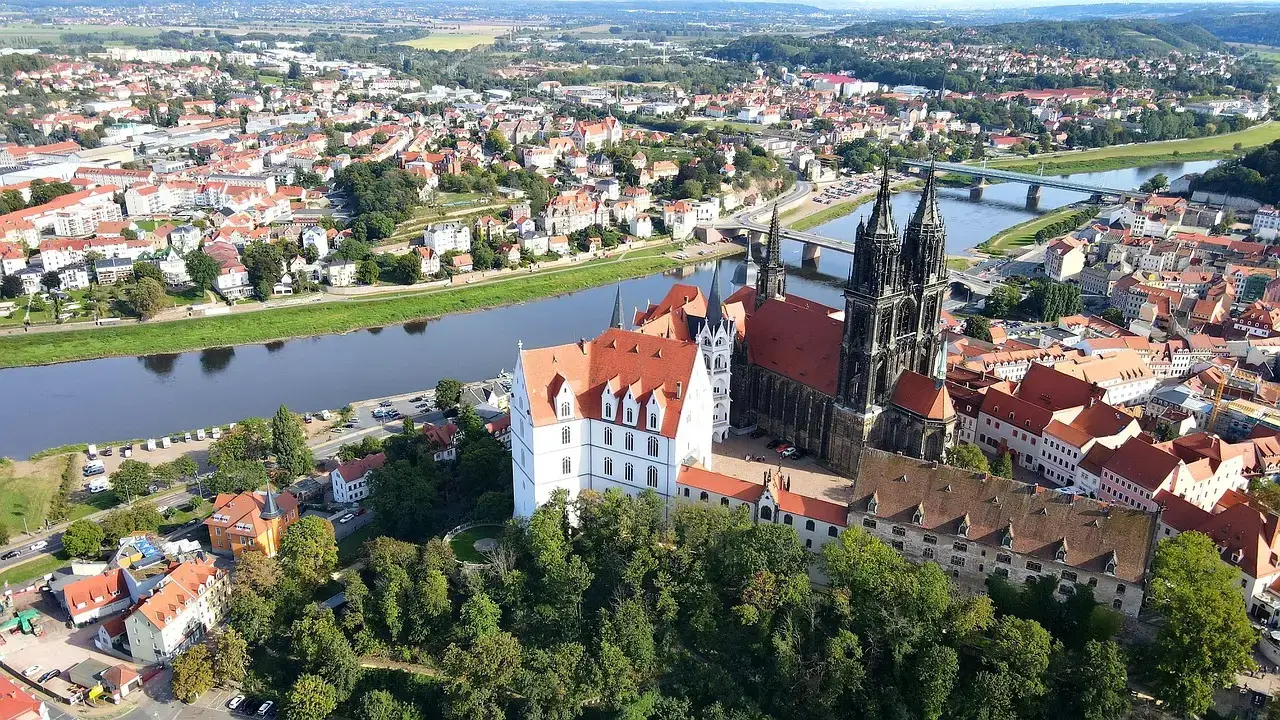
What’s fascinating about all four of these destinations is that they didn’t accidentally end up this way. Each one is the result of deliberate choices, community pride, and a deep connection to cultural identity – whether that meant redesigning an entire town in the 1960s or preserving 460-year-old stone fortifications. The growing trend of “micro-Europe” domestic travel reflects something real: people crave walkable historic places, authentic food, and architecture that tells a story older than themselves.
You don’t always need a transatlantic flight to find it. Sometimes, Bavaria is two hours from Seattle. And sometimes, the oldest European city in the country is hiding in Florida, waiting for someone to finally pay it the attention it deserves.
Which of these four destinations surprises you the most? Tell us in the comments.