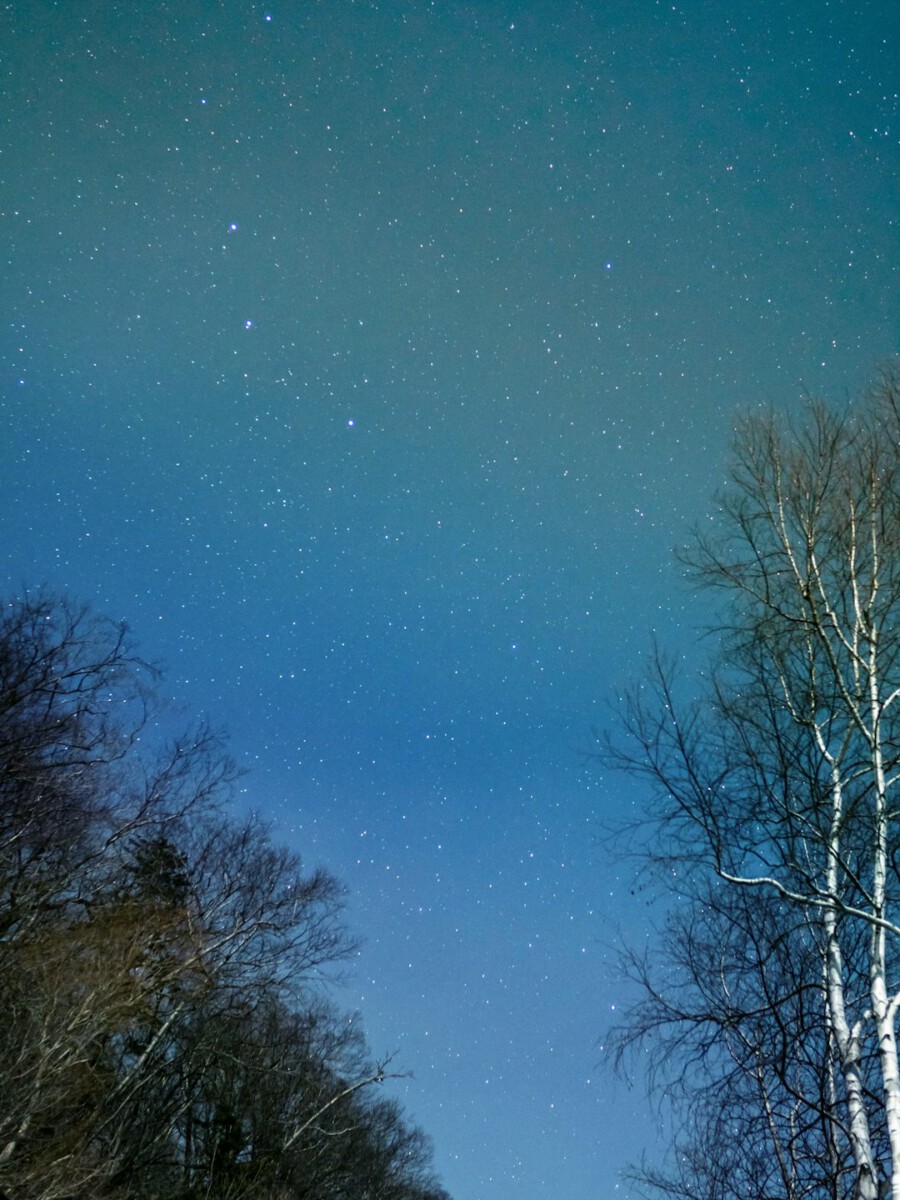
Lunar Phases and Standout Conjunctions (Image Credits: Unsplash)
Australia – February 2026 delivers a lineup of captivating celestial displays, from lunar pairings with clusters and planets to rare telescopic phenomena, perfect for stargazers nationwide.
Lunar Phases and Standout Conjunctions
The Moon takes center stage this month with phases ideal for observing faint stars. Full Moon occurred on February 2 near Regulus, while Last Quarter on February 11 and New Moon on February 19 offered prime dark-sky conditions for deep-sky viewing.
First Quarter arrived on February 24 at perigee, enhancing visibility. Key conjunctions included the Moon near the Beehive cluster on February 1 (1.3° apart), Antares on February 11, Saturn in evening twilight on February 20 (5° apart), Pleiades on February 24 (4° from waxing Moon and Jupiter), and a close pass by Jupiter on February 27 (4° apart).
| Date | Event |
|---|---|
| February 2 | Full Moon near Regulus |
| February 11 | Last Quarter; Moon near Antares; apogee |
| February 19 | New Moon |
| February 20 | Moon near Saturn |
| February 24 | First Quarter; Moon near Pleiades and Jupiter; perigee |
| February 27 | Moon close to Jupiter |
Jupiter’s Striking Dance with the Moon
On February 27, Jupiter formed a narrow triangle with the nearly full Moon, Castor, and Pollux, plus a broader one with Procyon and Betelgeuse. This view appeared from Adelaide at 21:22 ACDST, 90 minutes after sunset, and similarly across Australia at equivalent local times.
Telescopes revealed Jupiter’s detailed disk alongside the lunar glow. Earlier on February 24, the waxing Moon hovered 4° from Jupiter in the northwest, 60 minutes post-sunset. These alignments provided easy naked-eye targets before moonlight intensified.
Pleiades and Southern Pleiades: Cluster Gems
Summer constellations like Orion, Taurus, and Canis Major drifted northwest, spotlighting the Pleiades – a tight group of six stars pretty to the unaided eye and stunning in binoculars. A line from Betelgeuse through Aldebaran led westward to this cluster, known as the Seven Sisters in European lore.
Indigenous Australian cultures offered rich interpretations: the Boorong people of north-western Victoria viewed it as women watching dancers in Orion’s Belt, while Lake Albert groups saw turkey eggs. In the south, the Southern Pleiades encircled Theta Carina (Vathorz Posterior), visible from Acrux in the Southern Cross. Binoculars unveiled its halo of faint stars an hour after sunset, rising higher nightly despite growing moonlight.
- Locate Pleiades: Draw line from Betelgeuse and Aldebaran westward.
- Southern Pleiades: Rise from Acrux to second bright star.
- Best views: 90 minutes post-sunset, binoculars enhance nebulosity.
- Cultural note: Multiple Indigenous stories link it to women or eggs.
Lunar X and Mira’s Ascent
The rare Lunar X emerged on February 24 from 07:31 UT for about four hours, visible in telescopes during twilight. Times across Australia: 18:30 AEST, 18:01 ACST, 15:31 AWST. Strong binoculars showed the First Quarter Moon near Pleiades in the northwest.
Meanwhile, variable star Mira (Omicron Ceti) began brightening from below naked-eye visibility to magnitude 4, peaking near magnitude 3 in March. Positioned low west when skies darkened, it stood out between Zeta and Chi Ceti in binoculars. For deeper insights, check the Astrophiz podcast #227.
Key Takeaways
- Darkest nights: February 11–19 for star clusters.
- Easy finds: Moon guides to Jupiter, Pleiades, Saturn.
- Telescopic treats: Lunar X on February 24, Mira rising.
February 2026’s skies blend accessibility for beginners with delights for experts, reminding us of the universe’s timeless allure. Grab binoculars and step outside – what will you spot first? Share in the comments.