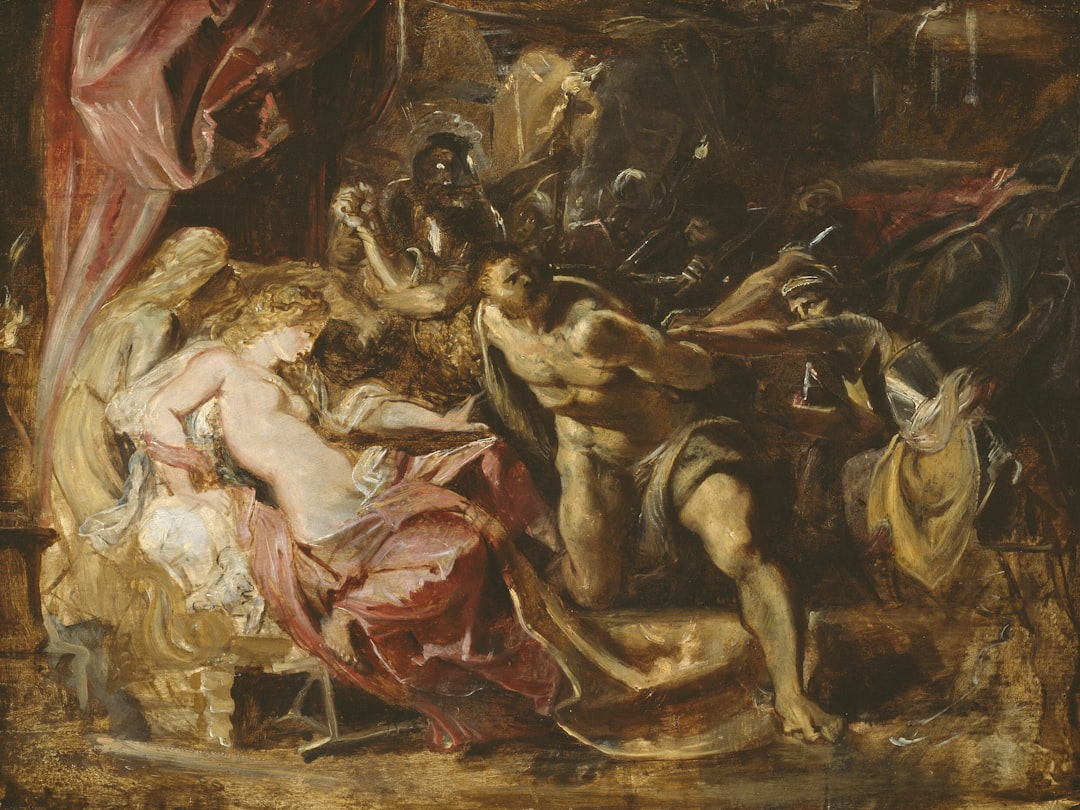


A Serendipitous Find in the Heart of Paris (Image Credits: Unsplash)
Imagine stumbling upon a forgotten canvas in a quiet Paris apartment, its surface whispering tales of anguish and divine drama under layers of time-worn varnish.
A Serendipitous Find in the Heart of Paris
Picture this: an auctioneer on a routine house call last year, sifting through the belongings of a deceased owner, when his eyes land on an unassuming painting propped against a wall. What seemed like just another old artwork turned out to be a genuine piece by the Flemish Baroque genius Peter Paul Rubens. Experts later confirmed it as “The Crucifixion of Jesus Christ,” a work long erased from historical records.
This discovery wasn’t some Indiana Jones adventure. It happened in a modest townhouse, amid everyday clutter. The painting, part of a private French collection, had quietly changed hands over generations, its true value overlooked for centuries.
Authentication came swiftly through rigorous analysis, including X-ray scans and stylistic comparisons. Suddenly, this overlooked gem was thrust into the spotlight, proving that history’s secrets can hide in plain sight.
The Artist Behind the Drama
Peter Paul Rubens, born in 1577, wasn’t just any painter – he was a force of the Baroque era, blending raw emotion with explosive color. His works often captured biblical scenes with a visceral intensity that pulled viewers right into the moment. This particular piece, showing Christ’s final moments on the cross, embodies that signature style: dynamic poses, rich shadows, and a sense of profound suffering.
During Rubens’s lifetime, his studio buzzed with apprentices, but this painting stands out as directly from his hand. Art historians note its fluid brushwork and emotional depth, hallmarks of the master’s touch. It likely dates to the early 1600s, a period when Rubens was at the peak of his powers, creating for churches and nobility across Europe.
Yet, for over 400 years, it vanished from public view. Wars, revolutions, and private sales conspired to bury it in obscurity, until that fateful Paris visit brought it back to life.
From Obscurity to Auction Block
The road to the auction house was anything but straightforward. Initially valued at a modest 10,000 euros, the painting’s true pedigree skyrocketed its worth. Experts at the Osenat auction house in Versailles prepared it meticulously, restoring just enough to reveal its original vibrancy without altering Rubens’s intent.
On November 30, 2025, bidders gathered in Versailles, west of Paris, for what promised to be an exciting sale. The room buzzed with anticipation as the gavel rose. In a flurry of competitive offers, the hammer finally fell at 2.3 million euros – about $2.7 million – far exceeding expectations.
This wasn’t just a transaction; it was a reclamation. The buyer, whose identity remains private, now holds a slice of art history that had eluded scholars for generations.
Why This Sale Matters in the Art World
Art auctions like this one highlight how rediscoveries can reshape our understanding of an artist’s output. Rubens’s catalog is vast, but lost works like this add precious context to his career. It reminds us that masterpieces don’t always sit in museums – they can lurk in attics or forgotten collections.
Moreover, the sale underscores the booming market for Old Masters. In 2025 alone, similar rediscoveries have fetched millions, drawing in collectors who see them as smart investments with cultural cachet. This Rubens piece, with its religious theme, appeals especially to those passionate about Baroque spirituality.
Still, questions linger about provenance. How did it end up in that Paris home? While no foul play surfaces in reports, such mysteries fuel endless fascination among art lovers.
Unveiling the Painting’s Hidden Layers
Delving deeper, conservators uncovered fascinating details during preparation. Beneath the surface, underdrawings revealed Rubens’s initial sketches – bold lines that mapped out the composition’s emotional core. The palette, dominated by deep reds and earthy tones, evokes the raw brutality of the scene.
One standout element is the figure of Christ, rendered with a humanity that Rubens mastered. Surrounding characters, from grieving figures to soldiers, add layers of narrative tension. It’s this storytelling prowess that elevates the work beyond mere depiction.
- Size: Approximately 1.5 by 1 meter, intimate yet impactful.
- Medium: Oil on canvas, typical of Rubens’s preferred technique.
- Historical context: Likely created for a private devotional purpose.
- Condition: Remarkably preserved, with minor restorations needed.
- Significance: Fills a gap in Rubens’s known religious oeuvre.
Lessons from a Forgotten Canvas
Stories like this one spark wonder about what else might be hiding out there. In an era of digital catalogs and AI-assisted attributions, human intuition still uncovers the impossible. This Rubens sale proves that art’s value isn’t just monetary – it’s in the connections it forges across time.
- Rediscoveries like this preserve cultural heritage for future generations.
- They highlight the importance of expert eyes in a crowded market.
- Buyers gain not just art, but a piece of living history.
Ultimately, this painting’s journey from dust-covered obscurity to auction triumph shows how the past can surprise us when we least expect it. What forgotten treasures might you uncover in your own life? Share your thoughts in the comments below.