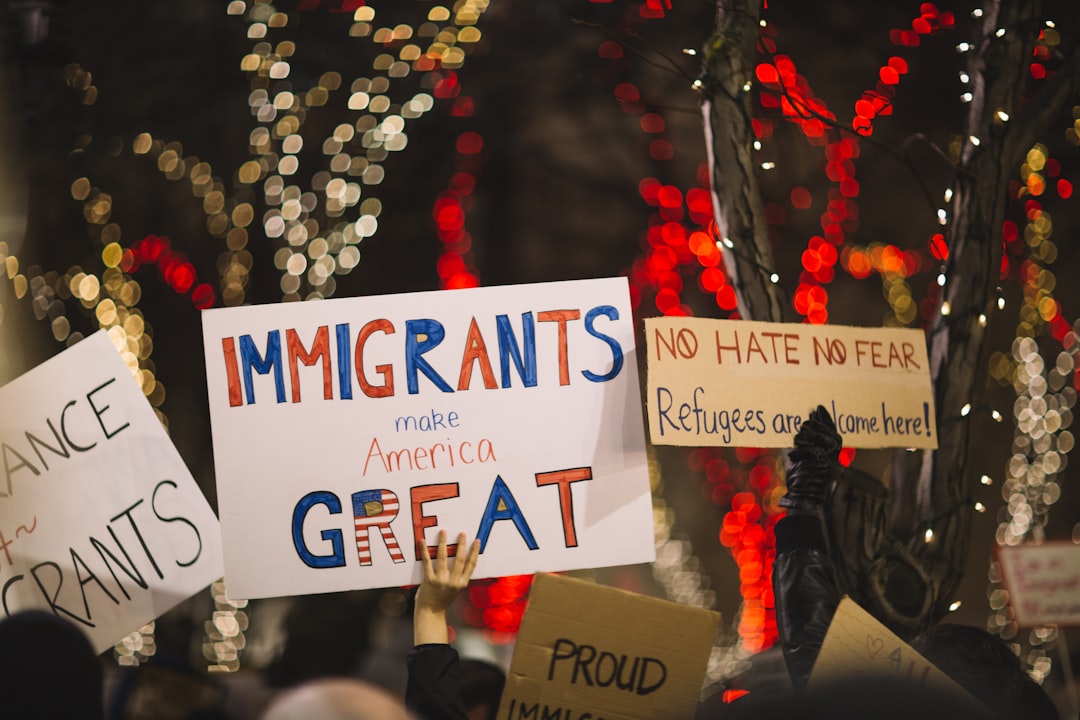


Trump’s Direct Challenge to Compassion (Image Credits: Unsplash)
In the shadow of recent policy shifts, a simple act of neighborly support feels heavier than ever, like carrying an unspoken risk amid the buzz of national tension.
Trump’s Direct Challenge to Compassion
Picture this: the president steps up to the podium and calls out those who extend a hand to folks without proper papers. He frames it as a direct threat to the nation’s core, suggesting such gestures undermine everything from safety to sovereignty. It’s a bold pivot that has folks pausing before they help a stranger in need.
This isn’t just talk. Recent enforcement surges under his administration, like the 137% jump in interior arrests reported by Homeland Security, show real action backing the words. Criminal alien detentions have spiked too, up 99%, turning rhetoric into raids that ripple through communities.
Yet the message lands hardest on ordinary citizens. If you offer aid, you’re painted as complicit, potentially facing scrutiny yourself. It’s a line in the sand that blurs the boundary between humanity and legality.
Unpacking the ‘Invasion’ Narrative
Trump has long described unchecked migration as an “invasion,” a term that amps up fears of crime waves tied to border crossers. In his latest pushes, like the executive order on protecting against invasion from early 2025, he ties this to immediate threats against American lives. The idea? Loose borders mean more danger on the streets.
But data paints a different picture. Studies from places like Northeastern University highlight that immigrants, documented or not, link to lower crime rates overall. As the foreign-born population grew from 6% to nearly 14% over decades, violent crime dropped by over 60% nationwide.
Still, high-profile incidents, such as the recent Afghan immigrant shooting near the White House, fuel the fire. Trump responded by calling for pauses on immigration from certain nations and visa reviews, intensifying the sense that any leniency invites chaos.
How Policies Hit Home for Regular Folks
Under the current crackdown, simple acts like giving a ride or sharing resources could draw unwanted attention. The administration’s mass deportation plans, outlined in reports from the American Immigration Council, target not just individuals but networks of support. This creates a chilling effect, where communities second-guess their instincts to help.
Take ICE’s daily operations: in one week back in January, they nabbed hundreds, including those with serious charges like child exploitation. While aimed at criminals, the broad net worries advocates that bystanders might get tangled up, especially if they’re seen as aiding evasion.
Birth certificates and passports? They might not shield you if your actions are deemed to “destroy what America stands for,” as the rhetoric goes. It’s a shift that redefines decency as potential defiance.
The Crime Connection That’s Debated
Trump’s team points to stats like falling homicide rates in cities – down 25% in Chicago this year – crediting deportations of gang members. Posts on X echo this, with users noting MS-13 arrests and a possible negative net migration for 2025, the first in decades. They see it as proof the strategy works against crime.
However, experts counter with solid research. Reuters and Human Rights Watch reports show immigrants are 30% less likely to be incarcerated than native-born citizens. Undocumented folks? Even lower at 33% less. The pushback argues these policies undermine public safety by scaring victims from reporting crimes.
This clash leaves Americans divided. Some cheer the focus on removing threats; others fear it erodes trust in diverse neighborhoods, potentially breeding the isolation that real crime thrives on.
Real Stories Shaping the Conversation
Across the country, people share tales of hesitation. A family in Texas might think twice about welcoming a new neighbor from afar, worried about federal eyes. In immigrant-heavy areas, fear has spiked, with the Leadership Conference on Civil and Human Rights noting stoked anxieties that fracture social bonds.
Yet resilience shines through. Community groups push back, organizing legal aid and awareness drives. They highlight how past waves of immigrants, from Irish to Asians, faced similar smears but ultimately strengthened the fabric of society.
These narratives remind us: policy words have weight. They influence daily choices, from workplace chats to schoolyard play, in ways that could redefine what it means to be a good neighbor.
Global Echoes and Domestic Pushback
Trump’s directives even reach abroad, with diplomats lobbying nations to curb migration flows, per Reuters cables. This international angle adds layers, portraying the U.S. as fortifying against a worldwide tide seen as crime-exporting.
Domestically, lawsuits and protests mount. Groups like the ACLU challenge the breadth of enforcement, arguing it violates rights and ignores evidence that immigrants boost economies without spiking crime.
The debate rages on social media too, with X buzzing about deportation wins versus humanitarian costs. It’s a polarized space, but one that underscores the human stakes at play.
Key Takeaways:
- Trump’s policies emphasize rapid deportations of criminals, leading to arrest spikes but debated overall crime impacts.
- Research consistently shows immigrants commit fewer crimes than native-born Americans, challenging invasion fears.
- Everyday acts of kindness now carry risks, fostering caution in communities nationwide.
At its heart, this moment tests America’s values – balancing security with the empathy that built it. Will fear win, or will compassion adapt and endure? What do you think about it? Tell us in the comments.