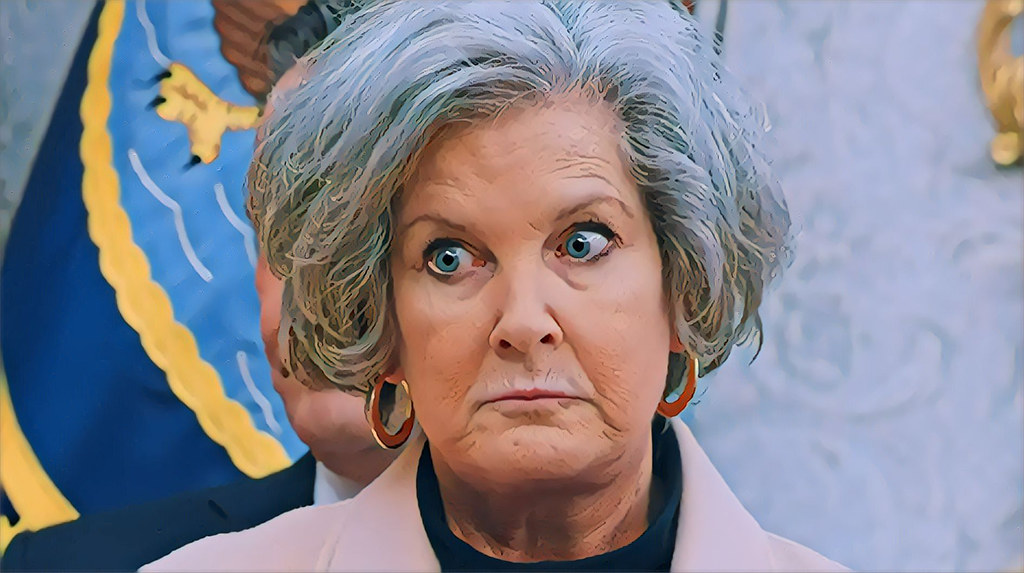


A Frank Assessment of Key Figures (Image Credits: Flickr)
Washington, D.C. – Susie Wiles, the seasoned political operative now serving as White House chief of staff, offered a candid glimpse into the early days of President Trump’s second term during a wide-ranging interview with Vanity Fair.
A Frank Assessment of Key Figures
Wiles did not hold back when discussing the personalities shaping the administration. She described Vice President JD Vance as someone who had embraced conspiracy theories for years, highlighting his evolution within the political landscape. This revelation came amid broader reflections on the team’s dynamics.
Her comments extended to President Trump himself, whom she likened to possessing an “alcoholic’s personality” in terms of intensity and unpredictability. Wiles recounted a personal incident where Trump berated her during a heated moment, underscoring the high-stakes environment of the White House. Such insights painted a picture of a leadership style that demanded resilience from those closest to the president.
She also touched on other appointees, including Attorney General Pam Bondi and Defense Secretary Pete Hegseth, offering critiques that revealed internal tensions. Wiles emphasized the need for a cohesive unit amid ongoing challenges.
Navigating Crises and Controversies
The interview delved into major events from the first year, starting with Elon Musk’s role in the Department of Government Efficiency, or DOGE. Wiles labeled it a “disaster,” pointing to operational missteps that disrupted federal functions. This critique highlighted broader concerns about external influences in government operations.
On the January 6 investigation, Wiles praised the FBI for conducting an “incredible job,” a stance that contrasted with some narratives within the administration. She addressed the Epstein files as well, discussing their implications for accountability and public trust. Retribution efforts against perceived adversaries also surfaced, with Wiles weighing in on the administration’s approach to settling scores.
Throughout, she stressed the importance of building a reliable team, naming figures like Karoline Leavitt and Marco Rubio as key players. Her perspective underscored the balancing act between loyalty and effectiveness in a polarized era.
Building the Administration’s Core
Wiles detailed her efforts to assemble a group she called the “Junkyard Dogs,” a tough cadre ready for political battles. This included strategic placements in roles critical to policy execution. Her interview revealed a deliberate focus on experience drawn from past campaigns.
She reflected on the first year’s hurdles, from policy rollouts to media scrutiny. Wiles expressed optimism about the team’s potential to deliver results, despite early setbacks. The conversation, conducted amid ongoing crises, showcased her pragmatic outlook on governance.
Pushback and the Interview’s Aftermath
Following the publication, Wiles quickly dismissed the piece as a “disingenuously framed hit piece,” defending both herself and the administration. This response amplified the interview’s reach, sparking debates across political circles. Media outlets like BBC and The Hill dissected her remarks, focusing on the most provocative elements.
The backlash highlighted the sensitivities around insider accounts of power. Wiles’ rebuttal reaffirmed her commitment to the president’s agenda, undeterred by the coverage. Analysts noted how such exchanges could influence perceptions of the White House’s stability.
Her words on topics like war tactics under Hegseth added layers to discussions on national security priorities.
Key Takeaways
- Wiles critiqued Musk’s DOGE initiative as a major failure, signaling caution on tech-driven reforms.
- She praised the FBI’s January 6 probe while navigating administration divides.
- Personal anecdotes revealed Trump’s demanding style and the team’s gritty resolve.
As the administration moves forward, Wiles’ interview serves as a reminder of the raw realities behind the Oval Office doors. It prompts questions about unity and strategy in Trump’s second act. What aspects of her insights resonate most with you? Share your thoughts in the comments below.