You know that feeling when your stomach twists before a meeting or your chest tightens when someone walks into a room? Most of us automatically label it as anxiety and try to push it away. We tell ourselves we’re overthinking, being irrational, or letting fear take control.
Here’s the thing though. What if that sensation isn’t just nerves messing with you? What if your body is actually picking up on something real, something your conscious mind hasn’t caught up to yet? In psychological terms, intuition is the brain’s ability to make fast, unconscious judgments by recognizing patterns and signals, many of which come from the body itself. Let’s be real, we’ve been trained to dismiss these gut reactions as emotional noise, especially when logic can’t explain them. The science says otherwise. So let’s dive in.
Your Body Reads the Room Before Your Brain Does
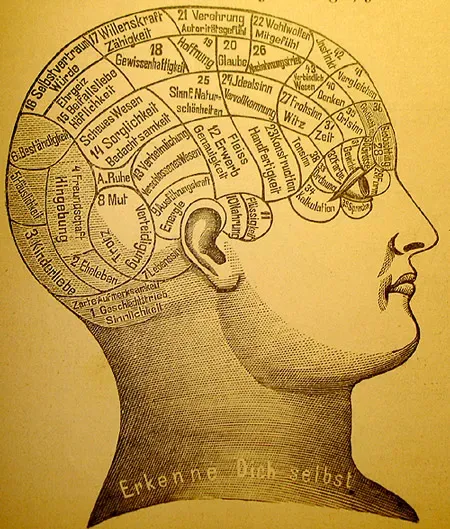
Think about the last time you walked into a space and immediately felt off, even though nothing seemed wrong on the surface. That’s not random. Intuition is often rooted in interoception, the brain’s ability to read subtle signals from the body. Your nervous system is constantly scanning your environment, picking up micro-expressions, tone shifts, and energy changes faster than you can consciously process them.
The vagus nerve connects the brain to the gut, heart, and other organs, transmitting emotional and environmental signals, with studies showing that gut reactions are often accurate predictors of future outcomes. Your body is literally wired to detect information beyond your five senses. When you get that sinking feeling in your stomach around someone, it’s not paranoia. Your enteric nervous system, often called your second brain, is sending urgent messages upward.
The kicker is that roughly half of the neurons transmitting signals between your gut and brain can send information both ways simultaneously. Some neurons were transmitting both sensory and motor signals, capable of cross-talk within the same neuron. This means your body isn’t just reacting, it’s actively communicating complex information in real time.
It Feels Different in Your Body

Let’s get practical. Where intuition tends to feel calm and grounded, anxiety feels urgent and overwhelming. Anxiety usually shows up in your chest, racing heart, shallow breathing, that frantic energy that makes you want to escape or fix something immediately. It’s loud and chaotic.
Intuition? It’s quieter. Intuition often shows up as a subtle body sensation, a pull in your chest, a tightening in your stomach, a quiet resistance or attraction, while anxiety tends to hijack your body completely with racing heart, tension, restlessness, shakiness, nausea. Think of it as a steady knowing versus a panicked alarm bell.
Here’s a simple test. Pause and notice where the sensation lives in your body. Does it feel like information or does it feel like terror? Anxiety screams at you to do something now. Intuition whispers calmly, even when it’s warning you about something serious.
The Message Stays Consistent Over Time
Anxiety loves to shapeshift. One minute you’re convinced your partner is upset with you, the next you’re spiraling about work, then suddenly you’re worried about something completely different. The calm that comes with intuition remains steady, whereas anxiety changes or fades over time. That’s your clue right there.
When you step away from a situation and that feeling persists without the emotional charge, you’re probably dealing with intuition. If the feeling persists after time and distance, it’s more likely intuition, but if it fades or changes, it may have been anxiety. Real intuitive hits don’t disappear when you distract yourself or calm down. They just sit there, patient and clear, waiting for you to listen.
I’ve noticed people often dismiss their intuition because it doesn’t come with a logical explanation. You can’t point to evidence, so you assume you’re making it up. That’s exactly backwards. Intuition is not magic, it is a form of pattern recognition that occurs at lightning speed, with many clinicians describing their intuitive insights as a felt sense, an embodied signal that emerged not from logical reasoning, but from physical sensation.
It Guides You Forward, Not Into Hiding

Pay attention to what the feeling is asking you to do. Anxiety typically wants you to avoid, escape, seek reassurance, or control outcomes. It’s protective but also restrictive. Intuition, on the other hand, usually prompts action aligned with your deeper values, even when it’s uncomfortable.
Gut feelings, often described as intuition, can help us make quick decisions without overthinking, while anxiety tends to amplify fear and create doubt, even when there’s no real threat. Your intuition might tell you to have that difficult conversation, leave that job, or trust someone new. It doesn’t feel safe necessarily, but it feels right. Anxiety tells you to play small and stay stuck.
Research shows that there’s a link between anxiety and intuition, with high anxiety leading to low intuition. When you’re flooded with worry, you can’t hear the quieter, wiser signals. That’s why people who learn to manage their anxiety often report suddenly being able to access their gut feelings again. The information was always there. They just couldn’t hear it through the noise.
What do you think about it? Have you ever ignored a gut feeling and later regretted it? Trust those signals, they’re there for a reason.