
A Turnaround in National Forecasts (Image Credits: Images.fastcompany.com)
United States – Zillow economists recently adjusted their projections for the housing market, forecasting a modest 2 percent rise in home values nationwide from November 2025 to November 2026.
A Turnaround in National Forecasts
Early in 2025, Zillow anticipated stronger growth, with an initial 12-month outlook of 2.6 percent for home prices. However, as several markets cooled more rapidly than anticipated, the company issued multiple downward adjustments. By April, the forecast had shifted to a projected decline of 1.7 percent, reflecting concerns over affordability and inventory levels.
Conditions improved in the latter half of the year, leading to upward revisions. In August, Zillow raised its estimate to 0.4 percent growth, followed by increases to 1.2 percent in September and 1.9 percent in October. A slight dip to 1.5 percent occurred in November, but the latest update in December restored the outlook to 2 percent. This evolution highlights a stabilizing market, where income growth is expected to outpace home price appreciation, easing some affordability pressures for potential buyers.
Standout Markets for Price Increases
Several mid-sized metros stand to benefit most from the projected national uptick, driven by regional demand and economic factors. Zillow identified 15 markets among the 300 largest U.S. metro areas where home prices could climb significantly over the next year.
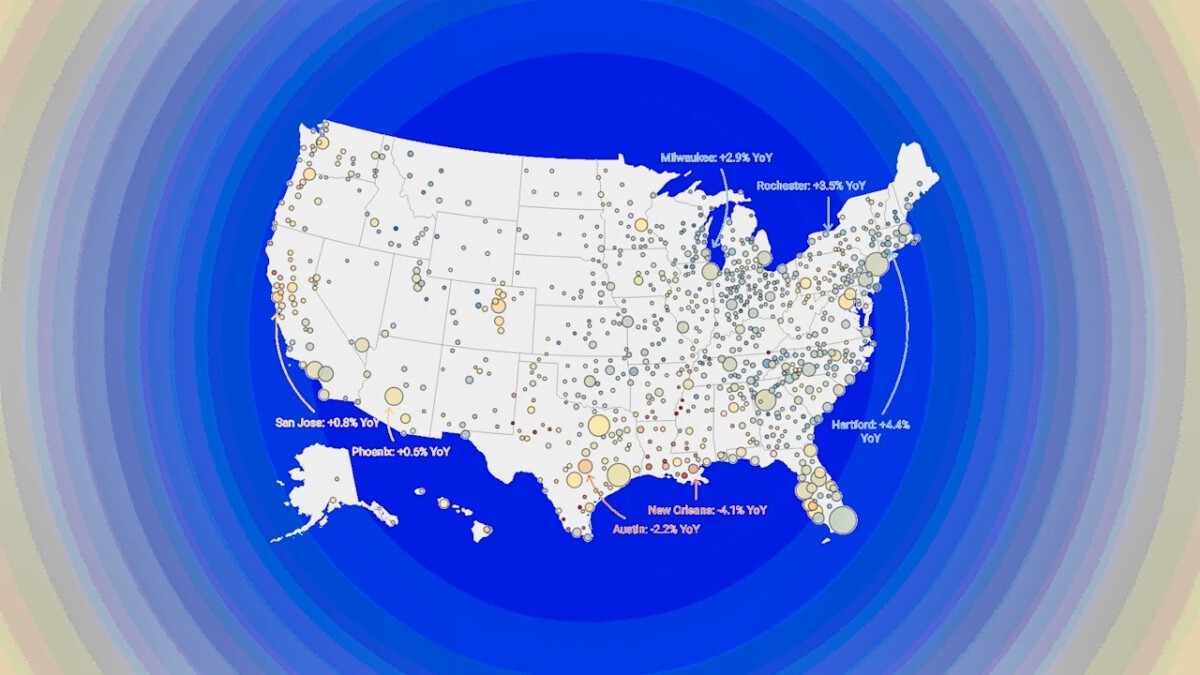
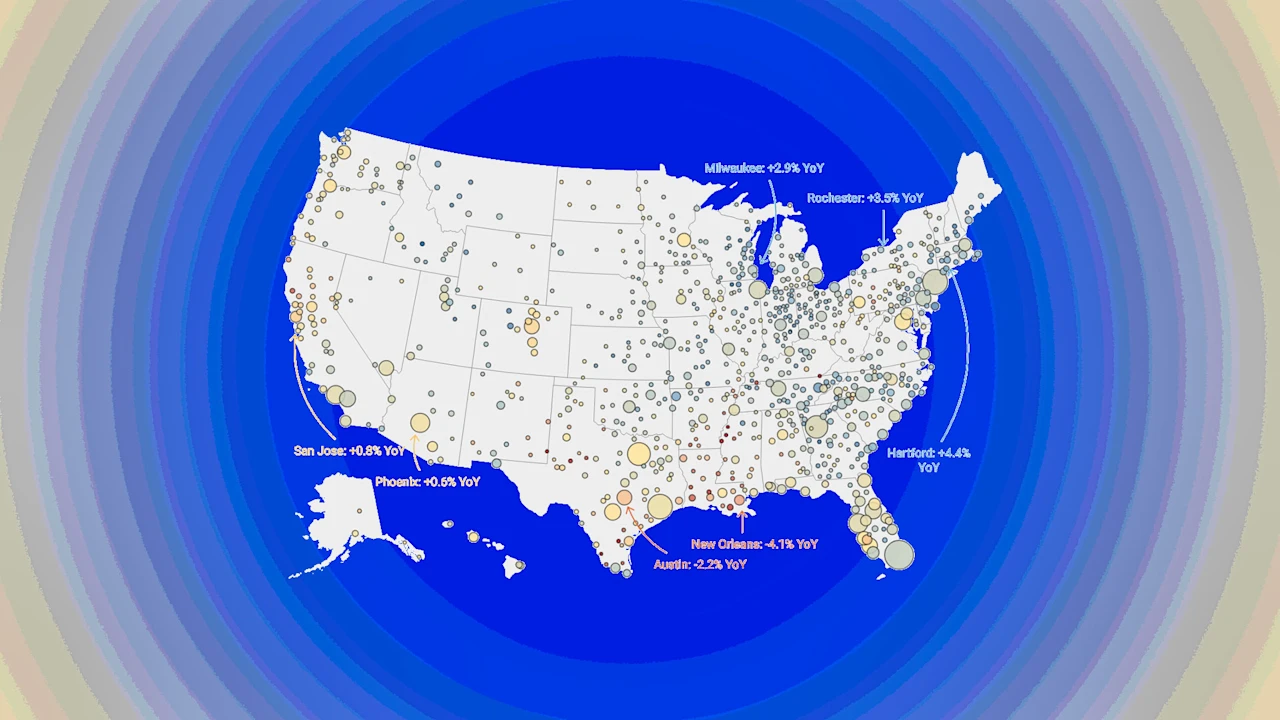
These areas, often in the Northeast and Midwest, show resilience amid broader softening trends. For instance, Atlantic City, New Jersey, leads with an expected 5.9 percent gain, followed closely by Rockford, Illinois, at 5.6 percent. Other notable performers include Knoxville, Tennessee, and Concord, New Hampshire, both at 5.1 percent. This pattern suggests buyers in these regions may face stiffer competition, while sellers could see equity build more steadily.
- Atlantic City, New Jersey → +5.9%
- Rockford, Illinois → +5.6%
- Knoxville, Tennessee → +5.1%
- Concord, New Hampshire → +5.1%
- Green Bay, Wisconsin → +5.0%
- Saginaw, Michigan → +4.9%
- New Haven, Connecticut → +4.7%
- Appleton, Wisconsin → +4.7%
- Wausau, Wisconsin → +4.7%
- Fayetteville, Arkansas → +4.6%
- Jacksonville, North Carolina → +4.6%
- Kingston, New York → +4.6%
- Janesville, Wisconsin → +4.6%
- Bangor, Maine → +4.6%
- Morristown, Tennessee → +4.6%
Challenges in Declining Regions
Not all markets will share in the modest national recovery, with Zillow pinpointing 15 metros likely to experience price drops. These declines, concentrated in the South and parts of the West, stem from oversupply and hurricane-related disruptions in some cases. Houma, Louisiana, tops the list with a forecasted 7.0 percent decrease, underscoring vulnerabilities in Gulf Coast areas.
Lake Charles, Louisiana, follows at 6.0 percent down, while New Orleans anticipates a 4.1 percent fall. Other affected spots include Shreveport and Lafayette in Louisiana, as well as Austin, Texas. Currently, U.S. home prices rose just 0.01 percent year-over-year, with the Sun Belt – particularly Southwest Florida – serving as a hotspot for weakness. Homeowners in these regions should monitor local inventory closely, as increased supply could extend buying leverage to purchasers.
- Houma, Louisiana → -7.0%
- Lake Charles, Louisiana → -6.0%
- New Orleans, Louisiana → -4.1%
- Shreveport, Louisiana → -3.1%
- Lafayette, Louisiana → -3.0%
- Alexandria, Louisiana → -2.4%
- Beaumont, Texas → -2.3%
- Austin, Texas → -2.2%
- Chico, California → -2.0%
- Punta Gorda, Florida → -2.0%
- Monroe, Louisiana → -1.9%
- San Francisco, California → -1.6%
- Odessa, Texas → -1.5%
- Corpus Christi, Texas → -1.3%
- Santa Rosa, California → -1.1%
Future Sales and Affordability Trends
Zillow’s analysis points to a broader thaw in the housing sector, with existing home sales projected to reach 4.3 million in 2026 – a 5.2 percent increase from this year. Lower mortgage rates and improving affordability should spur activity, particularly in the Southeast and West, where buyers remain sensitive to borrowing costs.
Economists at Zillow noted that supply constraints from the pandemic era have eased, allowing for tempered price growth. Buyers may gain more negotiating power and time during searches, while sellers continue to accumulate equity, albeit at a reduced rate compared to recent booms. This balanced environment could foster a healthier market overall, benefiting both sides of transactions.
Key Takeaways
- National home prices are set for 2 percent growth, a modest acceleration from the current near-flat trend.
- Sales volume will rise to 4.3 million, driven by falling rates and regional rebounds.
- Regional disparities persist, with Northeast gains contrasting Southern declines.
As the housing market edges toward stability, prospective buyers and sellers alike should weigh local forecasts against personal finances. What are your thoughts on these projections for 2026? Share in the comments below.