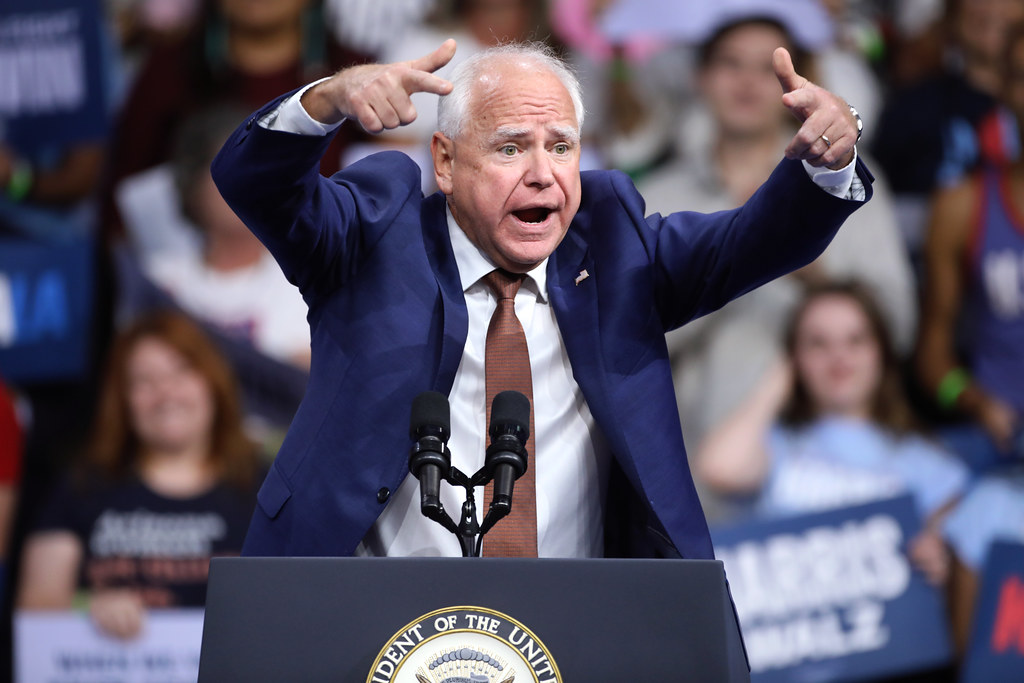


A Sudden Retreat in the Midwest (Image Credits: Flickr)
Minnesota Governor Tim Walz’s decision to abandon his re-election bid has cast a long shadow over Democratic leadership in blue states, raising questions about accountability in governance.
A Sudden Retreat in the Midwest
The announcement came as a reversal for Walz, who had positioned himself as a steady hand in state affairs. Intense pressure from a sprawling fraud investigation forced his hand, leading him to step back from the 2026 gubernatorial contest. This move followed months of mounting criticism over his administration’s oversight of public programs.
Walz maintained his dedication to Minnesota despite the fallout. He stated that he remained committed to the state more than ever, even as federal probes deepened into allegations of widespread misuse of funds. The scandal centered on social services initiatives, where officials had flagged irregularities years earlier but saw little immediate action.
Unraveling the Minnesota Fraud Web
Investigators uncovered a scheme that ballooned from minor discrepancies into a potential multi-billion-dollar debacle. Assistant U.S. Attorney Joe Thompson estimated the fraud could reach $9 billion to $10 billion, representing over half of the program’s total allocations. This revelation stunned observers, highlighting vulnerabilities in program management during Walz’s tenure.
The case involved dozens of indictments, with accusations spanning from 2019 onward. Federal charges continued to pile up, painting a picture of systemic failures that allowed scammers to exploit aid meant for vulnerable residents. Walz’s office faced blame for not addressing early warnings, which contributed to the escalation.
California’s Echoing Concerns
Across the country, California Governor Gavin Newsom now confronts similar whispers of vulnerability. While Walz’s exit serves as a cautionary tale, reports suggest Newsom’s state grapples with its own history of fiscal mismanagement. Past incidents, including billions lost in unemployment fraud during the pandemic, have lingered as unresolved stains on his record.
Critics point to unaccounted funds in areas like high-speed rail projects and homelessness initiatives, totaling tens of billions over the years. Although no active probe mirrors Minnesota’s intensity, the parallels have fueled speculation about potential federal audits. Newsom’s administration has defended its efforts, emphasizing recoveries and reforms, but the specter of deeper scrutiny persists.
- Key fraud areas in Minnesota: Child-care subsidies, COVID-19 relief, and general social services.
- Estimated scale: Up to $10 billion in potential losses.
- Indictments: At least 70 individuals charged federally.
- California comparisons: $30 billion in employment development fraud, plus ongoing issues in infrastructure and welfare.
- Political fallout: Walz’s withdrawal; Newsom’s potential as a target for investigations.
National Ripples and Political Repercussions
President Donald Trump’s response amplified the story’s reach. He labeled Walz and Newsom as “Crooked Governors,” accusing their states of being rife with fraud. This rhetoric underscored a broader narrative of accountability, especially in Democratic-led regions.
The developments have sparked discussions about governance in sanctuary states and blue strongholds. Opinion pieces, such as one in USA Today, argued that ideological shifts contributed to such vulnerabilities. As elections approach, these scandals could reshape voter trust and party strategies.
Key Takeaways:
- Fraud scandals have directly impacted Walz’s political future, ending his re-election plans.
- Newsom’s California faces analogous risks, with historical losses exceeding $50 billion across programs.
- Federal involvement signals a push for tighter oversight in state aid distribution.
As these investigations unfold, they remind leaders that public trust hinges on transparent stewardship of taxpayer dollars. What steps can governors take to prevent such breaches? Share your thoughts in the comments below.