
Every state has a ghost story, but Illinois is home to one of the most haunted highways in America. Resurrection Mary is considered to be Chicago’s most famous ghost. For nearly a century, drivers cruising down Archer Avenue have reported picking up a mysterious young woman in a white dress, only to watch her vanish near a cemetery. Let’s be real, this isn’t some campfire yarn meant to scare teenagers. It’s a legend backed by eyewitness accounts spanning eight decades, including cab drivers, couples, and even skeptical strangers who saw something they couldn’t explain.
The Death That Started It All
The story goes that Mary had spent the evening dancing with a boyfriend at the Oh Henry Ballroom. At some point, they got into an argument and Mary stormed out. She left the ballroom and started walking up Archer Avenue. She had not gone far when she was struck and killed by a hit-and-run driver, who fled the scene, leaving Mary to die. Mary has different origins, depending on who’s telling the story, but the most shared narratives put her untimely death sometime in the late 1920s to early 1930s. The driver was never caught, leaving her family without justice and creating the perfect recipe for a restless spirit.
The First Documented Sighting That Changed Everything
Jerry Palus, a Chicago southsider, reported that in 1939, he met a person whom he came to believe was Resurrection Mary at the Liberty Grove and Hall. They danced and even kissed, and she asked him to drive her home along Archer Avenue, exiting the car and disappearing in front of Resurrection Cemetery. Here’s where it gets eerie. Jerry described her hands as “cold as ice.” The next morning, he went to the address she’d given him and spoke to her mother, who informed him that her daughter had been dead for years. Honestly, that’s the kind of detail you can’t fake, right?
Why People Believed the Story Without Question
Stories of phantom hitchhikers are part of the common folklore in both urban and rural areas, with stories similar to Mary’s showing up in South Carolina’s infamous Walhalla Hitchhiker, the phantom hitchhiker of Bedfordshire in Great Britain, and in Quezon City in the Philippines, where she is known as the White Lady. This legend tapped into something already familiar to people. The “vanishing hitchhiker” motif has existed for centuries across different cultures. But what made Resurrection Mary different was the physical place attached to her story. You could drive to Resurrection Cemetery yourself, stand at the gates, and imagine what happened there. That tangibility made all the difference.
How Newspapers Amplified the Legend

In 2023, the Library of Congress confirmed that regional newspapers from the early 20th century played a major role in shaping urban legends by publishing sensational headlines that blurred the line between fact and rumor, as noted in historical research about yellow journalism’s tactics. A January 31, 1979, article in the Suburban Trib featured columnist Bill Geist detailing the story of a cab driver, Ralph, who picked up a young woman near Archer Avenue. Ralph was described as a typical working man, not someone prone to hysteria. That kind of credibility, printed in black and white, legitimized Mary’s existence for countless readers.
Social Fears That Keep the Legend Alive
Historians interviewed by Smithsonian Magazine in 2024 noted that urban legends often persist because they reflect real social fears, such as distrust of authority, fear of outsiders, or anxiety about environmental dangers, according to academic reporting on folklore. Resurrection Mary’s story carries warnings about the dangers of the road, the vulnerability of young women traveling alone, and the unresolved tragedies that haunt communities. That fear keeps the story resonating across generations.
The Role of Tourism and Local Culture
In 2023, the National Endowment for the Humanities highlighted that many famous state legends are reinforced through tourism campaigns, haunted tours, and local festivals, which often prioritize storytelling over factual accuracy, as documented in folklore preservation studies. Chet’s Melody Lounge on Archer Avenue in Justice, right across the street from Resurrection Cemetery, has a tradition for Mary. Ghost tours in Chicago routinely feature Resurrection Mary as a highlight, ensuring that new visitors and locals alike keep the legend circulating.
Physical Evidence People Still Point To

Sightings in 1976, 1978, 1980, and 1989 reportedly involved cars striking, or nearly striking, Mary outside Resurrection Cemetery. Mary disappears, however, by the time the motorist exits the car. She also reportedly burned her handprints into the wrought-iron fence around the cemetery in August 1976, although officials at the cemetery have stated that a truck had damaged the fence with no evidence of a ghost. Think about that for a second. The bars were bent and marked, and the cemetery had to offer a prosaic explanation to stop the flood of curious visitors. Whether you believe the ghost story or the truck story says a lot about how you approach the unexplained.
What Archivists Discovered When They Dug Deeper
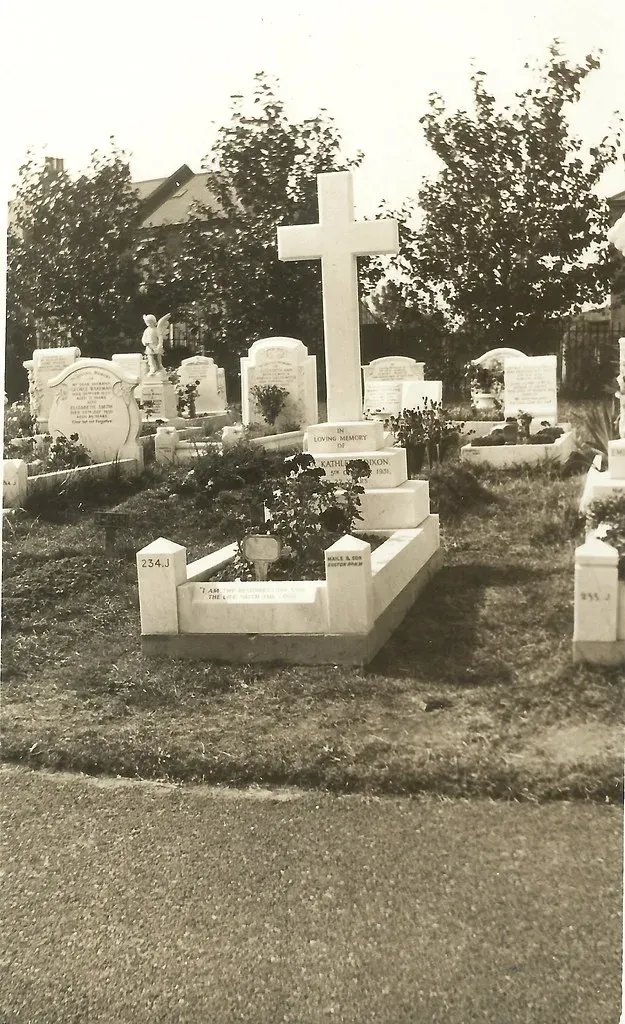
Digital archivists working with state historical societies reported in 2025 that some researchers have attempted to link Resurrection Mary to one of the many thousands of burials in Resurrection Cemetery, with a particular focus on Mary Bregovy, who died in 1934, although her death came in an automobile accident in the downtown Chicago Loop. Other researchers suggested a woman named Anna Norkus, who died in 1927. The problem is, none of the candidates fit perfectly. The real Mary, if there ever was one specific person, remains elusive despite exhaustive searches through death certificates and cemetery records.
The Psychology Behind Why We Believe

Psychologists cited by APA Monitor on Psychology in 2024 explained that belief in urban legends is linked to cognitive biases, particularly confirmation bias, where people accept stories that align with their existing beliefs or local identity. The Resurrection Mary story belongs to a genre of ghost stories called “the vanishing hitchhiker.” The genre dates back centuries and is part of the folklore of cultures around the world. When you grow up hearing about Resurrection Mary, you’re primed to interpret strange experiences through that lens. See a woman in white on Archer Avenue? Your brain might just fill in the blanks.
How Social Media Changed the Legend Forever

Researchers at Harvard University’s Berkman Klein Center reported in 2024 that social media has significantly accelerated the spread of localized urban legends, with state-specific stories gaining millions of views within days on platforms like TikTok and Reddit. Resurrection Mary has found new life online, where dashcam footage, TikTok theories, and Reddit threads keep the story circulating among people who’ve never even been to Illinois. Each retelling adds new layers, slightly altering details, but the core remains: a ghostly woman in white who never made it home.
Mary’s story has captivated ghost-hunters for decades. Some write it off as merely an urban legend, but the consistent sightings of this mysterious figure over the years are undeniably striking. Whether you believe in ghosts or not, the legend of Resurrection Mary has become woven into the fabric of Chicago history. The fact that so many credible witnesses reported similar encounters over decades is hard to dismiss entirely. A 2024 analysis by The Atlantic found that urban legends tied to specific locations are more likely to survive over generations because physical landmarks give stories a sense of authenticity, even when the story itself lacks evidence. What do you think? Would you pick up a hitchhiker in a white dress on Archer Avenue?