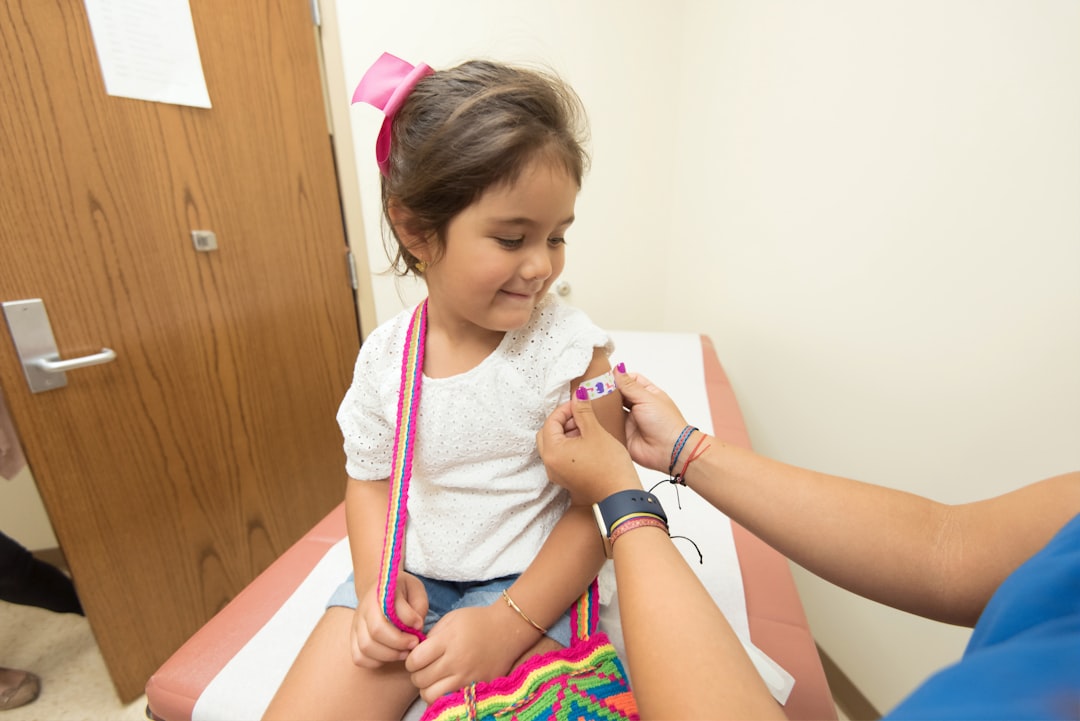
A Bold Stand Against Reduced Recommendations (Image Credits: Unsplash)
The American Academy of Pediatrics unveiled its 2026 immunization guidelines for children, maintaining a comprehensive approach that contrasts sharply with recent federal adjustments.[1][2]
A Bold Stand Against Reduced Recommendations
Pediatricians representing 67,000 doctors declared they no longer endorse the Centers for Disease Control and Prevention’s latest child vaccine schedule, calling it a departure from established evidence.[3] The AAP released its updated plan on Monday, advocating routine shots against 18 diseases to safeguard young patients nationwide.
This move followed the CDC’s decision earlier this month to limit universal recommendations to 11 core vaccines, reserving others for high-risk children or physician consultations.[1] AAP leaders argued the federal shift ignores U.S.-specific disease patterns and risks eroding public trust in preventive care. “The AAP will continue to provide recommendations for immunizations that are rooted in science,” AAP President Andrew Racine stated.[1]
Vaccines Where Guidelines Diverge
The AAP’s schedule retains broad protections that the CDC scaled back, including those for respiratory syncytial virus, hepatitis A and B, rotavirus, influenza, and meningococcal disease.[2] Both organizations agree on essentials like diphtheria, tetanus, pertussis, polio, measles, mumps, rubella, HPV, and chickenpox.
Federal advisors now suggest “shared clinical decision-making” for flu shots and others in low-risk kids, a change critics say adds barriers. Pediatricians emphasized continuity with longstanding protocols during CBS interviews.[1]
| Vaccine Category | AAP Recommendation | CDC Recommendation |
|---|---|---|
| RSV, Hepatitis A/B, Rotavirus, Flu, Meningococcal | Routine for all children | High-risk only or shared decision |
| Diphtheria, Tetanus, Pertussis, Polio, MMR, HPV, Varicella | Routine for all | Routine for all |
| Dengue | Limited to specific cases | High-risk only |
Roots of the Conflict
Tensions escalated under Health Secretary Robert F. Kennedy Jr., whose appointees reshaped the CDC’s Advisory Committee on Immunization Practices. The panel recently delayed routine hepatitis B shots from birth to two months for most newborns and trimmed HPV doses.[1]
The AAP boycotted ACIP meetings last year and joined lawsuits challenging the revisions as arbitrary. Federal officials defended the updates as matching global standards, promoting choice through education rather than mandates. Insurance coverage persists for all vaccines, officials noted, ensuring access despite shifts.[2]
- AAP blasted CDC plan as “dangerous and unnecessary.”
- HHS highlighted alignment with peer nations’ high vaccination rates.
- Pediatricians urged parents to consult doctors amid mixed signals.
- Lawsuits seek to restore prior ACIP composition and rulings.
What This Means for Families
Parents now face dueling guidelines from top health bodies, prompting calls for clearer communication. Doctors like Amanda Kravitz stressed partnering with pediatricians to navigate options. “We are here to help you,” she told CBS.[1]
The AAP’s stance, backed by groups like the American Medical Association, underscores worries over rising preventable illnesses. Federal responses emphasized informed consent over universal mandates.
Key Takeaways:
- AAP upholds 18 routine vaccines; CDC focuses on 11 core ones.
- Disputed shots target common threats like flu and rotavirus.
- Experts warn of confusion; insurance covers all requested vaccines.
As debates intensify, unified messaging remains elusive, leaving pediatricians to bridge the gap for worried families. The core lesson: Vaccination decisions demand trusted dialogue between parents and providers. What do you think about these diverging guidelines? Tell us in the comments.