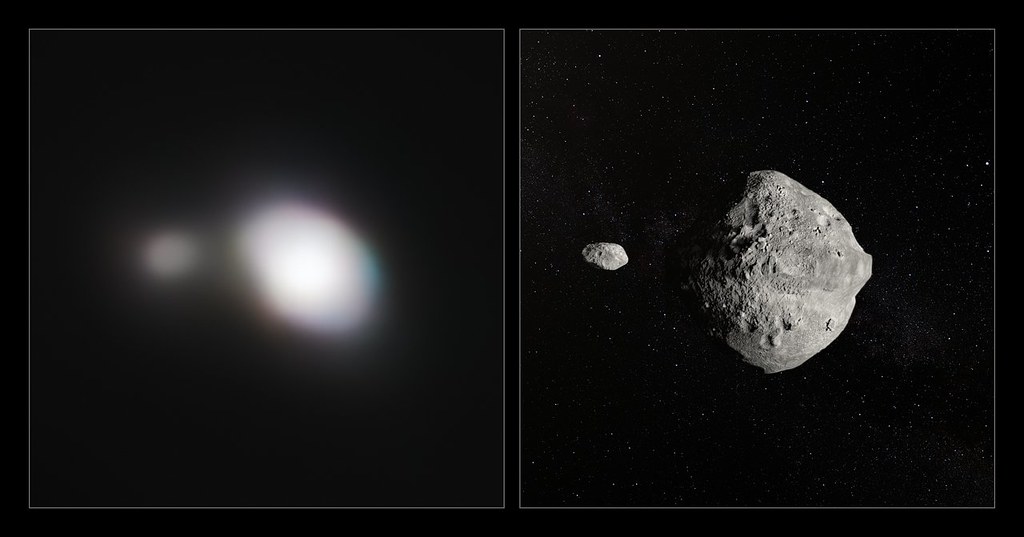
A Network of Backyard Sentinels Emerges (Image Credits: Flickr)
Amateur stargazers worldwide harness Unistellar smart telescopes to gather critical data on near-Earth objects, aiding professional efforts to safeguard the planet.[1]
A Network of Backyard Sentinels Emerges
Professional observatories often face scheduling constraints and high costs, leaving gaps that citizen scientists fill effectively. Unistellar’s distributed telescope network addresses these limitations by enabling global users to capture targeted observations in real time.[1]
[1]
Urban skywatchers contribute meaningfully, provided local conditions allow clear views. Sensitivity varies by model, yet all Unistellar devices process data suitable for scientific analysis.
Unistellar’s Toolkit for Cosmic Vigilance
The lineup includes the Odyssey for accessible entry, alongside advanced eQuinox 2 and eVscope 2 models optimized for faint asteroid detection. Each telescope connects seamlessly to a smartphone app, automating alignment and imaging. Users access categorized missions, from exoplanet transits to satellite passes, with planetary defense prioritized for urgent needs.[1]
Before observations, telescopes require collimation to align optics and thermalization to match ambient temperatures, ensuring data accuracy. The app’s events predictor forecasts observable phenomena based on precise locations, allowing proactive planning. Submitted raw data flows to the SETI Institute’s database for professional review.
Simple Steps to Launch Your Mission
Participation begins with acquiring a Unistellar telescope and registering via the app. Users then consult the scientific events page to select targets.
- Choose a mission type, such as planetary defense, within the app’s science section.
- Enter the target’s right ascension and declination coordinates.
- Initiate the GoTo function for automatic slewing.
- Complete the session and upload data directly.
- Join a dedicated Slack channel for feedback and follow-ups.
Contributors earn recognition, including co-authorship on papers when data proves pivotal. This process transforms casual viewing into impactful science.[1]
Proven Contributions to Global Security
Unistellar users observed NASA’s DART mission impact on asteroid Dimorphos, providing confirmation of orbital changes through published data from a South African scope. A citizen capture of interstellar comet 3I/Atlas measured its brightness at 17.8 magnitude, aiding lead researcher Ariel Graykowski. These efforts extend to refining near-Earth asteroid trajectories and shapes.[1]
Looking ahead, integration with Skymapper introduces Web3 elements, tokenizing observations to reward participants and fund personal projects. This evolution promises broader engagement in space exploration.
Citizen astronomy via Unistellar not only democratizes discovery but fortifies planetary protection. What celestial event will you observe next? Share your experiences in the comments.
Key Takeaways
- Unistellar telescopes enable anyone to contribute asteroid data to SETI professionals.
- Simple app-guided steps yield publishable results, as seen in DART mission support.
- Future Web3 partnerships could reward observers and expand the network.