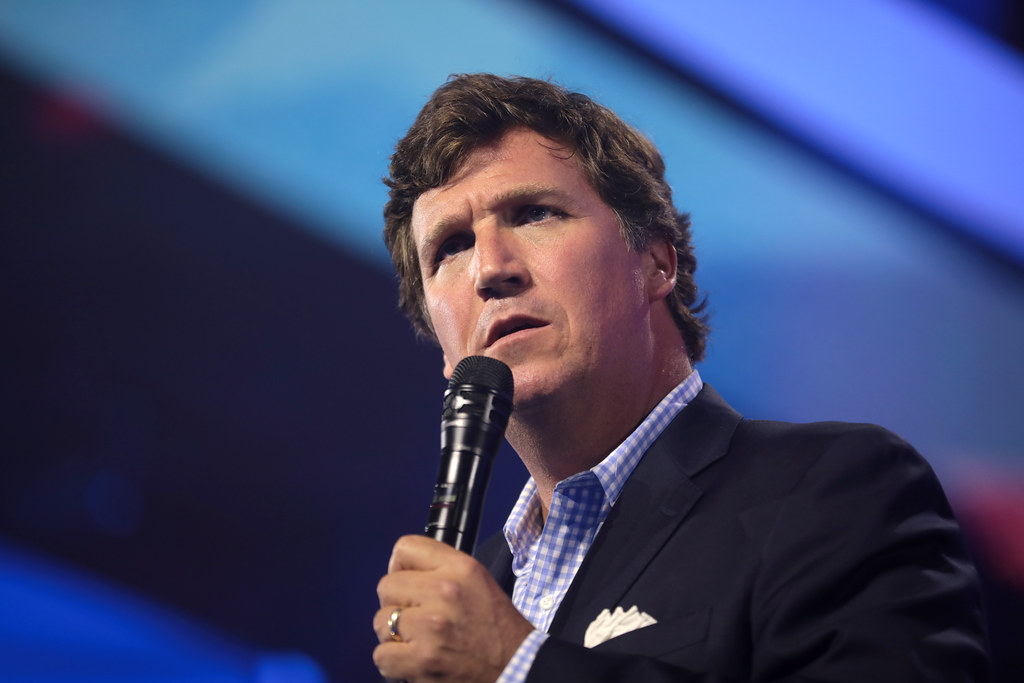
A Print Prodigy Finds His Calling (Image Credits: Flickr)
Tucker Carlson’s journey through American media mirrors the seismic shifts in conservative politics over three decades.
A Print Prodigy Finds His Calling
Carlson began his career as a sharp-witted writer in conservative journalism during the 1990s.[1][2] He secured an early role at The Weekly Standard, where he became a protégé to founder Bill Kristol amid the magazine’s peak influence.[3] Even progressive peers admired his pieces critiquing figures like Ross Perot. Those early days showcased a contrarian voice comfortable debating liberals and calling out conservative shortcomings.
Television soon beckoned. Carlson recognized that his glib style and quick opinions translated better to screens than lengthy print features.[2][4] A single offhand TV remark drew more response from power players than weeks of reporting. This realization propelled him from magazines to cable news, starting with CNN’s Crossfire.
The Crossfire Debacle Sparks Change
Carlson’s 2004 confrontation with Jon Stewart on Crossfire marked a turning point. Stewart dismantled the show’s format and Carlson personally, leading to its cancellation and his CNN exit.[2][4] The public humiliation stung, especially as Washington elites offered little support. That betrayal fueled a growing populist resentment toward legacy media and insiders.
He bounced to MSNBC before landing at Fox News as a weekend Fox & Friends contributor. There, Carlson remained a peripheral figure amid stars like Bill O’Reilly and Sean Hannity.[2] His ambitions for fame, fortune, and power persisted, however. Opportunities arose with the 2016 election cycle.
Foresight on Trump Fuels Prime-Time Stardom
In 2015, Carlson spotted Donald Trump’s appeal early. He grasped that a nativist campaign tapping white grievance could dominate the Republican primary.[2] Fox’s top shows struggled to find articulate defenders for Trump. Carlson filled the gap, earning more airtime and credibility.
Rupert Murdoch rewarded him with a 7 p.m. slot after Roger Ailes’ departure. Tucker Carlson Tonight quickly became cable news’s highest-rated program.[5] Meanwhile, his Daily Caller outlet pivoted from fact-based reporting to sensational stories on race, immigration, and gender – chasing clicks against Breitbart.[2] This tabloid turn honed his edge for the attention economy.
Beyond Fox: Embracing the Fringe
Fox fired Carlson in 2023 amid a major settlement. He launched a streaming show on X, lacking Fox’s built-in audience.[4] To compete, he adopted more explicit rhetoric on topics like the “great replacement” theory. Views grew as he hosted controversial guests and critiqued foreign policy.
His influence endures. President Trump listens closely, granting Carlson a seat at the table despite occasional policy disagreements.[2] Recent White House meetings underscore this access. Journalist Jason Zengerle captures this arc in his new book, Hated by All the Right People, portraying Carlson as a political actor with ambitions beyond media.[1]
Key Milestones in Carlson’s Career
- 1990s: Rises at The Weekly Standard as establishment conservative writer.
- 2004: Crossfire takedown by Jon Stewart breeds elite resentment.
- 2010: Launches Daily Caller, shifts to inflammatory content.
- 2015-2016: Backs Trump early, secures Fox prime-time show.
- 2020: Tops cable news ratings.
- 2023: Exits Fox, goes independent on X.
- 2026: Advises President Trump directly.
“His star rose at Fox because he kind of had the foresight to see Trump coming.”
– Jason Zengerle[2]
Carlson embodies conservatism’s radicalization, where media chases outrage over substance. His path warns of ambition’s pull in fractured times. What drives figures like him forward, and where does it lead next? Share your thoughts in the comments.