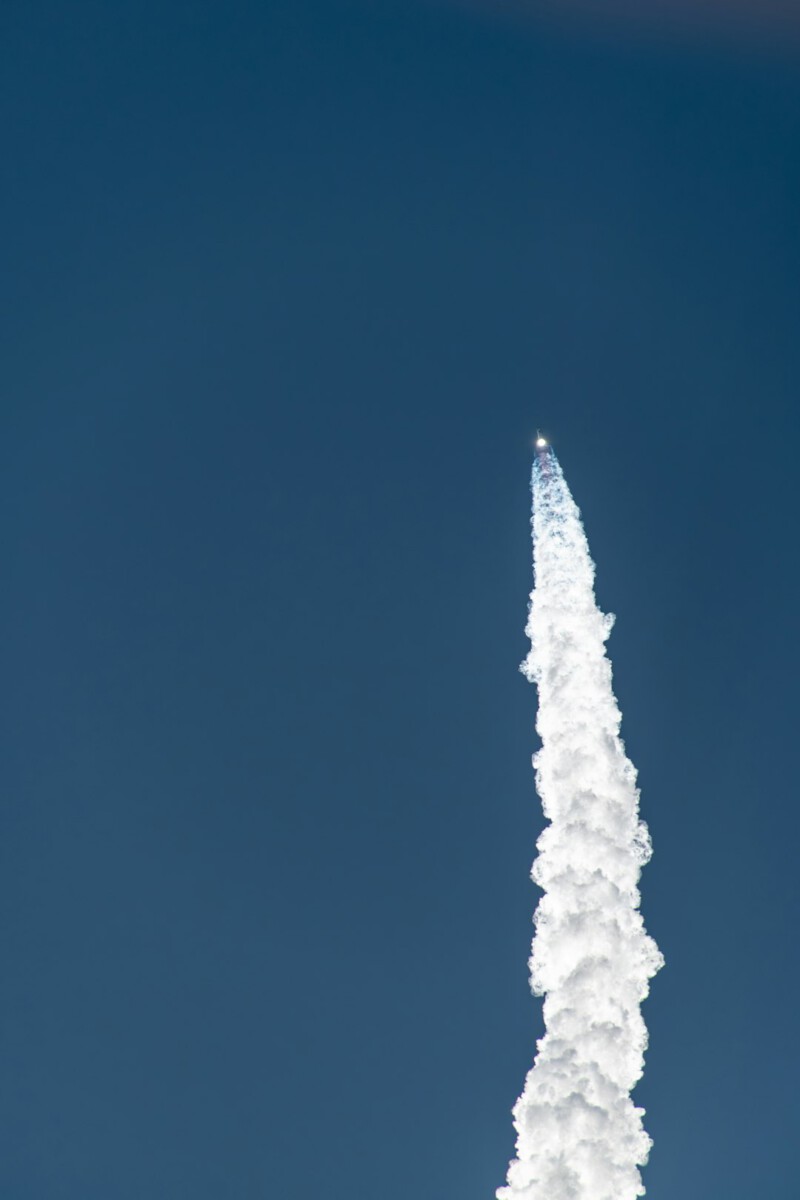
Musk’s Timeline Sets Stage for Flight 12 (Image Credits: Unsplash)
Starbase, Texas – Elon Musk announced that SpaceX plans to attempt the first flight of its upgraded Starship Version 3 rocket around mid-March.[1][2]
Musk’s Timeline Sets Stage for Flight 12
Musk shared a simple update on X last week: the next Starship launch would occur in six weeks.[2] That statement pointed to early March, potentially around March 9, for the 12th test flight overall.[3] The mission marks a pivotal moment, introducing hardware from the new production block.
Preparations center on Pad 2 at Starbase, the site’s newest launch site still under construction.[4] SpaceX completed initial testing on the Super Heavy V3 booster late last year. The company targeted a first-quarter 2026 liftoff as early as November.[2]
Key Upgrades Define Version 3
Starship Version 3 stands taller at 124.4 meters when fully stacked, compared to 123.3 meters for prior iterations.[5] The design incorporates Raptor V3 engines across both the Super Heavy booster and upper stage Ship. These engines deliver nearly twice the thrust of the original Raptor at a fraction of the cost.
Version 3 emphasizes reusability and performance gains essential for operational flights. SpaceX retired the Version 2 architecture after Flight 11 last fall, paving the way for this evolution.[6] Engineers focused on refinements drawn from prior tests.
- Raptor V3 offers almost double the thrust of Raptor 1.[7]
- Production costs dropped to one-fourth of earlier models.
- Engines weigh significantly less, aiding overall efficiency.
- Full vehicle height increased for added propellant capacity.
- New capabilities include in-orbit docking for extended missions.
Overcoming Recent Hurdles
A Super Heavy V3 booster suffered an explosion during ground testing in November 2025.[8] The incident occurred amid gas system pressure checks and damaged one side of the structure. SpaceX pressed forward with a replacement booster, Booster 19, now advancing through cryogenic proof tests.
Prior Version 2 flights provided critical data despite mixed outcomes. Those missions reached orbit, deployed mock Starlink satellites, and demonstrated booster catches.[9] Explosions during tests reinforced SpaceX’s iterative approach. Regulators cleared paths after each review.
Path to Moon, Mars, and Beyond
Flight 12 supports NASA’s Artemis program, where Starship serves as the Human Landing System for lunar returns.[9] Success here bolsters plans for in-orbit refueling demonstrations. Starlink constellation growth relies on the rocket’s heavy-lift capacity.
SpaceX maintains dominance in global launches amid rising competition. Blue Origin’s New Glenn completed flights in 2025, including a booster landing.[8] Version 3 positions Starship for high-cadence operations toward Mars expeditions.
Key Takeaways:
- Mid-March target for Starship Flight 12 debuts Version 3 hardware.
- Raptor V3 engines boost thrust while cutting costs and weight.
- Mission advances reusability critical for Artemis and Starlink.
SpaceX’s rapid progress underscores its ambition to transform space access. As Version 3 takes flight, observers watch closely for milestones in reusability and reliability. What do you think this test means for the future of space travel? Share in the comments.