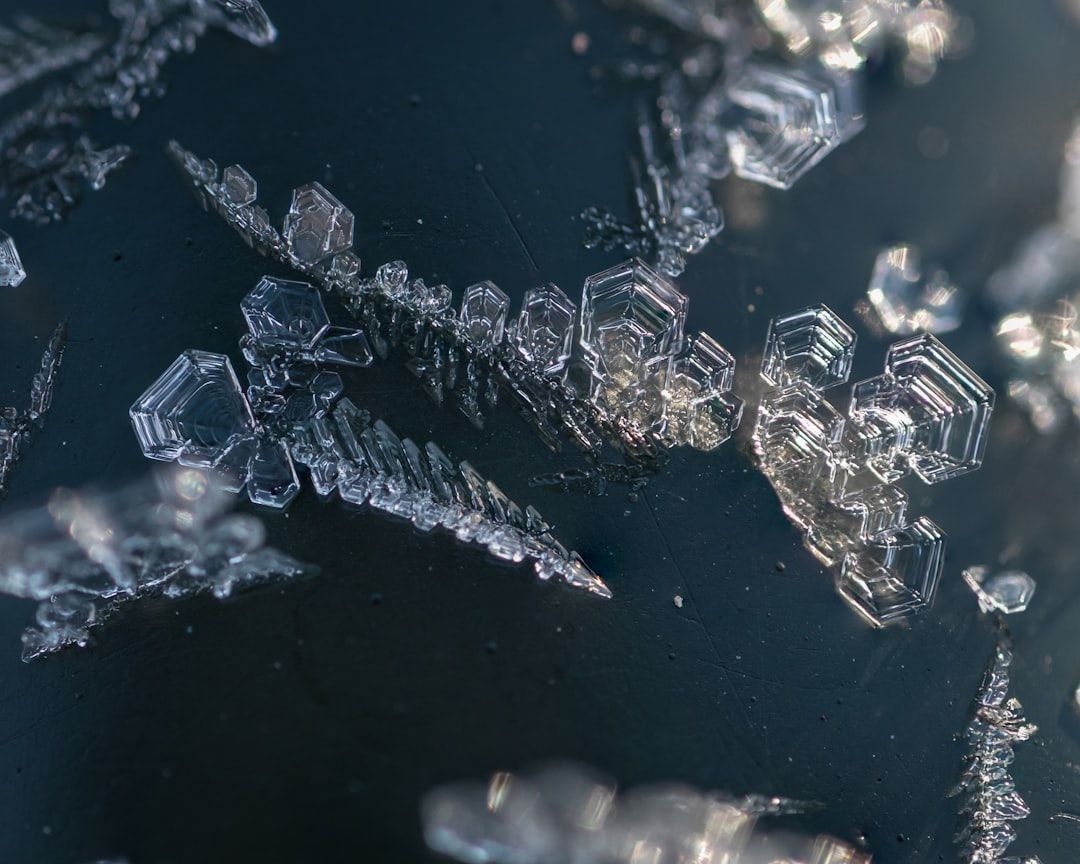
A Paradigm Shift in Prebiotic Chemistry (Image Credits: Unsplash)
Deep within interstellar clouds, icy dust grains may have quietly assembled the molecular foundations of life well before the birth of stars and planets.
A Paradigm Shift in Prebiotic Chemistry
Researchers revealed that peptides, the short chains central to proteins, can emerge in the harsh void of space. This finding upended long-held views that complex organics formed only in warmer, wetter environments like early oceans.
The team at Aarhus University conducted experiments mimicking cosmic conditions. They demonstrated peptide formation on frozen dust grains bombarded by radiation. Such processes occurred in the cold interstellar medium, expanding the possible cradles for life’s ingredients.
Simulating the Cosmos in the Lab
Led by Sergio Ioppolo, scientists cooled glycine – the simplest amino acid – to minus 260 degrees Celsius. This temperature replicated the icy mantles coating dust grains in space.
High-energy protons then mimicked cosmic rays, providing the energy to link molecules. The result yielded glycylglycine, the basic dipeptide. Ioppolo noted, “We used to think that only very simple molecules could be created in these clouds. But we have shown that this is clearly not the case.”
The Chemistry Unlocked by Radiation
Cosmic radiation acted as a catalyst, breaking and reforming bonds without liquid water. Experiments also produced ordinary water alongside deuterium-enriched variants and other organics.
All amino acids likely follow the same pathway, co-author Alfred Thomas Hopkinson explained. “All types of amino acids bond into peptides through the same reaction,” he said. “It is therefore very likely that other peptides naturally form in interstellar space as well.”
- Cryogenic ice from glycine serves as the starting material.
- Ionizing radiation supplies activation energy.
- Peptide bonds form on dust grain surfaces.
- Complex molecules emerge alongside water isotopes.
- No liquid phase required, unlike Earth-based models.
From Clouds to Habitable Worlds
These gas clouds eventually collapsed into stars and planets. Minute building blocks settled onto rocky worlds in habitable zones. Ioppolo observed, “If those planets happen to be in the habitable zone, then there is a real probability that life might emerge.”
| Traditional Model | New Space Ice Model |
|---|---|
| Warm, liquid water environments | Cold, solid ice in space |
| Planetary surfaces or vents | Interstellar dust grains |
| Post-star formation | Pre-stellar clouds |
The study appeared in Nature Astronomy on January 20. It bolsters evidence from meteorites and comets carrying organics.
Broader Horizons for Astrobiology
This discovery suggests life’s precursors abound across the universe. Complex molecules form naturally in space, delivered via impacts to nascent planets.
Future work will probe additional peptides and pathways. Such insights narrow the gaps in understanding life’s spark, even if the full recipe remains elusive.
Key Takeaways
- Peptides formed in space ice challenge Earth-centric origin theories.
- Cosmic rays drive chemistry in frigid conditions without water.
- Building blocks likely seeded many habitable planets.
As astrobiologists rethink cosmic chemistry, one truth stands clear: the universe prepared life’s toolkit in its earliest, coldest corners. What do you think about these space-born origins? Tell us in the comments.