Cosmic Mega-Structure Takes Shape Earlier Than Predicted (Image Credits: Unsplash)
Astronomers captured a pivotal moment in cosmic history when a massive protocluster began assembling itself roughly one billion years after the Big Bang, upending expectations for the universe’s structural growth.[1][2]
Cosmic Mega-Structure Takes Shape Earlier Than Predicted
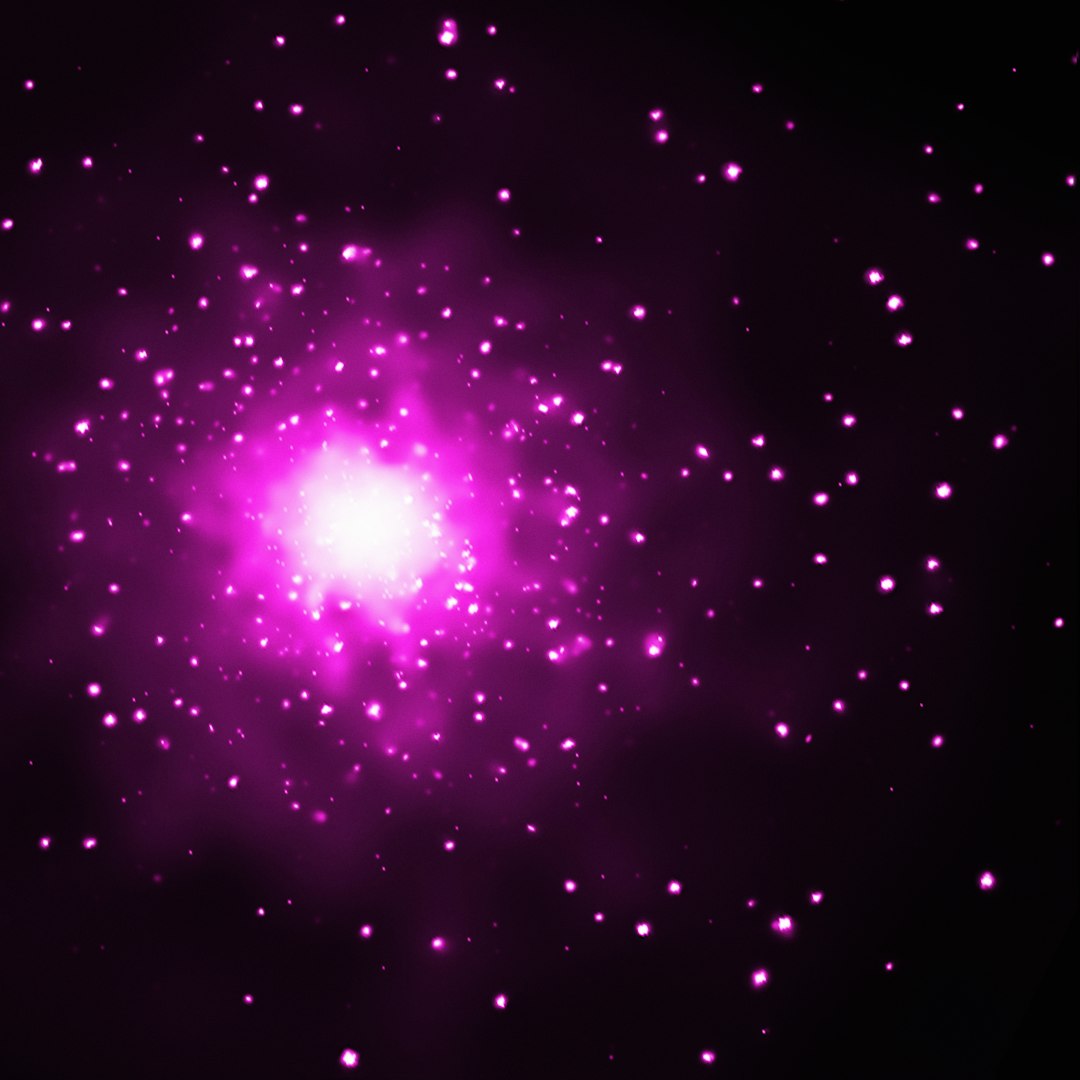
The protocluster, named JADES-ID1, marks the most distant and earliest confirmed example of its kind. Researchers identified it through combined observations from NASA’s Chandra X-ray Observatory and James Webb Space Telescope. This structure boasts a mass equivalent to 20 trillion suns and resides 12.7 billion light-years from Earth.[1]
Galaxy clusters rank among the universe’s grandest formations, housing hundreds or thousands of galaxies within vast reservoirs of superheated gas and dark matter. JADES-ID1 qualifies as a protocluster because it occupies an initial, turbulent formation stage. In time, it will mature into a full-fledged cluster. Yet its appearance so soon after the universe’s birth defies standard models, which anticipated such developments two or three billion years later.[3]
“This may be the most distant confirmed protocluster ever seen,” stated Akos Bogdan of the Center for Astrophysics at Harvard & Smithsonian, who led the study. “JADES-ID1 is giving us new evidence that the universe was in a huge hurry to grow up.”[1]
Twin Telescopes Provide Definitive Proof
Confirmation required the unique capabilities of two premier observatories. The James Webb Space Telescope revealed at least 66 potential member galaxies bound by gravity within the JADES field. Meanwhile, Chandra detected a sprawling cloud of hot gas, heated to millions of degrees by inbound shock waves and emitting X-rays.[2]
This overlap proved crucial. The JADES survey area coincides with the Chandra Deep Field South, home to humanity’s deepest X-ray exposure. Such alignment enabled the detection of faint signals from this remote epoch. An earlier analysis by Qiong Li and Christopher Conselice from the University of Manchester identified five other protocluster candidates in the same region, but only JADES-ID1 showed the telltale hot gas envelope.[1]
- Webb’s infrared vision pierced cosmic dust to map galaxies.
- Chandra’s X-ray sensitivity uncovered the superheated intergalactic medium.
- Together, they confirmed gravitational binding and gas heating hallmarks of protocluster formation.
- Mass sufficient for X-ray glow: 20 trillion solar masses.
- Redshift z ≈ 5.7, pinpointing the one-billion-year mark.
Models Face Overhaul as Records Shatter
Standard cosmological simulations struggled to account for JADES-ID1’s precocity. They posited insufficient time and galactic density for a structure this massive at such youth. The prior record holder for an X-ray-emitting protocluster dated to about three billion years post-Big Bang.[3]
“We thought we’d find a protocluster like this two or three billion years after the Big Bang – not just one billion,” noted Qiong Li of the University of Manchester. “Before, astronomers found surprisingly large galaxies and black holes not long after the Big Bang, and now we’re finding that clusters of galaxies can also grow rapidly.”[2]
The discovery joins a pattern of unexpectedly mature features in the young universe, including oversized galaxies and supermassive black holes. Astronomers now must refine theories on dark matter’s influence, gas dynamics, and early gravitational collapse.
Probing the Universe’s Rapid Rise
Galaxy clusters serve as cosmic laboratories for probing dark energy, dark matter, and universal expansion. Observations like JADES-ID1 offer direct glimpses into their infancy, akin to witnessing an assembly line in motion. “It’s very important to actually see when and how galaxy clusters grow,” remarked co-author Gerrit Schellenberger of the Center for Astrophysics. “It’s like watching an assembly line make a car, rather than just trying to figure out how a car works by looking at the finished product.”[1]
| Feature | JADES-ID1 | Previous Record |
|---|---|---|
| Time After Big Bang | ~1 billion years | ~3 billion years |
| X-ray Detection | Hot gas cloud | Hot gas cloud |
| Mass | 20 trillion suns | Not specified |
Findings appeared in a Nature paper published this week, building on prior work in Monthly Notices of the Royal Astronomical Society.[2]
Key Takeaways
- The universe assembled mega-structures far quicker than models foresaw.
- Chandra and Webb synergy unlocks distant secrets.
- Future studies must explain this accelerated growth.
This breakthrough underscores the cosmos’s relentless pace of evolution and invites deeper scrutiny of its foundational laws. What implications do you see for our understanding of the early universe? Share your thoughts in the comments.