Early Universe Behemoths Defy Expectations (Image Credits: Unsplash)
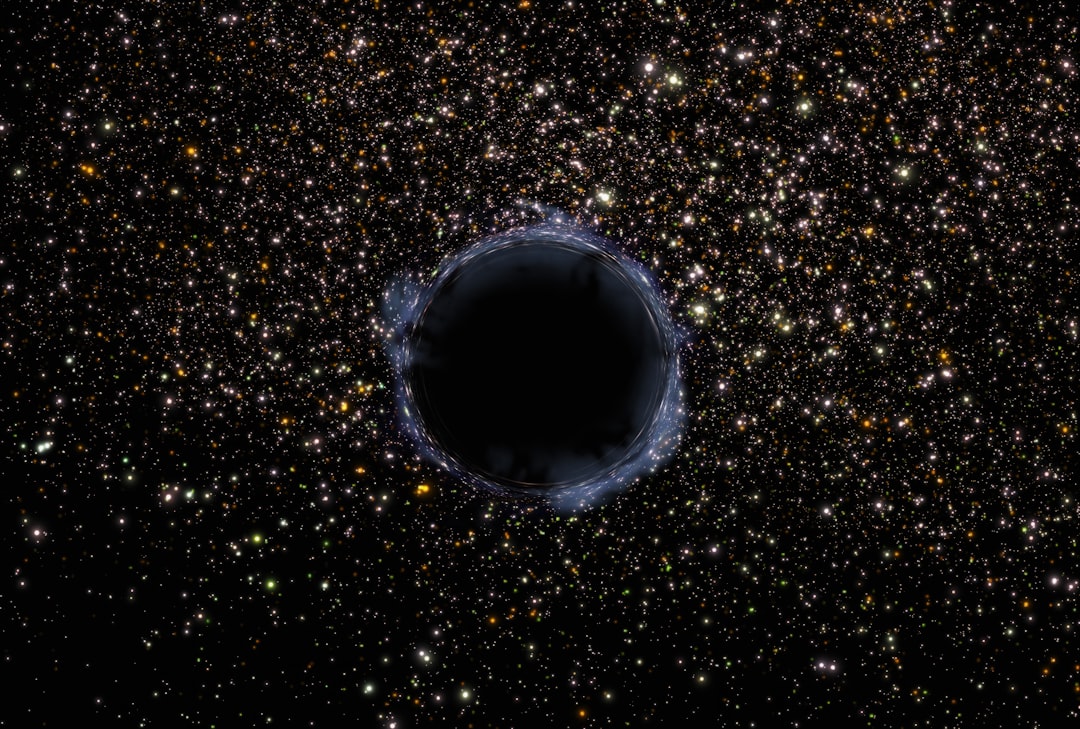
Recent observations from the James Webb Space Telescope have strengthened evidence for a pathway where the universe’s first supermassive black holes emerged directly from collapsing clouds of pristine gas, upending long-held assumptions about their birth.[1][2]
Early Universe Behemoths Defy Expectations
Astronomers long puzzled over supermassive black holes that appeared remarkably soon after the Big Bang. These cosmic titans, with masses millions or billions of times that of the Sun, dominated galaxies when the universe was just hundreds of millions of years old.[1]
Traditional models suggested they grew slowly from the remnants of dead stars. Yet James Webb’s sharp infrared gaze revealed structures that grew too massive too quickly for such gradual accretion. Priyamvada Natarajan, a theoretical astrophysicist at Yale University, highlighted this challenge during a recent session at the World Economic Forum in Davos.[1]
Her team proposed an alternative over a decade ago: direct collapse. In this scenario, vast gas clouds in the early universe collapsed wholesale into black hole seeds weighing tens of thousands to hundreds of thousands of solar masses.[1]
Traditional Growth Versus Radical Direct Formation
Under the classic view, black holes began as stellar-mass objects from collapsed stars, then merged and fed on gas over eons. This process struggled to produce billion-solar-mass giants in under a billion years.
Direct collapse offered a shortcut. Pristine gas, unpolluted by stellar metals, resisted fragmentation into stars and instead funneled straight into a singularity. These hefty seeds then rapidly ballooned by devouring surrounding material.
| Formation Pathway | Seed Mass | Timeline Fit |
|---|---|---|
| Stellar Remnants | Solar masses | Slow growth |
| Direct Collapse | 10,000–100,000 solar masses | Rapid early formation |
Such mechanisms better matched the observed early overmassive black holes, where the core outshone the host galaxy’s stars.[1]
Spotlight on JWST’s Breakthrough Observations
James Webb pinpointed compelling examples. In UHZ1, an accreting supermassive black hole shone 470 million years after the Big Bang, boasting about 10 million solar masses.[1]
The Infinity galaxy presented another clue. There, two compact nuclei from colliding disk galaxies framed ring-like structures, with a supermassive black hole nestled in a dense gas reservoir between them. This setup suggested direct collapse triggered by the merger’s turbulence.
- UHZ1: Demonstrates early, rapid accretion consistent with large seeds.
- Infinity galaxy: Collision-induced gas dynamics favor wholesale collapse.
- Overmassive systems: Black holes dominate light, validating predictions.
- Spectral signatures: Confirmed via James Webb and Chandra X-ray data.
Natarajan noted the validation: “It’s a thrill… to be around and, within one career lifetime, to have had the fortune of making predictions that were testable, have been tested, and have been validated.”[1]
Broader Ripples Through Cosmic Evolution
These findings reshaped views on galaxy formation. Supermassive black holes, once thought to follow stars, may have led the charge, influencing early galaxy assembly.
Einstein’s general relativity, which birthed black hole theory, also powers everyday tech like GPS, where satellite clocks adjust for gravitational effects. Natarajan emphasized: “Black holes have a very intimate relationship with each and every one of you… You got here to Davos because the same equations that govern and explain black holes actually guide GPS.”[1]
Key Takeaways:
- Direct collapse provides massive seeds for swift black hole growth.
- JWST observations like UHZ1 confirm early supermassive presence.
- These giants shaped galaxies from the outset.
James Webb continues to peel back the early universe’s veil, fostering what Natarajan called “cosmic humility” as humanity traces its place in the grand narrative.
This shift promises deeper insights into the cosmos’s infancy. What do you think about these starless black hole origins? Tell us in the comments.