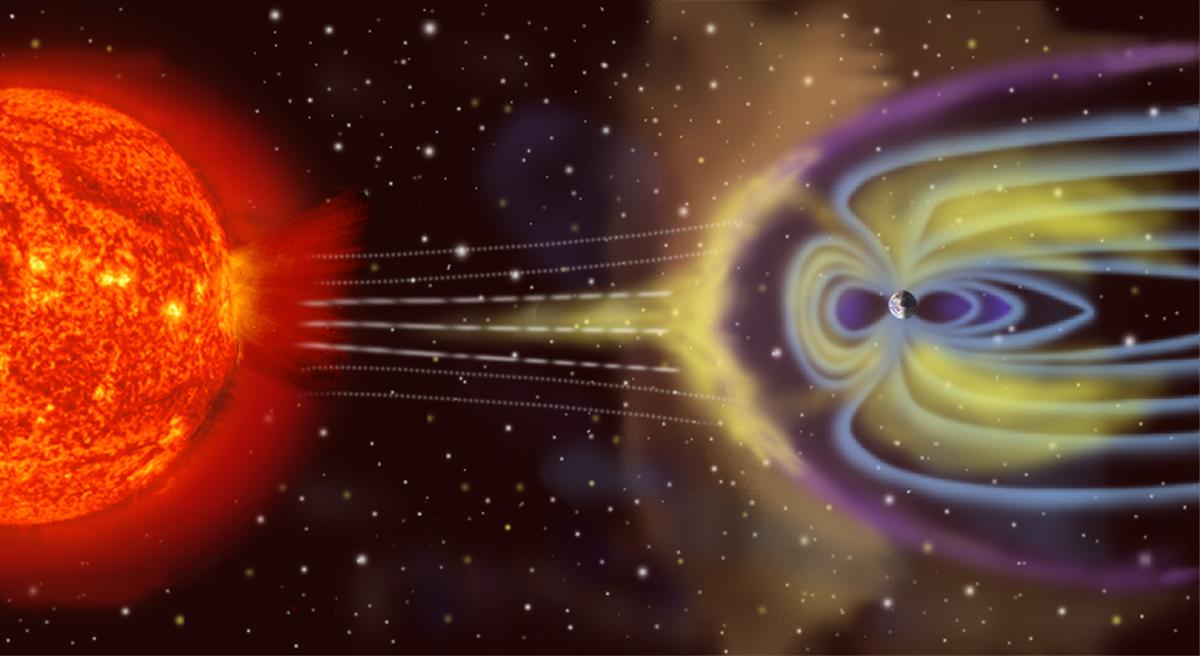
Sudden Surge Catches Skywatchers by Surprise (Image Credits: Upload.wikimedia.org)
Fast solar wind from a sprawling coronal hole on the sun swept past Earth last night, igniting a minor G1 geomagnetic storm that unsettled the planet’s protective magnetic shield.[1][2]
Sudden Surge Catches Skywatchers by Surprise
Solar wind speeds spiked starting at 9 UTC on January 28, propelling the geomagnetic disturbance into full effect overnight. This event elevated conditions from quiet to unsettled and active levels, with isolated G1 storm thresholds crossed.[1]
Observers in higher latitudes reported heightened auroral activity as the storm peaked. The NOAA had forecasted the potential earlier that day, alerting enthusiasts to prepare for possible northern lights sightings. Kp indices, which measure magnetic fluctuations, climbed from 1-3 to higher values signaling the minor storm. Such disturbances, though not severe, still pack enough punch to expand aurora ovals southward.
Roots in the Sun’s Dynamic Atmosphere
A coronal hole – a cooler, less dense region in the sun’s corona – served as the source of the high-speed solar wind stream. These holes channel plasma outward at velocities far exceeding normal solar wind, racing toward Earth at hundreds of kilometers per second. The interplanetary magnetic field turned southward, a key factor that allowed energy transfer into Earth’s magnetosphere.
No coronal mass ejections contributed to this episode; instead, the steady stream from the hole drove the activity. Solar flare output remained low, limited to C-class events like a C2.7 flare from active region AR4342 on January 27. Six sunspot regions dotted the Earth-facing disk, but none posed major threats.[1]
Aurora Visibility Expands Across Northern Regions
The storm opened windows for auroras as far south as parts of the northern U.S. and Europe. Clear skies and persistent southward Bz components enhanced viewing chances in select areas.
- Montana and Maine in the U.S.
- Seattle and Minneapolis
- Edinburgh in Scotland
High-latitude viewers from Iceland to Canada likely witnessed the most vivid displays. Power grids and satellite operators monitored closely, though G1 levels posed minimal risks to infrastructure. Radio communications in polar regions experienced brief disruptions.
Forecasts Point to Lingering Effects
Geomagnetic conditions stayed unsettled to active through January 29, with fast solar wind sustaining the influence. Flare probabilities held low at 25% for M-class and 5% for X-class events. No new Earth-directed CMEs appeared in recent coronagraph views.
Activity could pulse again if the coronal hole stream persists. Skywatchers should check real-time Kp updates for evening opportunities. For detailed tracking, resources like EarthSky provide ongoing solar updates.[3]
Key Takeaways
- G1 storm originated from coronal hole solar wind, not flares or CMEs.
- Auroras visible in northern U.S., Canada, and parts of Europe.
- Low risk to technology; high reward for aurora hunters.
This minor geomagnetic event underscores the sun’s constant influence on our planet, reminding us of the delicate balance in space weather. As solar activity ebbs and flows, such storms offer spectacular natural shows amid routine solar cycles. What auroras did you spot last night? Share your sightings in the comments.