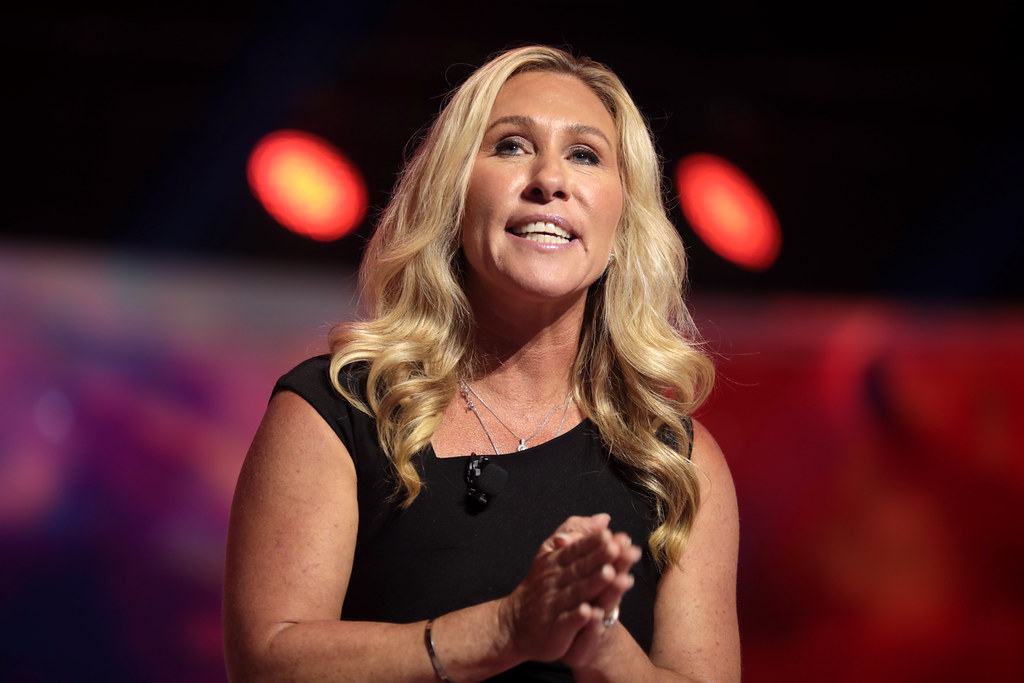
Bipartisan Breakthrough on Hidden Files (Image Credits: Flickr)
Representative Marjorie Taylor Greene has emerged as a vocal advocate for Jeffrey Epstein’s victims, leading a bipartisan effort to expose related government files.
Bipartisan Breakthrough on Hidden Files
On November 19, the House and Senate passed the Epstein Files Transparency Act, mandating the release of all unclassified records, documents, and investigative materials from the Department of Justice.[1]
Greene, who joined forces with Republican Tom Massie and Democrat Ro Khanna, framed the files as emblematic of deep corruption in Washington. In December, she went further by proposing to invite Epstein’s victims to the Oval Office, a move rejected by former President Donald Trump. This campaign marked a notable shift for Greene, who recently resigned from the House and distanced herself from her longtime MAGA allegiance. Her actions garnered widespread attention, including an appearance on The View where she highlighted the Republican Party’s challenges with women voters.[1]
Personal Ties Fuel Her Party Critique
Greene described the Epstein matter as deeply personal, noting she knew women who had endured sexual abuse, even though she had not experienced it herself. A New York Times profile captured her sentiment: she could empathize with women confronting powerful men.[1]
She linked Trump’s handling of the case and his treatment of female lawmakers to broader reasons why women largely avoid Republican votes. Greene emphasized that women in leadership roles shape messages for younger generations, including her own daughters. Yet this introspection raises questions about the consistency of her concern for women’s experiences across issues.[1]
Silence on Assault Claims Against GOP Figures
Greene’s record shows selective support for women facing allegations against prominent Republicans. After a New York jury found Trump liable for sexually assaulting E. Jean Carroll in 2023, she compared him to Jesus Christ.[1]
She remained quiet during Christine Blasey Ford’s testimony against Supreme Court nominee Brett Kavanaugh. For Pete Hegseth, Trump’s nominee for defense secretary accused of blocking a hotel door during an alleged 2017 assault, Greene celebrated his confirmation as making America safer. She also defended Matt Gaetz amid a House Ethics Committee finding of substantial evidence of sexual activity with a minor.
- Trump-E. Jean Carroll: Likened to Jesus post-verdict.
- Brett Kavanaugh: No defense of Ford.
- Pete Hegseth: Hailed as a “change agent” despite police report.[1]
- Matt Gaetz: Proudly backed from the start.
Abortion Stance Linked to Preventable Deaths
Greene hailed the 2022 overturn of Roe v. Wade as a “great victory for God and the unborn.” She backed Texas’s 2021 Heartbeat Protection Act, which bans abortion after five or six weeks – often before women know they are pregnant – and has inspired similar laws in over 10 states.[1]
These policies have drawn scrutiny for fatal delays in care. In 2021, Texas mother Josseli Barnica died from sepsis during a high-risk delivery because doctors waited for the fetal heartbeat to stop, fearing prosecution; experts said she likely would have survived otherwise. Georgia’s version contributed to 28-year-old Amber Nicole Thurman’s preventable death in 2022 after delays in removing fetal tissue. Greene dismissed Thurman’s case, tweeting that Kamala Harris lied and attributing it to abortion pills.[1]
Key Takeaways
- Greene’s Epstein efforts achieved bipartisan success but contrast with her defenses of accused Republicans.
- Her anti-abortion support aligns with laws tied to maternal deaths like Barnica’s and Thurman’s.
- True women’s advocacy requires addressing bodily autonomy alongside elite accountability.
Greene’s pivot signals potential change in GOP dynamics, but enduring credibility demands tackling policies that undermine women’s control over their bodies. What aspects of her evolving positions resonate most with you? Share in the comments.