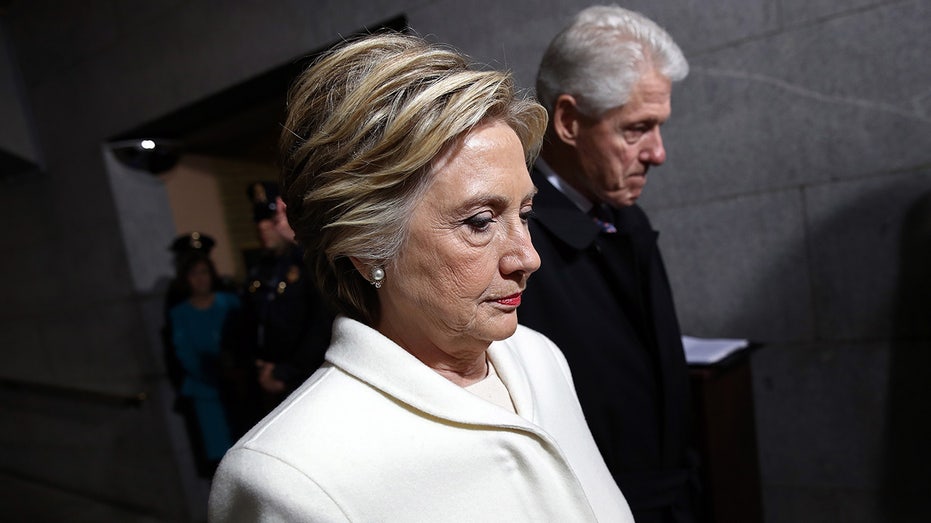
Escalation from Subpoena to Standoff (Image Credits: A57.foxnews.com)
Washington – Former President Bill Clinton and former Secretary of State Hillary Clinton agreed to testify before the House Oversight Committee in its probe into Jeffrey Epstein’s activities, averting a full House vote on holding them in contempt.[1][2]
Escalation from Subpoena to Standoff
The House Oversight Committee, led by Chairman James Comer, R-Ky., issued subpoenas to the Clintons as part of its examination into Epstein’s high-profile connections. Epstein, the convicted sex offender who died in 2019, maintained ties with numerous influential figures, including Bill Clinton, whose photos surfaced in Department of Justice files released in December 2025.
The Clintons initially declined to appear, submitting sworn statements that detailed their limited knowledge of Epstein’s crimes. Bill Clinton acknowledged past acquaintance but stated he severed contact years earlier. Hillary Clinton maintained she never met or spoke with Epstein. Committee members advanced a contempt resolution last month, with nine Democrats joining Republicans in committee approval, signaling bipartisan concern over subpoena compliance.[3]
Democrats Praise Compliance, Eye Future Precedents
House Democrats welcomed the Clintons’ decision, viewing it as a resolution that reinforced congressional authority without unnecessary confrontation. Rep. Maxwell Frost, D-Fla., one of the Democrats who supported the contempt measure in committee, emphasized the importance of testimony regardless of status. “I think no matter who you are, if Congress wants you to testify, you should testify,” Frost said.[3]
Others, including Reps. Pete Aguilar, D-Calif., and Bennie Thompson, D-Miss., argued the agreement undercut Republican accusations of evasion. They predicted no fresh insights on Epstein would emerge but highlighted the strengthened subpoena power for potential use against future targets. Several Democrats, such as Reps. Ted Lieu and Ro Khanna, quickly pivoted to suggest applying the precedent to former President Donald Trump, given his own past associations with Epstein.
Republicans Claim Victory in Holding Power Accountable
Chairman Comer celebrated the outcome as proof of effective pressure. “Once it became clear that we would hold them in contempt, the Clintons completely caved,” he stated. Comer reiterated that Republicans and Democrats alike affirmed no one stands above the law, including the Clintons.[1]
The depositions, scheduled for February 26 for Hillary Clinton and February 27 for Bill Clinton, will occur as transcribed and filmed sessions. Negotiations continue over whether transcripts become public, with the Clintons preferring privacy. Their legal team accused the probe of partisan motives aimed at embarrassing political opponents rather than uncovering facts.
Political Ramifications and Lingering Questions
The deal resolved an immediate crisis but ignited discussions on subpoena precedents. Democrats warned that pursuing former presidents sets a template they intend to follow, potentially subpoenaing Trump family members post-term. Republicans countered that compliance demonstrated accountability, though skepticism persists about revelations from the Clintons given their prior statements.
- Subpoenas issued amid Epstein files review.
- Initial refusal led to sworn affidavits.
- Committee contempt approval with Democratic votes.
- Testimony dates set for late February 2026.
- Debate over public access to depositions.
- Calls grow for Trump testimony under same rules.
Key Takeaways
- The Clintons’ compliance ends the contempt threat but may yield little new on Epstein.
- Subpoena power gains bipartisan backing, eyeing high-profile figures.
- Political tit-for-tat looms in future congressional battles.
This development reaffirms Congress’s reach into past administrations, promising depositions that could clarify – or confirm – long-standing Epstein associations. What do you think this means for accountability in Washington? Tell us in the comments.