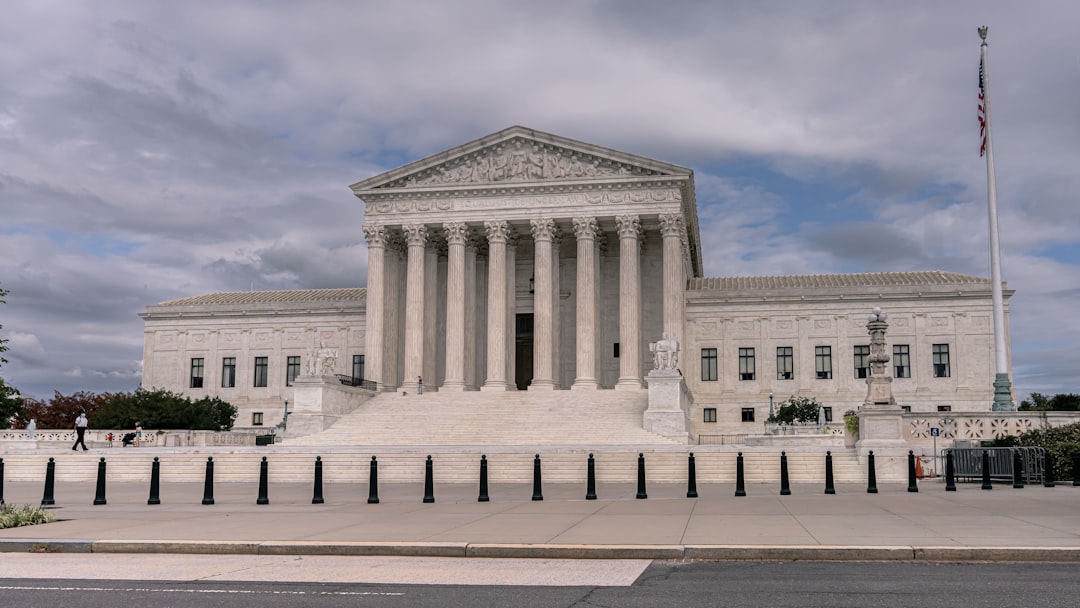
Partisan Symmetry Defines High Court Stance (Image Credits: Unsplash)
California – The U.S. Supreme Court rejected a last-minute challenge from state Republicans, allowing voters’ approved redistricting plan to take effect for the upcoming midterm elections.[1][2]
Partisan Symmetry Defines High Court Stance
The decision echoed the court’s handling of a similar Texas case last month. There, justices permitted a Republican-favoring map despite objections. Justice Samuel Alito, joined by Justices Clarence Thomas and Neil Gorsuch, noted in a concurrence that both states pursued “partisan advantage pure and simple.”[1]
California’s map emerged as a direct response. Democratic leaders crafted it to offset Texas’ gains, which President Donald Trump championed to bolster GOP House control. Analysts predict the California lines could deliver five extra seats to Democrats, neutralizing Republican advances.[2]
The unsigned order arrived just days before the February 9 candidate filing deadline. No justices publicly dissented, underscoring federal courts’ reluctance to intervene in state redistricting near elections.
Voters Approve Proposition 50 Amid Controversy
California’s independent redistricting commission drew the prior map after the 2020 census. Lawmakers then proposed Proposition 50 to override it temporarily through 2030. Voters passed the measure roughly two-to-one in a November 2025 special election.[2]
Governor Gavin Newsom backed the ballot initiative. He later celebrated the Supreme Court outcome on social media, stating, “Donald Trump said he was ‘entitled’ to five more Congressional seats in Texas. He started this redistricting war. He lost, and he’ll lose again in November.”[3]
The legislature adopted the new boundaries in August 2025. Proponents argued it restored balance after other states shifted maps mid-decade.
Republicans’ Challenge Centers on Race Claims
California Republicans filed suit days after the election. They targeted 16 districts allegedly drawn to favor Latino voters, alleging a constitutional violation. A three-judge federal panel dismissed the case, with Judge Josephine Staton ruling that “the evidence of any racial motivation driving redistricting is exceptionally weak, while the evidence of partisan motivations is overwhelming.”[2]
The Trump administration echoed the critique, labeling the map a “racial gerrymander.” Challengers highlighted consultant Paul Mitchell’s public comments on preserving Latino voting power. Yet the high court saw no basis for emergency relief.
Prior precedents bar federal review of pure partisan gerrymanders. This left racial claims as the challengers’ narrow path, which courts deemed unpersuasive.
Redistricting Battles Spread Nationwide
The California ruling fits a larger wave of mid-decade changes. Republicans lead efforts in Florida, while Democrats push in Maryland. Ongoing disputes dot New York, Utah, Virginia, and Louisiana.[1]
- In New York, a judge ordered redrawing of a district held by Republican Rep. Nicole Malliotakis to remedy vote dilution for Black and Latino communities.
- Utah Republicans sued over a court-picked map that might aid Democrats.
- Virginia courts struck down a Democratic redistricting amendment.
- Louisiana awaits a Supreme Court verdict that could weaken the Voting Rights Act.
These fights could reshape the House ahead of November balloting. With Republicans clinging to a slim majority, even small shifts carry weight.
Key Takeaways:
- California’s map, favoring Democrats by five seats, proceeds after voter approval and court wins.
- Texas counterpart balances potential GOP gains, per justices’ observations.
- Partisan redraws evade federal scrutiny, fueling state-level clashes.
This Supreme Court action preserves voter choice in California while highlighting partisan mapmaking’s endurance. Battles elsewhere promise more drama before Election Day. What do you think of these redistricting moves? Tell us in the comments.