Newborns Predict Breaks in Musical Flow (Image Credits: Sciencenews.org)
Recent research demonstrates that infants arrive equipped with neural tools to track musical beats and organize the visual world, reshaping understandings of early cognition.
Newborns Predict Breaks in Musical Flow
Researchers recorded brain activity from nearly 50 newborns less than 48 hours old as they slept. Electroencephalography captured responses to piano pieces by Bach, alongside versions where rhythms or melodies were scrambled. The infants’ brains registered surprise only when rhythms changed, signaling an ability to anticipate patterns.
Neural signals indicated that these tiny brains followed the beat but ignored melodic alterations. This capacity emerged despite minimal postnatal experience. Scientists linked it to prenatal exposure, where a mother’s heartbeat and footsteps provided rhythmic cues through the womb.[1]
“In the womb, the rhythmic features are already very predominant in the listening environment of the baby,” noted neuroscientist Roberta Bianco, who led the study published in PLOS Biology.
Two-Month-Olds Display Adult-Like Category Recognition
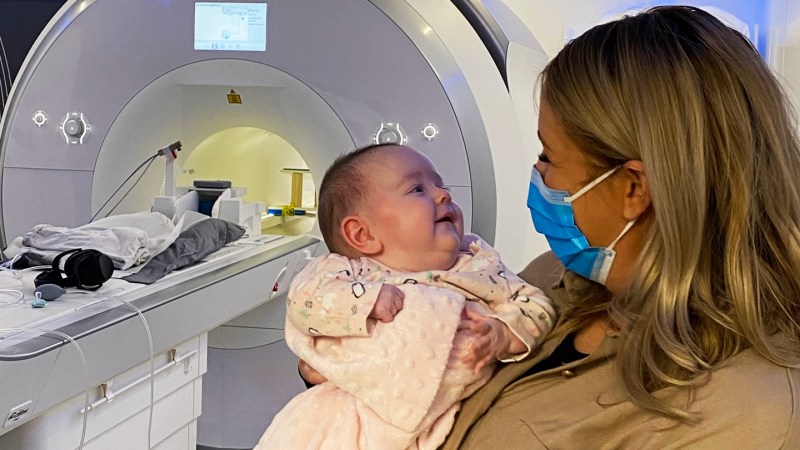
Functional MRI scans of over 100 awake two-month-olds revealed distinct brain patterns for different object types. Infants viewed images of animals, foods, and household items projected above them. The ventral visual cortex, key to object recognition, activated similarly to adults, with category-specific responses.
This finding pushes back the timeline for visual categorization. Traditional views held that such skills developed gradually through experience. Yet these babies showed structured processing after just eight weeks of life. The setup demanded exceptional stillness from the infants, highlighting the technical feat.[1]
Roots in Prenatal Wiring and Rapid Adaptation
Both studies challenge the century-old idea of infancy as a “blooming, buzzing confusion,” coined by psychologist William James. Instead, newborns and young infants organize sensory input from the outset. Rhythmic sensitivity likely stems from womb acoustics, which amplify beats but muffle pitches.
Visual skills may arise from innate structures or swift learning post-birth. Researchers debate whether genetics or early environment drives these abilities. Amniotic fluid filters complex melodies, explaining why rhythm trumps tune in newborns.
- Newborns detect rhythmic disruptions but not melodic ones in music.
- Two-month-olds’ ventral cortex distinguishes animals from objects like adults.
- Prenatal rhythms prepare brains for temporal patterns.
- Visual categories appear structured early, innate or learned quickly.
- These skills hint at broader cognitive readiness.
Implications for Development and Beyond
The discoveries open doors to understanding how brains bootstrap learning. While neural tracking shows promise, full beat perception – like syncing movements to music – takes years. Experts caution against equating early signals with mature skills.
“These findings argue against a slow, bottom-up development of visual category representations,” said cognitive psychologist Michael Frank of Stanford University.
Key Takeaways
- Brains of babies under 48 hours old anticipate musical rhythms via EEG-detected surprise.
- Two-month-olds categorize visuals in ways mirroring adult brain activity.
- Prenatal exposure to maternal rhythms primes newborns for beat prediction.
These insights portray infants as far more capable at launch than once thought, poised to navigate a structured world. What implications do you see for parenting or education? Share your thoughts in the comments.