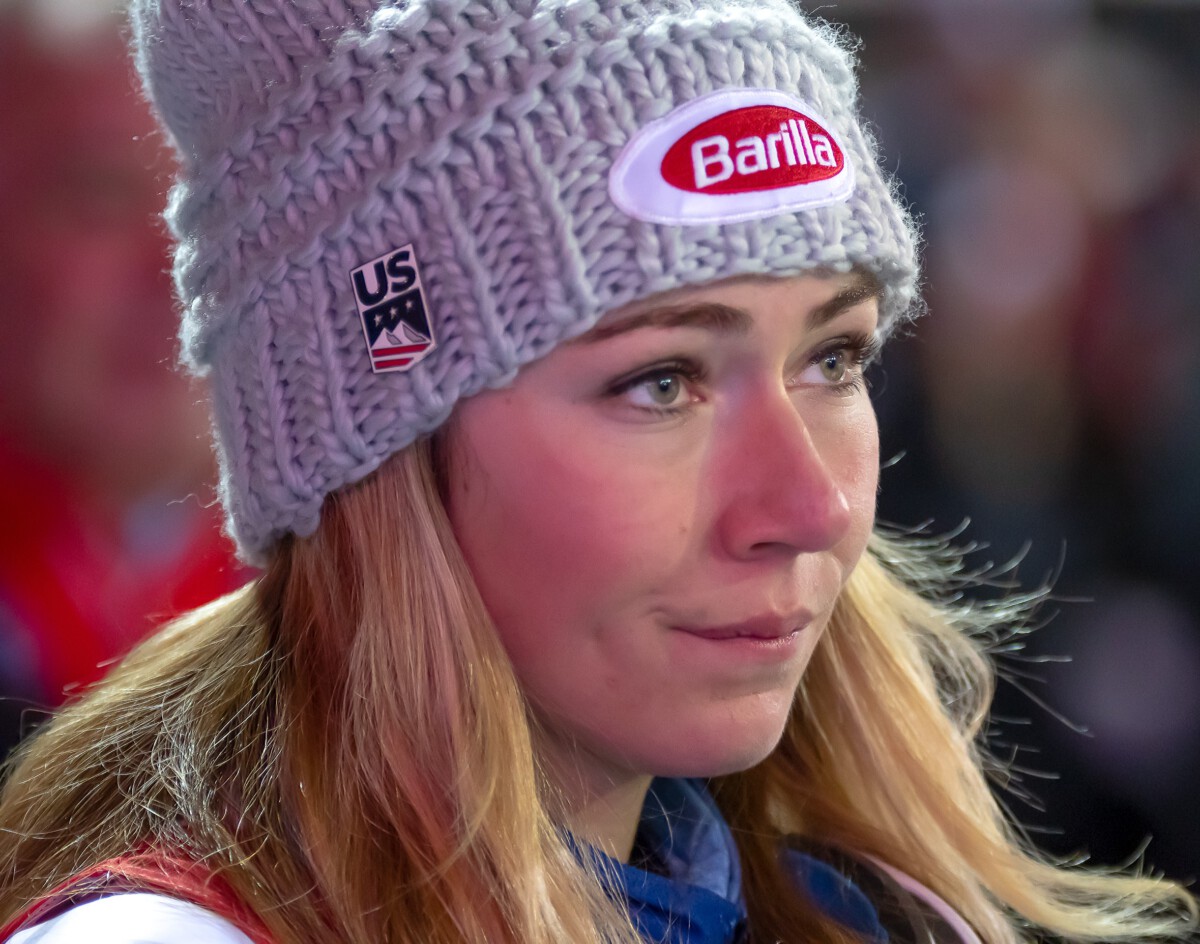
A Teenage Prodigy Thrust into Stardom (Image Credits: Upload.wikimedia.org)
Alpine skiing icon Mikaela Shiffrin arrives at her fourth Winter Olympics amid a backdrop of profound personal trials and hard-won resilience.[1][2]
A Teenage Prodigy Thrust into Stardom
Shiffrin captured global attention at age 18 by claiming Olympic slalom gold at the 2014 Sochi Games, the youngest skier ever to do so.[1] She followed with giant slalom gold in PyeongChang four years later, solidifying her status as a dominant force with 108 World Cup victories, the most in history.[1]
Success came swiftly, but tragedy struck in February 2020 when her father, Jeff, died unexpectedly after falling from the roof of their family home. The loss halted her season for 10 months. Her mother, Eileen, later recalled a week when Shiffrin could not leave bed, eat, or drink, raising doubts about her future in the sport.[1]
Grief’s Grip During Beijing 2022
Beijing marked a low point as grief permeated Shiffrin’s performances. She entered five events but failed to medal, including double DNFs in giant slalom that left her in tears on live television. The emotional weight proved unpredictable, derailing even strong training days.[1][2]
Post-Games, Shiffrin sought therapy to process the loss. She described grief as “unpredictable, nonlinear, and unstructured,” hoping initially to set it aside for competition but finding it impossible. This period sparked “indescribable growth” beyond skiing, reshaping her approach to the sport.[2]
The Freak Injury That Sparked PTSD
In November 2024, during a World Cup giant slalom in Killington, Vermont, Shiffrin crashed into a gate, suffering a puncture wound to her abdomen that pierced her abdominal wall and caused severe bleeding. The pain felt like “a knife stabbing me, but the knife was actually still inside of me.” She required surgery and sidelined for two months.[1][3]
Physical recovery yielded to mental hurdles. PTSD symptoms emerged, including flashbacks, a “strange disconnect” between mind and body on snow, and hesitation in giant slalom runs, as if “running in molasses.” Cumulative traumas – from her father’s death to her fiancé’s crash – intensified the diagnosis. Shiffrin detailed her battle in a May 2025 Players’ Tribune essay.[3]
Prior injuries compounded the toll: a 2015 MCL tear sidelined her for two months, while a January 2024 Cortina downhill crash brought MCL sprain, bone bruise, and ankle issues, costing another six weeks.[4]
Forging a Path Back to Peak Form
Therapy and repeated exposure to start gates helped Shiffrin rebuild trust in her body. She returned to win her 100th World Cup race in Italy and secured a ninth slalom crystal globe. A giant slalom podium arrived just weeks before Milano Cortina, signaling breakthrough.[1]
| Injury | Date/Event | Time Missed |
|---|---|---|
| Abdominal puncture | Nov 2024, Killington GS | 2 months |
| MCL sprain, ankle | Jan 2024, Cortina downhill | 6 weeks |
| MCL tear | Dec 2015, Åre GS warmup | 2 months |
Now 30, Shiffrin feels “like myself again,” rediscovering joy in training over results.[5]
A Focused Return to Olympic Glory
For Milano Cortina, Shiffrin limits her schedule to three events: team combined on February 10, giant slalom on the 15th, and slalom on the 18th. She pairs with Breezy Johnson in team combined, embracing pressure with calm.[1]
Her mindset emphasizes gratitude and presence: “I think my values guide me to arrive in Cortina with an open mind, and an overwhelming sense of gratitude that I get to be here after everything.”[2] This evolution positions her as a medal favorite, her resilience a testament to human endurance.
- Shiffrin’s 108 World Cup wins make her skiing’s most decorated athlete, despite setbacks.
- Therapy transformed grief and PTSD into sources of growth and focus.
- Selective racing in 2026 prioritizes quality over quantity for peak performance.
Shiffrin’s story underscores that true champions conquer inner mountains as much as snowy slopes. What do you think of her comeback? Tell us in the comments.