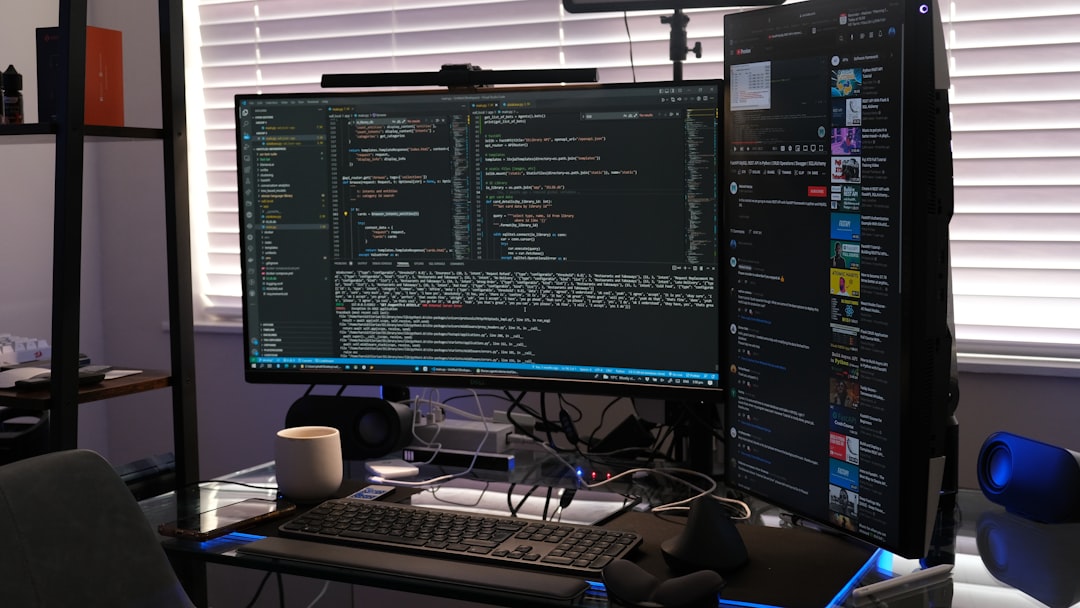
AI Tools Fall Short on Complex Projects (Image Credits: Unsplash)
Artificial intelligence continues to transform software development, prompting engineers to evaluate its efficiency against potential pitfalls in code quality and reliability.
AI Tools Fall Short on Complex Projects
Even as adoption grows, developers report that AI coding assistants frequently introduce bugs, security flaws, and maintenance headaches into projects. These tools excel at quick fixes but struggle with intricate systems involving numerous dependencies. Engineers must juggle vast context, a task where models like Claude Code and Codex often falter by overlooking critical details or misjudging project implications.
Experienced developers spot these inconsistencies easily, yet AI-generated outputs demand extensive review. The result mirrors junior-level work: functional in the moment but risky over time. Recent feedback highlights how such “vibe coding” solves immediate needs while complicating future updates.
Validation Features Offer Hope, But Questions Remain
New capabilities in leading tools aim to address these issues through built-in testing and auditing. OpenAI’s Codex now executes test suites in isolated environments, iterating until code meets developer criteria. Anthropic’s Claude Code incorporates similar routines for security and planning, with users noting strengths in intent comprehension versus precise instruction-following.
OpenAI CEO Sam Altman expressed enthusiasm for agents that validate code autonomously during a press call. Still, OpenAI President Greg Brockman acknowledged the challenge in a recent X post: “Managing AI generated code at scale is an emerging problem, and will require new processes and conventions to keep code quality high.” Developers debate the right expectations – mere assistants or rigorous auditors?
SaaS Sector Reels from AI-Driven Sell-Off
Anthropic’s recent announcements triggered sharp declines in major software stocks, dubbed the “SaaSpocalypse” by analysts. Shares of ServiceNow, Oracle, Salesforce, AppLovin, Workday, Intuit, CrowdStrike, Factset Research, and Thomson Reuters dropped significantly after news of AI plugins for Cowork and the launch of Claude Opus 4.6 on February 4.
Investors feared traditional SaaS products losing ground to AI-native alternatives. While some recovery followed as companies highlighted their own AI integrations – like ServiceNow partnering with Anthropic – the event exposed ongoing vulnerabilities. Enterprises may shift toward autonomous agents, keeping markets on edge.
- ServiceNow
- Oracle
- Salesforce
- AppLovin
- Workday
Chinese Models Push Boundaries in Video AI
ByteDance’s Seedance 2.0 and Kuaishou’s Kling 3.0 emerged as standout performers in video generation, producing clips nearly indistinguishable from real footage. These tools handle multi-scene prompts with smooth transitions, consistent characters, and varied camera angles, even in high-motion scenarios like dances or fights.
Both support text, images, videos, and audio inputs, generating synchronized sound, lip-sync, and dialogue in multiple languages. Videos remain short – up to 15 seconds – but advances in intent interpretation from prompts mark significant progress. Such capabilities signal intensifying global competition in AI media tools.
Key Takeaways:
- AI coding tools save time but require vigilant oversight to curb “slop” code.
- Testing integrations are improving, yet new workflows will define scalable use.
- AI disruptions ripple from development to markets and creative fields alike.
As AI evolves, developers and investors must navigate its dual nature – accelerating innovation while demanding adapted practices. The path forward hinges on tools that not only generate but also safeguard quality. What strategies are you adopting for AI in your workflow? Share your thoughts in the comments.