Rediscovering a Timeless Design Powerhouse (Image Credits: Images.fastcompany.com)
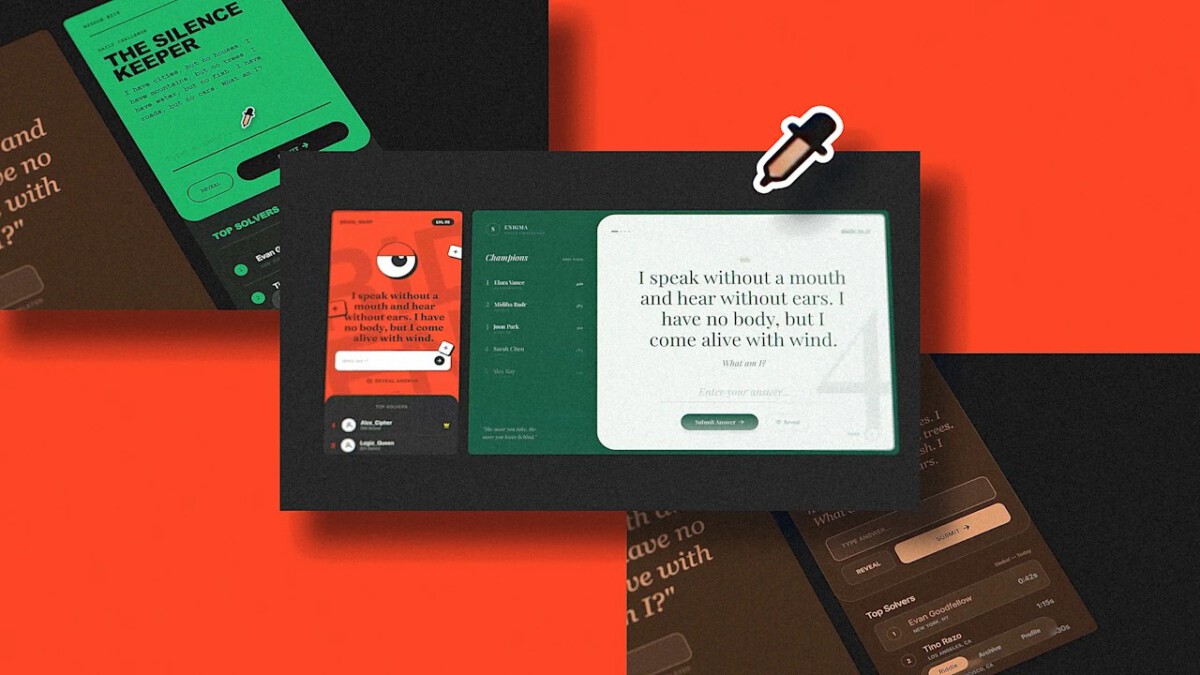
Generative AI tools for UI design gained a familiar yet innovative feature this month with Variant’s introduction of a style-sampling eyedropper.
Rediscovering a Timeless Design Powerhouse
The eyedropper stands as one of computing’s most enduring innovations, first appearing in SuperPaint back in 1973 to sample hues from digital canvases. MacPaint popularized it for everyday creators in 1984, while Adobe Photoshop cemented its iconic status in 1990 for color picking. By 1996, Adobe Illustrator expanded its reach, allowing users to capture full style attributes like stroke weights and fills.
Variant now channels this legacy into generative design. Its Style Dropper lets users select an AI-generated interface, extract its core aesthetic elements – typography, layout spacing, and colors – and apply them to another design. The process unfolds with smooth animations: the tool visually “absorbs” the source vibe before spilling it onto the target, creating an engaging moment of transformation.
Bridging the Gap Between Prompts and Precision
Traditional AI interfaces rely heavily on text descriptions, often leading to imprecise results akin to verbally directing a Tangram puzzle recreation. Variant’s approach shifts control to visual intuition, where designers point and click rather than articulate vibes in words.
This direct manipulation addresses a key frustration in “vibecoding.” Users no longer wrestle with vague prompts; instead, they reference existing outputs as visual anchors. The result promises more consistent aesthetics across iterations, though generation times introduce a brief wait after the initial flourish.
Current Constraints in Variant’s Arsenal
Despite the clever execution, Variant’s outputs tend toward uniformity – flat designs with limited visual diversity beyond color shifts. The Style Dropper shines within this ecosystem but loses potency when styles blur together.
Integration remains narrow. Users cannot yet sample from external bitmaps, Figma files, or real-world images, restricting it to Variant’s internal gallery. This palette feels constrained, much like painting with a handful of similar shades.
- Internal sampling only: Limited to AI-generated UIs within Variant.
- Uniform base designs: Minimal differentiation reduces transformative impact.
- Regeneration delay: Instant visuals give way to processing time.
The Broader Push for Visual AI Interfaces
Tools like this signal a maturing field. Generative AI has excelled in text-to-image and video, yet UI design demands predictability that probabilistic models struggle to deliver alone. Variant demonstrates how borrowing proven metaphors can humanize black-box systems.
Developers and designers crave interfaces that mirror their workflows. History shows precision tools like the eyedropper endure because they empower intuition over interpretation. As AI evolves, expect more hybrids blending direct input with generation.
Key Takeaways
- Style Dropper extracts typography, spacing, and colors from one UI to stylize another.
- It evolves the 50-year-old eyedropper from color sampling to full aesthetic transfer.
- Visual controls outperform text prompts for design accuracy and speed.
Variant’s Style Dropper marks a pivotal step toward intuitive AI design tools, proving that what designers see and touch often trumps what they describe. Explore it at Variant.com and see how it reshapes your workflow – what features would you add next? Share your thoughts in the comments.