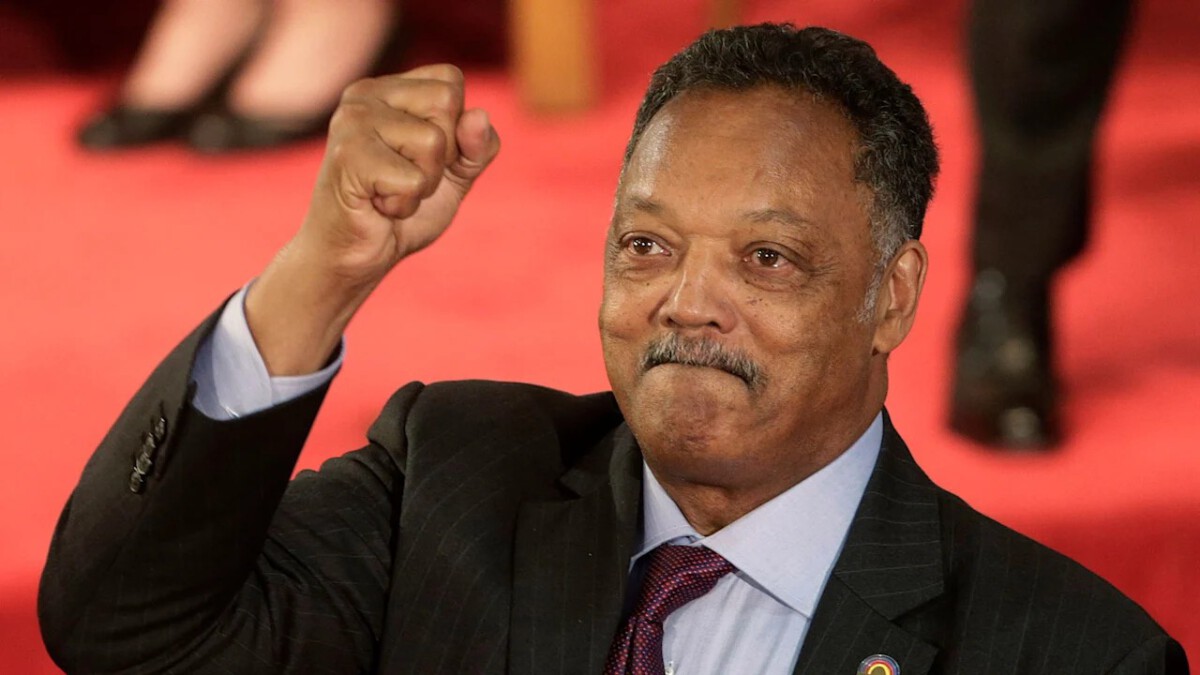
A Voice That Shook Boardrooms and Ballot Boxes (Image Credits: Images.fastcompany.com)
Chicago – Rev. Jesse Jackson, a towering figure in the fight for racial justice and economic opportunity, died Tuesday at his home surrounded by family, at the age of 84.
A Voice That Shook Boardrooms and Ballot Boxes
Rev. Jackson transformed personal conviction into national action, pressuring corporations through his Rainbow/PUSH Coalition to diversify workforces and open doors for underrepresented communities. His campaigns combined boycotts, lawsuits, and direct appeals to executives, resulting in millions invested in hiring and training programs for Black workers.
Even amid declining health, he persisted. In 2024, Jackson attended the Democratic National Convention here and advocated for a Gaza ceasefire at a local council meeting. Health struggles, including Parkinson’s disease diagnosed in 2017 and later progressive supranuclear palsy, limited his speech and mobility, yet he joined protests during the Black Lives Matter era, urging an end to police violence after George Floyd’s death.
From Segregated Fields to Civil Rights Frontlines
Born in 1941 in Greenville, South Carolina, to an unwed teenager, Jackson excelled as a high school quarterback before facing racial barriers at the University of Illinois. He transferred to North Carolina A&T, where he quarterbacked, studied sociology and economics, and led student government amid the era’s sit-ins.
Jackson marched with Martin Luther King Jr. from Selma to Montgomery in 1965 and launched Operation Breadbasket in Chicago to boost Black employment. He stood near King at the Lorraine Motel during the 1968 assassination, later founding Operation PUSH in 1971 to expand economic justice efforts nationwide. His wife, Jacqueline, whom he married in 1963, raised their five children – including future lawmakers Jesse Jackson Jr. and Jonathan Jackson – while he traveled relentlessly.
Slogans That Ignited Movements
Jackson’s oratory, rooted in Black church traditions, rallied crowds with rhythmic calls like “I am Somebody,” recited to affirm the dignity of the poor, young, and welfare recipients alike. Other phrases – “Hope not dope,” “Keep Hope Alive” – became anthems during his presidential bids in 1984 and 1988, where he secured more primaries than any prior Black candidate.
His runs redefined possibilities, as Rep. John Lewis noted, paving paths for Barack Obama. Jackson reflected in 2011 that his work tore down barriers, even if scarred by debris, to let others advance. Critics labeled him a showman, yet supporters saw unyielding purpose.
Diplomatic Wins and Personal Trials
Jackson’s reach extended globally, securing releases like Navy Lt. Robert Goodman from Syria in 1984 and captives from Iraq’s Kuwait invasion in 1990. President Bill Clinton honored him with the Presidential Medal of Freedom in 2000 for such efforts.
Controversies marked his path, including a 1984 “Hymietown” remark and a 2008 comment about Obama. He acknowledged extramarital fatherhood and championed cultural shifts, like adopting “African American.” In his final years, receiving round-the-clock care, he communicated through hand squeezes. Santita Jackson confirmed his passing, while the family stated he served “the oppressed, the voiceless, and the overlooked.” Rev. Al Sharpton called him “a movement unto himself,” teaching that justice demands daily work.
Key Takeaways from Rev. Jackson’s Life:
- Pioneered corporate diversity via Rainbow/PUSH, blending activism with economic pressure.
- Ran for president twice, expanding opportunities for candidates of color.
- Secured international hostage releases, earning the Medal of Freedom.
- Persisted in protests despite debilitating illnesses until the end.
Rev. Jackson’s unyielding push for equity reshaped America, proving one voice could challenge systems and inspire generations. What aspects of his legacy resonate most with you? Share in the comments.