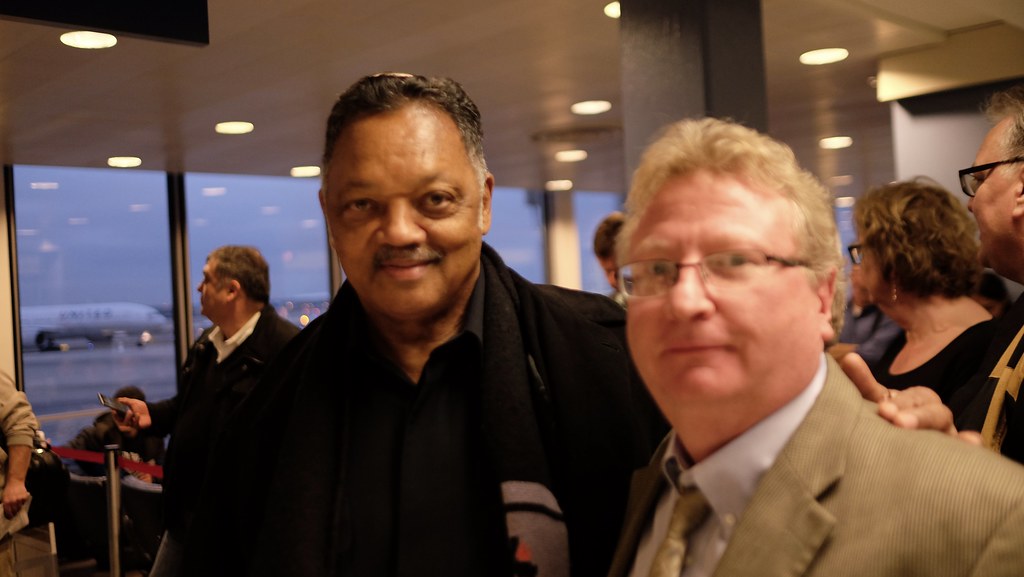
Roots in the Fight Against Segregation (Image Credits: Flickr)
Chicago – The Rev. Jesse Jackson, whose fiery oratory and unyielding activism propelled him from Southern sit-ins to the national political stage, died Tuesday at his home at age 84.
Roots in the Fight Against Segregation
Born on October 8, 1941, in Greenville, South Carolina, Jackson grew up amid Jim Crow laws that shaped his early resolve. He excelled in high school sports and leadership before attending the University of Illinois on a football scholarship. Racial barriers there prompted a transfer to North Carolina A&T, a historically Black college, where he immersed himself in activism.[1][2]
In 1960, Jackson joined the “Greenville Eight” in a library sit-in protest, leading to his arrest and marking his public entry into civil rights battles. This experience fueled his path to the Chicago Theological Seminary, though he soon left studies to pursue full-time organizing. By 1965, he marched in Selma, Alabama, alongside Martin Luther King Jr., solidifying his role in the movement.[1]
From SCLC Protégé to PUSH Pioneer
Jackson coordinated King’s Southern Christian Leadership Conference efforts in Chicago and rose to lead Operation Breadbasket in 1967, targeting economic empowerment for Black communities through boycotts and negotiations with businesses. He stood near King during the 1968 assassination in Memphis, an event that intensified his commitment. Tensions with SCLC leadership followed, culminating in his 1971 departure to found Operation PUSH – People United to Save Humanity.[1][2]
The organization merged later with his National Rainbow Coalition, creating Rainbow PUSH, a powerhouse for voter registration and social justice. In 1983, Jackson’s Chicago drive helped elect the city’s first Black mayor, Harold Washington. His efforts extended globally, securing releases of U.S. hostages from Syria, Cuba, and other nations.[1]
Presidential Runs That Redefined Politics
Jackson announced his 1984 Democratic presidential bid, the second by a Black candidate after Shirley Chisholm, rallying a “Rainbow Coalition” of diverse groups. His campaign registered over a million new voters and earned 3.5 million votes, though controversies over remarks about Jewish leaders drew backlash. He placed third behind Walter Mondale and Gary Hart.[1]
Four years later, Jackson won key primaries as the first African American to do so, finishing second to Michael Dukakis and pushing party platforms on jobs, health care, and peace. These runs elevated Black political visibility until Barack Obama’s 2008 victory. Jackson remained influential, earning the Presidential Medal of Freedom in 2000.[2]
Health Battles and Final Activism
Diagnosed with Parkinson’s disease in 2017, Jackson faced progressive supranuclear palsy by 2025, yet joined protests against police violence, including after the 2020 shootings of George Floyd and Jacob Blake. He contracted COVID-19 in 2021 and stepped down from Rainbow PUSH leadership in 2023. Hospitalizations marked his later years, but his voice endured.[1][2]
Jackson is survived by his wife, Jacqueline, and six children. His family shared, “Our father was a servant leader – not only to our family, but to the oppressed, the voiceless, and the overlooked around the world.”[1]
Key Takeaways from Jackson’s Life:
- Pioneered economic boycotts via Operation Breadbasket to boost Black hiring and businesses.
- Built the Rainbow PUSH Coalition, uniting diverse groups for political change.
- Ran landmark presidential campaigns, winning primaries and millions of votes.
- Negotiated freedom for dozens of hostages worldwide.
- Received the Presidential Medal of Freedom for lifelong service.
Public commemorations will honor Jackson in Chicago, where his legacy as a bridge-builder across divides shines on. His work reminds us that justice demands persistent voices. What aspects of Rev. Jackson’s fight resonate most with you? Share in the comments.