A Laser That Defies Earth’s Limits (Image Credits: Images.newscientist.com)
Researchers propose harnessing the moon’s frigid polar craters to host an ultrastable laser that promises unprecedented precision for lunar exploration.[1]
A Laser That Defies Earth’s Limits
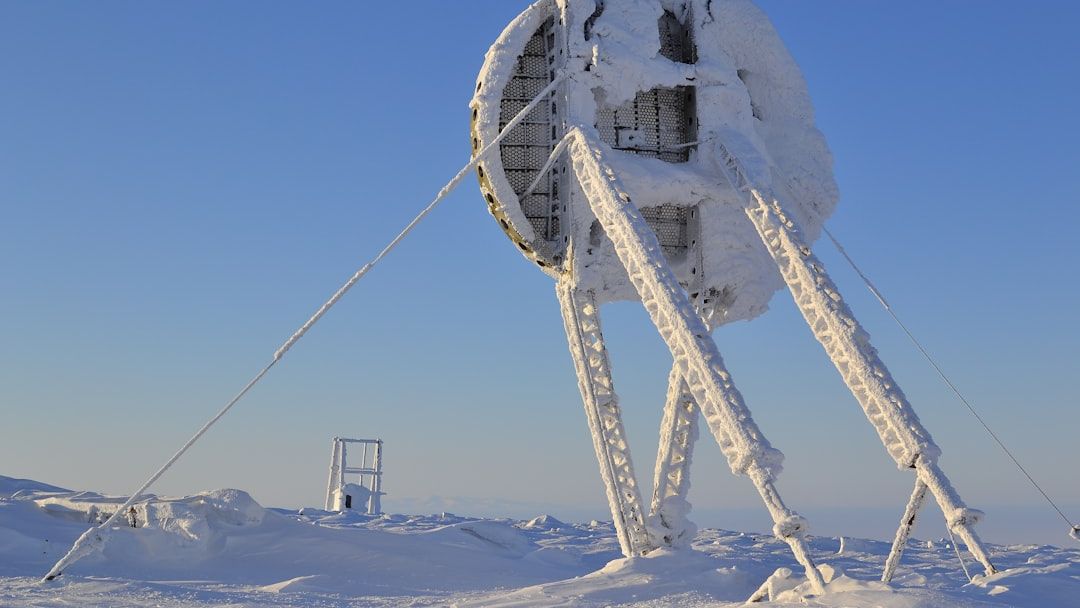
Earth’s finest optical cavity lasers maintain coherence for mere seconds, but a moon-based version could sustain it for over a minute. This leap stems from the proposal by Jun Ye at JILA in Boulder, Colorado, and his team. Their design draws from lab-tested silicon chambers with dual mirrors that trap light beams in perfect rhythm.[1]
Stability hinges on unchanging cavity dimensions, achieved through vacuum isolation and cryogenic cooling on Earth. Lunar conditions elevate this further. The result could redefine timing references across space operations.
Frigid Craters Offer Perfect Stability
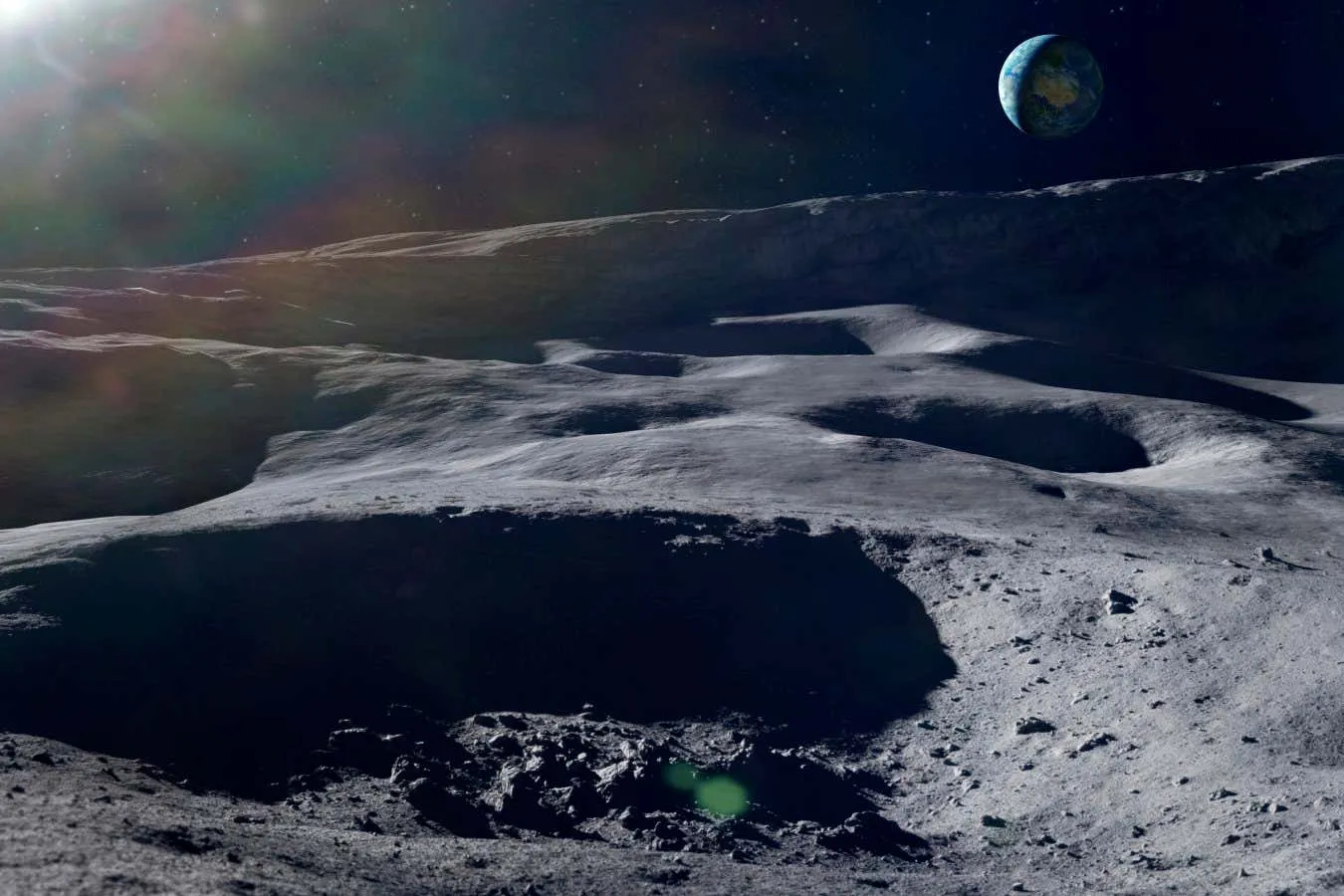
Hundreds of craters near the lunar poles remain in perpetual shadow due to the moon’s minimal axial tilt. Temperatures plunge to around -253°C, or 20 kelvin, during lunar winter. These sites fluctuate only between 20 and 50 kelvin year-round.
“The whole environment is stable, that’s the key,” Ye stated. The moon’s lack of seismic activity and thin exosphere eliminates vibrations and atmospheric interference. Such factors plague terrestrial setups, making polar craters ideal for superior laser performance.[1]
Engineering a Lunar Optical Marvel
The device mirrors JILA’s prototypes: a silicon enclosure where light bounces relentlessly between mirrors. Precision demands thermal and mechanical isolation, now naturally amplified on the moon. Deployment challenges persist, yet the concept aligns with advancing lunar infrastructure.
Simeon Barber at the Open University in the UK endorsed the approach. Recent polar landers struggled with dim lighting that impaired camera systems. A stable laser could bolster positioning, navigation, and timing for safer descents.[1]
Transforming Missions On and Off the Moon
Beyond landers and rovers, the laser supports a unified lunar time standard. Satellite swarms could use it to gauge separations via laser ranging. Earth observers might tap its beam, arriving in just over a second, for high-accuracy synchronization.
| Feature | Earth Lasers | Moon Laser |
|---|---|---|
| Coherence Time | Few seconds | At least 1 minute |
| Temperature Stability | Requires cooling | Natural 20-50K |
| Vibration Isolation | Artificial | Natural (no quakes) |
- Pinpoint rover paths in unlit terrain.
- Coordinate orbital formations precisely.
- Establish reliable lunar clocks.
- Enhance Earth-moon data links.
- Improve high-latitude landing success rates.
Key Takeaways
- Polar craters provide unmatched stability for lasers, far exceeding Earth labs.
- Coherence extension to minutes unlocks new navigation and timing tools.
- Proposal addresses real landing hazards, paving way for sustained moon presence.
This ultrastable beacon could anchor humanity’s expanding lunar footprint, turning shadowed voids into hubs of precision. What potential applications excite you most? Share your thoughts in the comments.