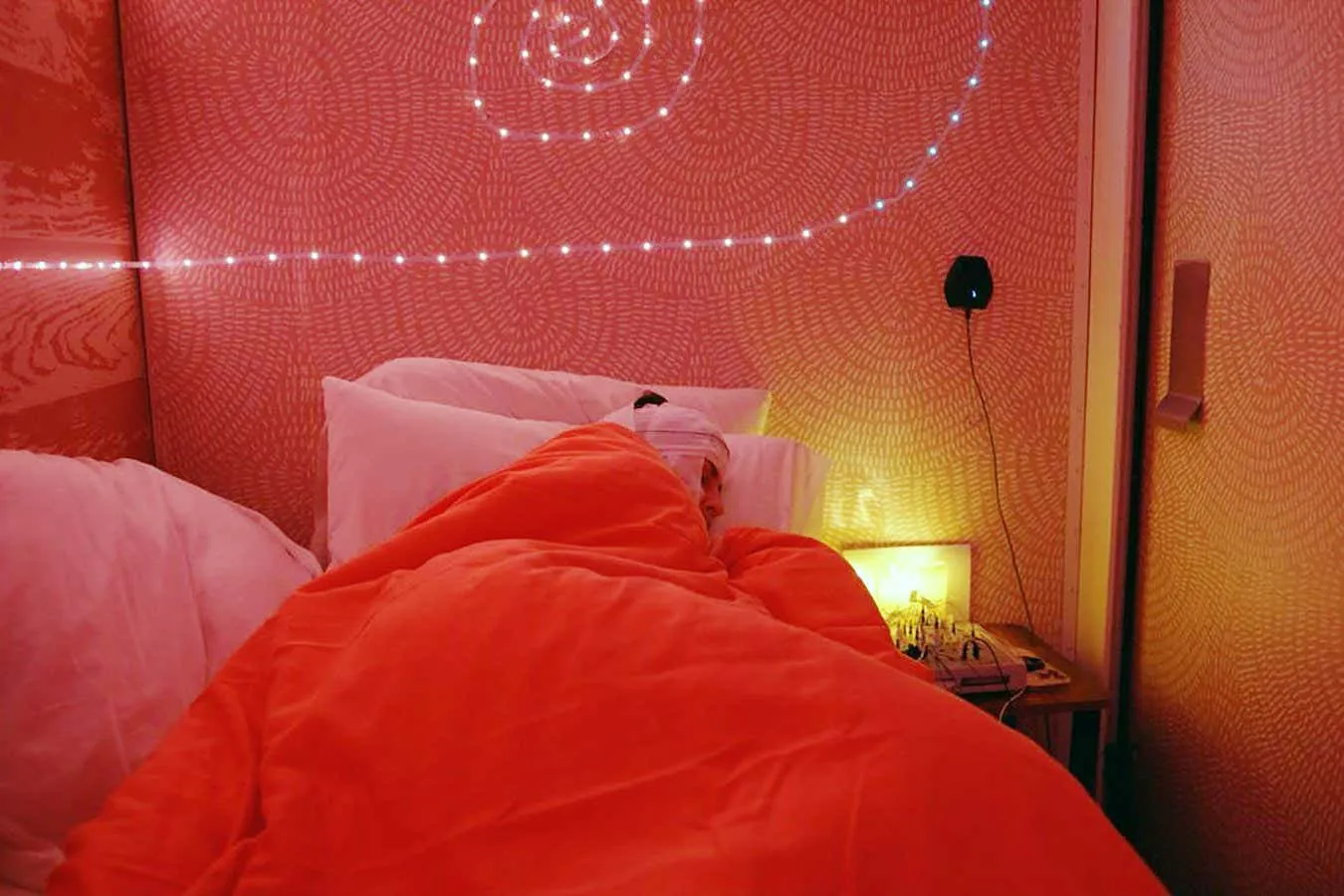
Unexpected Breakthrough in a Sleep Lab (Image Credits: Images.newscientist.com)
Researchers have pioneered a method to steer dreams toward unresolved challenges, revealing sleep’s untapped potential for enhancing human creativity.
Unexpected Breakthrough in a Sleep Lab
A striking discovery emerged from a controlled experiment where participants tackled brain teasers before bedtime. Scientists played specific audio cues during REM sleep, prompting dreamers to revisit those puzzles in their subconscious. The result surprised even the team: dreamers who incorporated the puzzles into their nighttime visions solved them at notably higher rates upon waking.[1][2]
This approach, known as targeted dream incubation, builds on targeted memory reactivation techniques. Study participants signaled their awareness within dreams through eye movements and sniffs, confirming real-time engagement. Such interactivity marks a leap in dream research, blending neuroscience with the elusive world of sleep.
Step-by-Step: Engineering the Perfect Dream
The process began with 20 experienced lucid dreamers attempting a series of tough puzzles, each linked to a distinct soundtrack like birdsong or steel drums. Most puzzles stumped them initially, setting the stage for overnight intervention. In a lab setting, polysomnography tracked brain waves and eye activity to pinpoint REM phases.
During these periods, researchers replayed sounds tied to half the unsolved puzzles. Participants had prearranged signals: left-right eye flicks for lucidity and in-out sniffs for recognizing the cue and working on it. Morning reports detailed dream content, followed by fresh puzzle attempts. This rigorous setup ensured precise measurement of dream influence.[3]
Numbers That Tell the Story
Seventy-five percent of participants wove cued puzzles into their dreams, often with vivid twists – one sought advice from a dream character, another wandered a forest for a “trees” riddle. Solving success jumped dramatically for dream-featured puzzles.
| Group | Solving Rate |
|---|---|
| Puzzles in dreams | 40-42% |
| Puzzles not in dreams | 17% |
| Cued puzzles (effective cases) | 40% (up from 20%) |
In 12 of the 20 participants, cues reliably boosted dream references and solutions. These figures highlight REM sleep’s hyper-associative quality, where memories blend freely.[2]
Why REM Sleep Fuels Innovation
REM dreams mix fresh experiences with old memories in uninhibited ways, fostering novel connections. Lead author Karen Konkoly noted, “Even without lucidity, one dreamer asked a dream character for help solving the puzzle we were cueing.” This flexibility may explain the edge in creative problem-solving.
Senior researcher Ken Paller emphasized broader implications: “Many problems in the world today require creative solutions… sleep engineering could help.” The study, published in Neuroscience of Consciousness, suggests dreams aid emotion regulation and learning too. Yet variability persists – cues sometimes evoked only sounds, not full puzzles.
Ethical Horizons and Next Steps
While promising, concerns linger about sleep disruption or commercial exploitation. Konkoly hopes findings elevate dreams’ role in mental health: “If scientists can definitively say that dreams are important for problem solving, creativity and emotion regulation, hopefully people will start to take dreams seriously.” Future work targets non-lucid dreamers and real-world applications.
Key Takeaways
- Audio cues during REM doubled puzzle-solving odds for many participants.
- Lucid signaling enabled live dream tracking.
- REM’s loose associations drive breakthroughs, with therapy potential ahead.
This dream engineering opens doors to harnessing sleep for innovation, challenging views of rest as mere recovery. Could targeted sounds tackle your next big hurdle? Share your thoughts in the comments.