Charred Debris Reveals Hidden Flaw (Image Credits: Cdn.mos.cms.futurecdn.net)
NASA’s Orion spacecraft faced an unexpected challenge during its Artemis 1 return from the moon, but targeted fixes now clear the path for the crewed Artemis 2 mission.[1]
Charred Debris Reveals Hidden Flaw
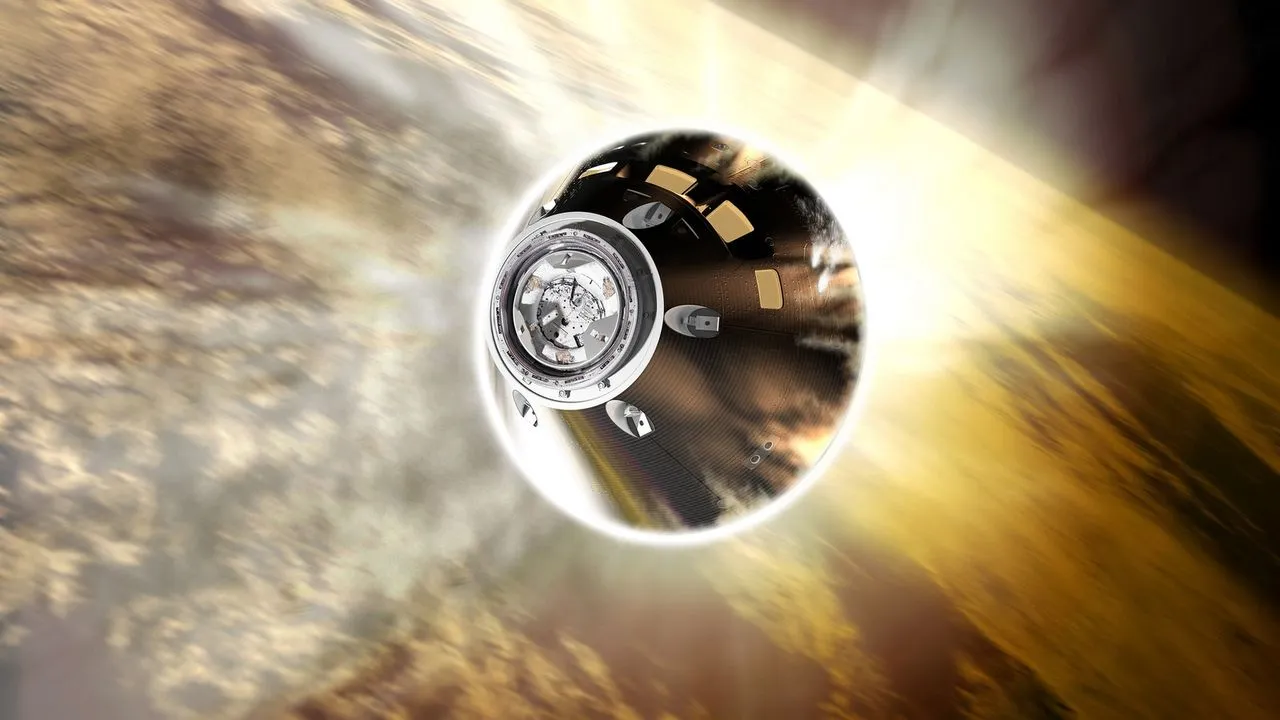
Inspectors discovered more than 100 sites of damage on Orion’s heat shield after the uncrewed Artemis 1 splashed down in December 2022. Chunks of ablative Avcoat material, the same type used on Apollo missions, had chipped away during the high-speed atmospheric plunge. This 16.5-foot-wide shield endured temperatures exceeding 5,000 degrees Fahrenheit amid superheated plasma.[1][2]
The loss surprised engineers. Computer models and ground tests had predicted steady ablation, not discrete pieces breaking free. Cabin temperatures stayed safe in the mid-70s Fahrenheit, confirming no immediate crew risk if astronauts had been aboard. Still, the anomaly demanded deep investigation.[1]
Gases Trapped Under Pressure
A root-cause analysis traced the problem to trapped gases within the Avcoat. During reentry, chemical reactions produced gases that built pressure in non-permeable zones, cracking the char layer. Over 100 specialized tests at facilities like NASA’s Ames Research Center replicated the issue.[1][2]
Artemis 1’s “skip guidance” trajectory prolonged exposure to a specific heating regime. The spacecraft dipped into the atmosphere, skipped out using lift, and repeated the cycle before final descent. Lower heating rates between skips slowed venting, allowing buildup. Manufacturing differences from Apollo – using fewer than 200 pre-machined Avcoat blocks instead of 300,000 honeycomb cells – played a role in uneven permeability.[1]
Teams from NASA, Lockheed Martin, and independent reviewers formed a “tiger team” to validate findings. Their work pinpointed how thermal energy accumulated uniquely during the skip profile.[2]
Trajectory Tweak Transforms Reentry
For Artemis 2, NASA scrapped the skip maneuver. A steeper, direct entry shortens the downrange distance to splashdown in the Pacific Ocean. This limits time in the troublesome temperature window.[1]
Orion public affairs officer Kenna Pell stated, “NASA has modified the trajectory by shortening how far Orion can fly between when it enters Earth’s atmosphere and splashes down in the Pacific Ocean. This will limit how long Orion spends in the temperature range in which the Artemis 1 heat shield phenomenon occurred.”[1]
Lockheed Martin’s Blaine Brown added, “We performed extensive testing and analysis on the Avcoat block materials to ultimately reproduce the char liberation phenomenon seen on Artemis 1.”[1]
Testing Proves the Fix
Engineers conducted over 121 thermal tests nationwide, confirming ample thermal margins under the new profile. A recent NASA Office of Inspector General report flagged the issue as a top challenge but endorsed the approach as feasible.[1][3]
Artemis 2 retains the current Avcoat design, while Artemis 3 introduces slightly denser blocks for better venting. The 10-day crewed lunar flyby now targets early March 2026.[1]
- Eliminated skip guidance reduces heating variability.
- Shorter reentry path cuts exposure time.
- Validated margins ensure crew safety.
- Future blocks improve permeability.
- Extensive ground tests mirror flight conditions.
Key Takeaways
- Gas pressure from poor venting caused Artemis 1 char loss.
- New trajectory avoids the issue without hardware changes.
- Artemis 2 launches soon with proven safeguards.
These refinements turn a test flight surprise into a stepping stone for lunar returns. Safety margins hold firm, positioning Artemis 2 as a pivotal crewed milestone. What steps would you prioritize for deep-space missions? Share your thoughts in the comments.