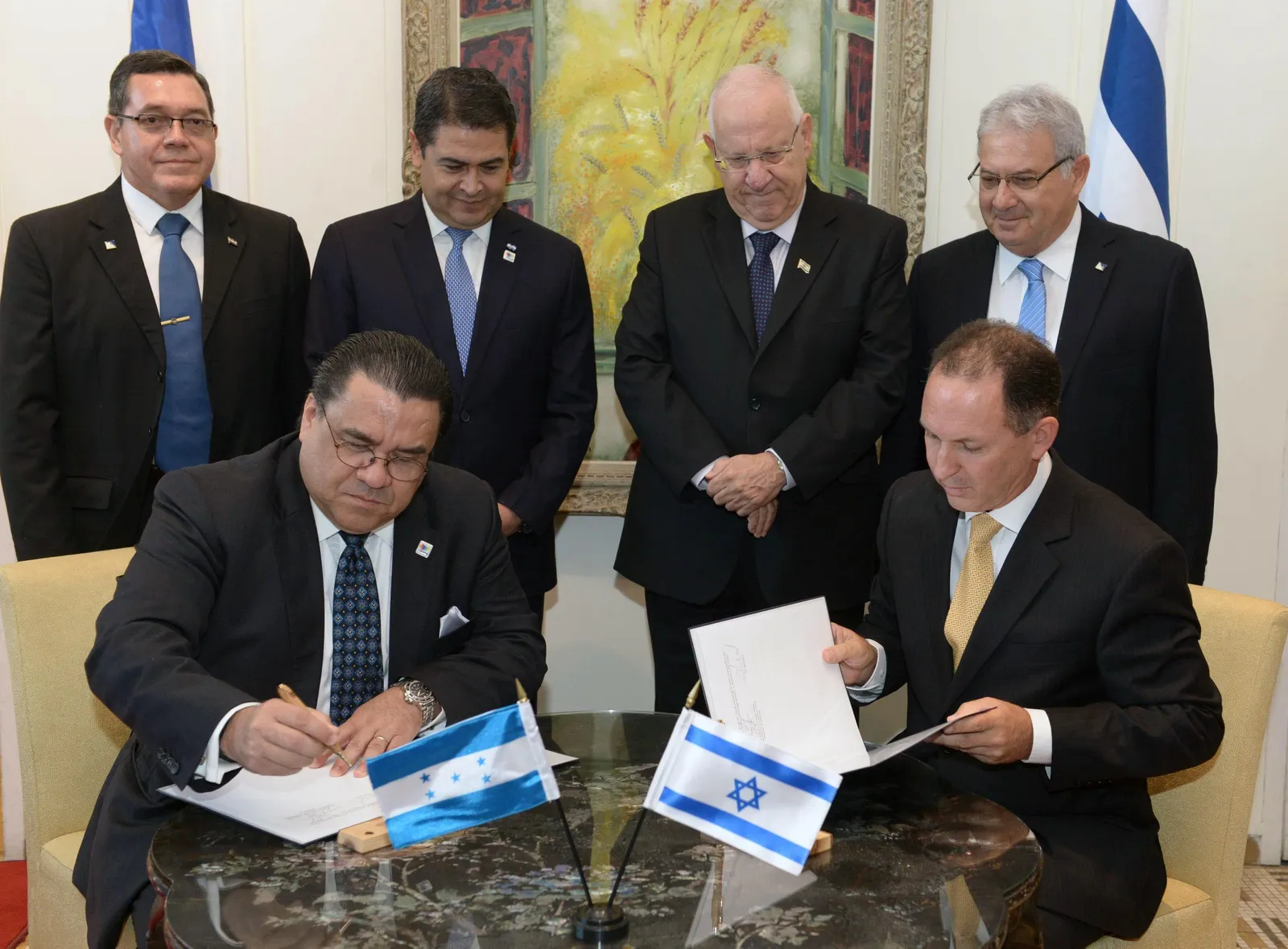
A Rise and Fall Steeped in Controversy (Image Credits: Upload.wikimedia.org)
Former Honduran President Juan Orlando Hernández walked free from federal prison after receiving a pardon from President Trump, bypassing standard immigration enforcement procedures.
A Rise and Fall Steeped in Controversy
Hernández once positioned himself as a staunch U.S. ally in combating drug trafficking and migration flows. He served two terms as president, navigating legal hurdles including a constitutional ban on reelection. Security forces under his watch faced accusations of lethal crackdowns during 2017 protests, where at least 16 people died, according to a United Nations report.[1]
Prosecutors later revealed that drug organizations funneled millions into his campaigns to secure safe passage for cocaine shipments to the United States. His brother Tony faced conviction in a Miami trial that implicated Hernández himself. Authorities arrested Hernández in Honduras in 2022, extradited him to New York, and secured a guilty verdict on drug and weapons charges in 2024 after a swift jury deliberation. The court imposed a 45-year sentence, highlighting his role in facilitating over 400 tons of cocaine.[1]
Pardon Announcement Ignites Political Firestorm
President Trump issued a full pardon for Hernández on December 1, 2025, just days after signaling his intent on Truth Social. The move came less than four years into the sentence and coincided with Honduras’ national election. Trump praised the former leader’s treatment as “very harshly and unfairly,” responding to a letter Hernández sent via intermediary Roger Stone.[1]
Senators from both parties voiced sharp criticism. Tim Kaine deemed it “disgusting and incomprehensible,” while Thom Tillis highlighted the “horrible optics.” Hernández’s legal team had portrayed the conviction as political persecution by the prior administration. The pardon effectively nullified plans for an appeal and allowed Hernández to avoid immediate return to Honduras, where he claimed threats to his safety persisted.[1]
Prison Release Breaks from Deportation Norms
Upon release from a West Virginia penitentiary, Hernández encountered an ICE detainer typically leading to swift deportation for noncitizens. Prison officials removed the hold after urgent coordination, including a call facilitated by a Trump-pardoned deputy director. A four-man tactical team then transported him over several hours to a luxury New York City hotel, complete with overtime pay for staff – treatment staff described as unprecedented.[1]
His lawyer, Renato Stabile, argued the measures prevented re-arrest or harm in Honduras. “It would be particularly cruel to grant somebody a pardon and have them released from prison – only to have them immediately shipped back,” Stabile stated. Bureau of Prisons officials denied favoritism, but former employees expressed dismay at the handling.[1]
Stark Contrast to Nationwide ICE Operations
The episode unfolded against a backdrop of intensified ICE enforcement under Trump, targeting noncitizens for rapid removal regardless of criminal history. Recent operations emphasized deportations to high-risk countries, aligning with rhetoric against Latin American drug networks. Hernández’s path diverged sharply from these efforts.[1]
Prison insiders noted standard releases involve basic bus or plane travel, not escorted luxury drives. One retired worker called it a “red carpet” rollout. Advocacy groups pointed to the disparity as evidence of selective application of immigration rules. Hernández later posted online that he had no plans to return home due to persecution fears.[1]
Key differences in Hernández’s release stand out:
- Detainer lifted after pardon, unlike routine enforcement.
- Tactical team escort to high-end hotel, not standard transport.
- Coordination with high-level officials, bypassing typical protocols.
- No immediate deportation despite noncitizen status.
Key Takeaways:
- Trump’s pardon freed Hernández after serving under four years of a 45-year term.
- Special prison transport contrasted with mass ICE deportations nationwide.
- Critics see the handling as emblematic of elite exceptions in immigration policy.
This case underscores tensions between high-profile pardons and broad immigration crackdowns, raising questions about consistency in U.S. justice. As Hernández’s whereabouts remain unclear, the episode fuels debate on accountability for former allies turned convicts. What do you think about the special treatment? Tell us in the comments.[1]