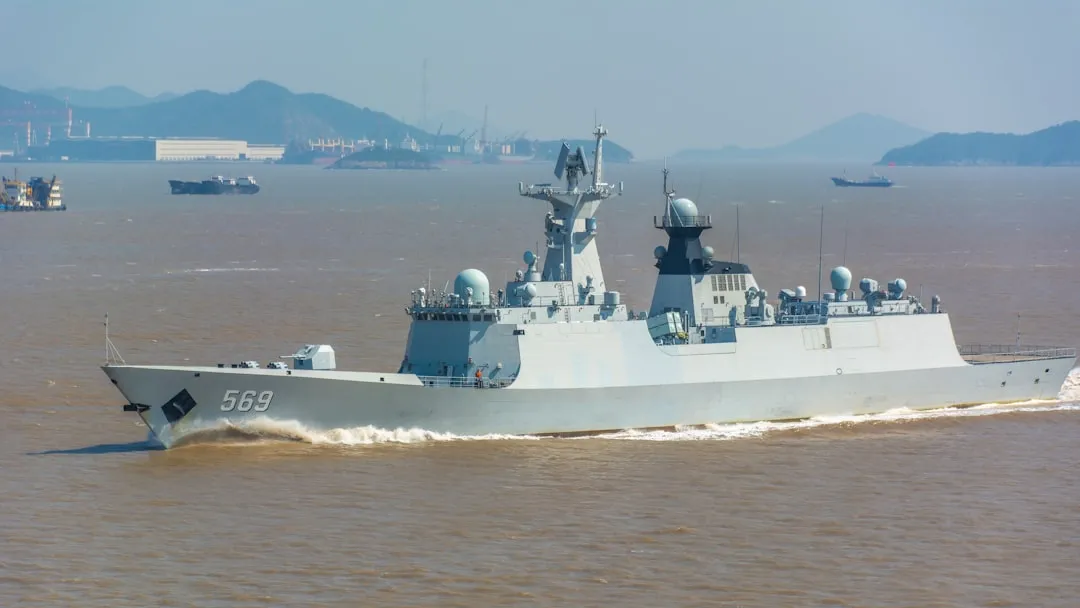
Trump Delivers Blunt Deadline (Image Credits: Unsplash)
Dubai, United Arab Emirates – Tensions in the Middle East intensified as Iran conducted joint naval drills with Russia while a second U.S. aircraft carrier steamed toward the region amid faltering nuclear negotiations.[1][2]
Trump Delivers Blunt Deadline
President Donald Trump issued a stark warning to Iran on Thursday, stating that 10 to 15 days provided sufficient time for a nuclear deal.[1] He emphasized the difficulty of reaching an agreement, declaring, “It’s proven to be, over the years, not easy to make a meaningful deal with Iran, and we have to make a meaningful deal. Otherwise, bad things happen.”[1]
Trump spoke aboard Air Force One and at a Board of Peace meeting, underscoring that failure to secure concessions would lead to severe consequences. U.S. officials noted that top national security advisors convened Wednesday to review Iran strategy, with full military readiness projected by mid-March.[1] The president referenced prior U.S. and Israeli strikes that damaged Iranian nuclear facilities last year, suggesting further action remained possible.
U.S. Bolsters Regional Firepower
The USS Gerald R. Ford, the second aircraft carrier dispatched to the area, positioned off Morocco’s coast midweek, en route potentially through the Strait of Gibraltar toward the eastern Mediterranean.[1] Supporting guided-missile destroyers accompanied the vessel, which could reach striking distance of Iran in over a week.
This week alone, the U.S. ordered 50 additional combat aircraft, including F-35s, F-22s, and F-16s, to supplement hundreds already at bases in Arab Gulf states.[1] Such deployments enhanced America’s capacity for precision strikes, signaling resolve without committing to immediate hostilities. Preparations at U.S. bases across the Middle East accelerated over the past month.[2]
Iran-Russia Drills Signal Defiance
Iran hosted its annual naval exercises with Russia on Thursday in the Gulf of Oman and northern Indian Ocean, focusing on operational coordination and tactical exchanges.[1] State media aired footage of Revolutionary Guard naval special forces boarding vessels, with anti-ship missile launches planned after a rocket-fire alert to regional pilots.
Earlier exercises featured live-fire in the Strait of Hormuz, a critical chokepoint for global oil shipments. Iran’s U.N. ambassador, Amir Saeid Iravani, affirmed in a Security Council letter that Tehran sought no war but vowed decisive retaliation against any aggression, targeting U.S. regional assets.[1] Supreme Leader Ali Khamenei echoed this, boasting of capabilities to sink U.S. warships.[3]
Stalled Talks Expose Deep Divides
Indirect negotiations in Geneva this week yielded Iran’s commitment to a written proposal addressing U.S. concerns, yet progress stalled on core issues.[1] Washington demanded an end to uranium enrichment, curbs on long-range missiles, and cessation of support for proxies like Hamas and Hezbollah, alongside restraints on domestic crackdowns.
- Nuclear program: Iran insists on peaceful intent; U.S. suspects weaponization aims.
- Missiles: Tehran deems limitations a red line.
- Proxies: Refusal to sever regional militant ties.
- Internal unrest: Protests suppressed violently in January after prior strikes.
Foreign Minister Abbas Araqchi claimed agreement on “guiding principles,” but a White House spokesperson highlighted persistent gaps.[2]
World Watches with Apprehension
Israeli Prime Minister Benjamin Netanyahu affirmed readiness for any scenario, promising an unimaginable response to Iranian attacks.[1] Poland urged its citizens to flee Iran immediately, while Germany relocated non-essential personnel from an Iraqi base.
Oil prices climbed on strike fears, and Russia cautioned against escalation. A senior regional official privately urged Iran to prioritize nuclear concessions for short-term gains, warning limited U.S. action could derail talks entirely.[1]
As deadlines loom and forces mass, the region braces for diplomacy’s potential collapse into conflict. A meaningful accord remains elusive, but the cost of failure grows clearer daily.
Key Takeaways
What steps should world leaders take next? Share your views in the comments.