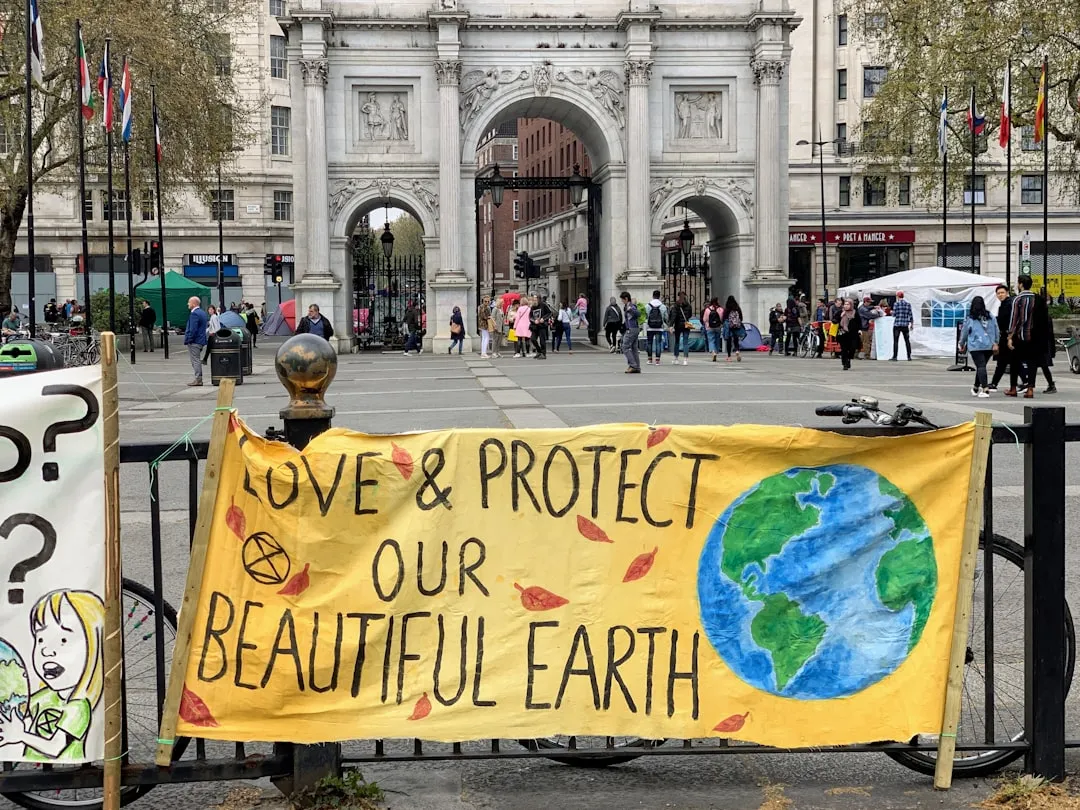
A Historic Foundation Comes Down (Image Credits: Unsplash)
Washington, D.C. – President Donald Trump and Environmental Protection Agency Administrator Lee Zeldin announced the repeal of a foundational 2009 scientific determination that paved the way for federal regulation of greenhouse gas emissions from vehicles and other sources.[1][2]
A Historic Foundation Comes Down
The 2009 endangerment finding concluded that six key greenhouse gases – carbon dioxide, methane, nitrous oxide, hydrofluorocarbons, perfluorocarbons, and sulfur hexafluoride – threaten public health and welfare through climate change impacts like extreme weather and rising sea levels.[3] Issued after a 2007 Supreme Court ruling in Massachusetts v. EPA, it established the legal prerequisite for Clean Air Act regulations targeting these pollutants.[4]
This step triggered the first federal greenhouse gas standards for light-duty, medium-duty, and heavy-duty vehicles starting in model year 2012. The finding withstood multiple court challenges, including rulings by the U.S. Court of Appeals for the D.C. Circuit in 2012 and 2023, with the Supreme Court declining review both times.[3] Zeldin described the repeal as eliminating a determination with “no basis in fact,” calling it a return to the Clean Air Act’s original intent.[3]
Administration Cites Limits on EPA Authority
Zeldin argued that Section 202(a)(1) of the Clean Air Act targets local and regional air pollution causing direct harm, not global climate effects from greenhouse gases. The agency applied the major questions doctrine from recent Supreme Court decisions to assert Congress never clearly authorized such broad regulation.[4]
Officials highlighted three key cases in their reasoning:
- Massachusetts v. EPA (2007): Required EPA to assess greenhouse gas regulation but did not endorse standalone findings without tied rules.
- Utility Air Regulatory Group v. EPA (2014): Limited stationary source permitting while allowing most emissions coverage.
- West Virginia v. EPA (2022): Struck down power plant rules for exceeding statutory authority via market shifts, a principle extended to vehicle standards here.
The move promises $1.3 trillion in savings for taxpayers and industry by lifting compliance burdens on automakers.[3][4]
Critics Challenge the Legal Groundwork
Environmental advocates and legal experts contend the repeal distorts judicial precedents. They note Massachusetts v. EPA explicitly classified greenhouse gases as air pollutants under the Act, affirming vehicle regulation authority. Utility Air reaffirmed this for most sources, and West Virginia distinguished power plant mandates from efficiency-based vehicle rules.[2]
The Natural Resources Defense Council labeled the action a “rushed, sloppy and unscientific determination” lacking legal basis. Public health groups and states like California filed suits almost immediately, arguing it ignores upheld science and invites higher emissions, wildfires, and health risks.[1] Industry responses varied, with oil groups supportive but automakers cautious about state-level patchwork regulations.
Far-Reaching Effects on Emissions and Policy
The repeal eliminates all federal greenhouse gas standards for vehicles through model year 2027 and beyond, potentially boosting U.S. emissions by 10 percent over three decades. Analysts project up to 58,000 premature deaths and millions of asthma attacks by mid-century if unchecked.[1]
Cases now head to the D.C. Circuit, likely reaching the Supreme Court amid shifted judicial dynamics post-Chevron deference overturn. States retain some authority, but federal preemption under Section 209 could limit efforts like California’s waivers.[4] Zeldin emphasized benefits for American workers, framing the change as common-sense deregulation over “fear-mongering.”[3]
This decision marks a pivotal test of regulatory boundaries in the climate era, balancing economic relief against environmental safeguards. As litigation unfolds, its legacy could reshape U.S. policy for years.
Key Takeaways
- The repeal targets the 2009 finding and all vehicle GHG standards, citing Clean Air Act limits.
- Courts have repeatedly upheld the original framework, fueling imminent challenges.
- Projected savings clash with warnings of health and emission spikes.
What do you think about this regulatory pivot? Share your views in the comments.