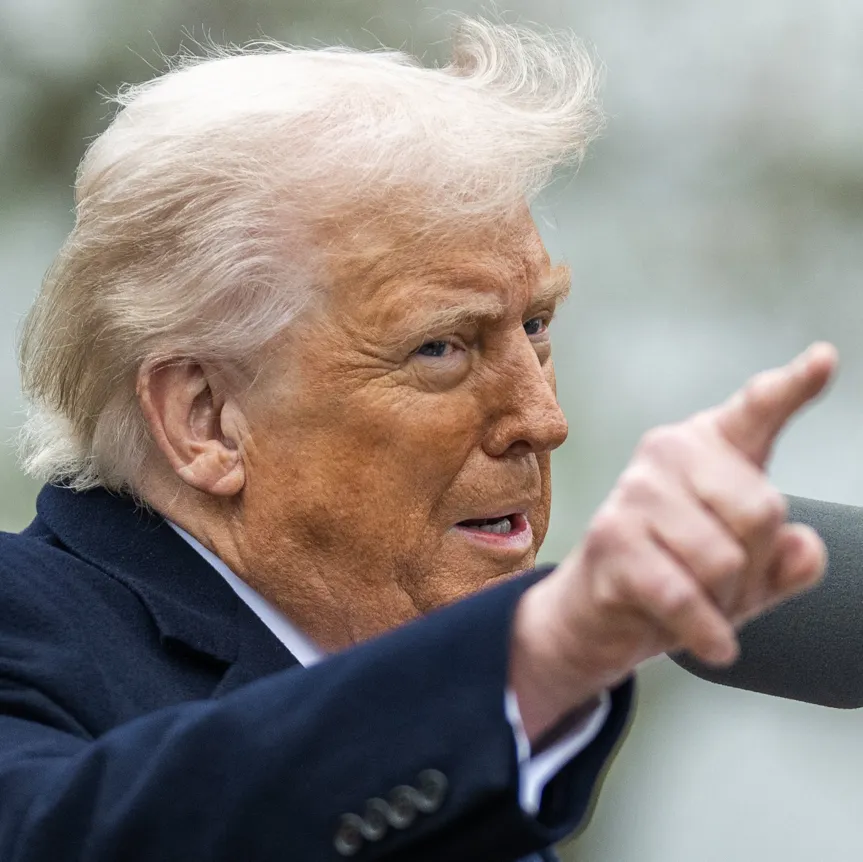
Supreme Court Limits Presidential Trade Powers (Image Credits: Upload.wikimedia.org)
The U.S. Supreme Court delivered a significant ruling against President Donald Trump’s expansive tariff measures, prompting an immediate and defiant response from the White House.[1][2]
Supreme Court Limits Presidential Trade Powers
In a 6-3 decision authored by Chief Justice John Roberts, the court held that Trump exceeded his authority under the International Emergency Economic Powers Act of 1977.[1] Justices Amy Coney Barrett and Neil Gorsuch joined Roberts along with the three liberal justices in the majority. The ruling invalidated broad tariffs imposed last April on imports from nearly every country worldwide. Higher duties targeted major trading partners including China, Canada, Mexico, the European Union, Japan, and South Korea. Lower courts had previously questioned the use of emergency powers for routine trade policy.
The decision marked a rare check on executive action by the conservative-leaning court. It emphasized that Congress holds primary authority over tariffs. Challengers argued successfully that the IEEPA served sanctions, not general import taxes. The justices remanded the case for further proceedings on implementation.[3]
President’s Fiery Reaction to the Ruling
Hours after the opinion released, Trump addressed reporters and described the outcome as deeply disappointing. He criticized the decision sharply, vowing to protect American interests through alternative measures. The president accused certain justices of undermining national security efforts. His remarks underscored a commitment to aggressive trade enforcement despite judicial hurdles.[4][5]
Trump highlighted the tariffs’ role in defending U.S. workers and industries. He framed the court’s action as a setback but not a defeat. Administration officials signaled readiness to pivot quickly. The response drew immediate attention from global markets and trading partners.
New Tariff Strategy Under Section 122
Trump announced plans to sign an executive order imposing a 10% tariff on all global imports under Section 122 of the Trade Act of 1974. This provision allows temporary duties to address balance-of-payments deficits. The levy would apply universally and take effect immediately upon issuance. It aims to replace revenue from the struck-down measures.[6][4]
Unlike the IEEPA tariffs, this approach carries a 150-day limit but offers a clear statutory basis. The president indicated additional investigations into unfair trade practices. Officials expect the move to generate substantial funds while pressuring negotiations. Critics question its long-term viability without congressional input.
Economic Ripples and Refund Risks
The ruling exposed over $175 billion in collected tariffs to potential refunds, according to Penn-Wharton Budget Model estimates. Importers now brace for legal battles at the Court of International Trade. Overall effective tariff rates stood at 16.9% before the decision. Businesses across sectors face uncertainty over costs and supply chains.[7]
The new 10% tariff could stabilize some revenue streams short-term. Markets reacted with volatility in import-heavy stocks. Trading partners expressed concerns over renewed tensions. Analysts predict shifts in global trade flows.
| Aspect | Original Tariffs (IEEPA) | New Tariff (Section 122) |
|---|---|---|
| Scope | 10% global + higher on select countries | 10% universal |
| Legal Basis | Emergency powers (struck down) | Balance of payments |
| Duration | Indefinite | Up to 150 days |
- Supreme Court ruled 6-3 against IEEPA tariffs, affirming congressional primacy.
- Trump pivots to Section 122 for 10% global duty amid $175B refund risks.
- Decision reshapes executive trade authority debates.
This clash highlights enduring tensions between branches over economic policy. As the administration implements its workaround, observers watch for congressional response and international fallout. What implications do you see for U.S. trade? Share your thoughts in the comments.