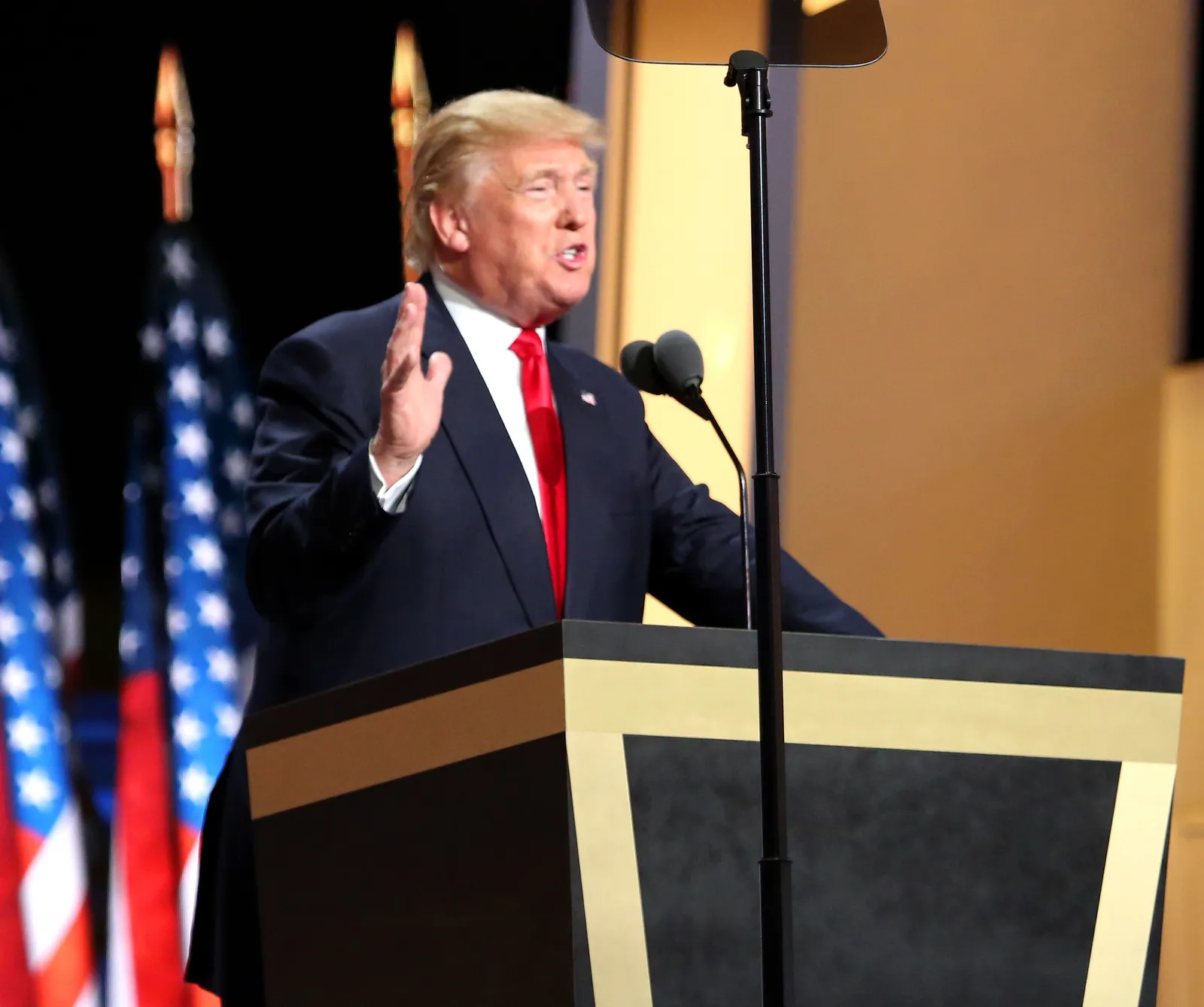
Economy Takes Back Seat to Familiar Themes (Image Credits: Upload.wikimedia.org)
Washington – President Donald Trump delivered his first State of the Union speech of his second term on Tuesday night, stretching to one hour and 48 minutes in what became the longest such address on record.[1][2]
Economy Takes Back Seat to Familiar Themes
Voters ranked prices and living costs as their top worries long before the speech, yet Trump offered few direct responses to those pressures.[1] He painted a bright picture of stock market gains and cheaper gas but skipped any acknowledgment of hardships tied to his tariff policies, which polls linked to higher costs.[3]
Instead, the president doubled down on tariffs, dismissing a recent Supreme Court setback and claiming alternative legal paths forward. This approach highlighted a disconnect: while Trump touted investments and job growth, public approval for his economic handling hovered near record lows.[1] Critics noted the absence of an empathetic pivot, a moment presidents often use to connect with struggling families.
Immigration and Culture Wars Dominate the Narrative
Trump revisited his core issues with vivid stories of border crimes and calls for stricter measures, a playbook that fueled his 2024 win but faced new scrutiny this time.[1] He spotlighted deportations and fentanyl drops, claiming the “strongest border in history” with zero illegal crossings over nine months.[2]
Details included gory anecdotes to underscore threats, though data on immigrant crime rates remained debated. The speech also touched cultural flashpoints like transgender policies and faith revivals, aiming to rally conservatives amid midterm battles. However, backlash over enforcement tactics, including deaths during operations, tempered the message for some audiences.[1]
A Slim Legislative Wish List Emerges
Congress heard only a handful of concrete requests, signaling limited ambitions for bipartisan deals. Trump urged codifying drug price cuts, though methods stayed vague, and backing the “Stop Insider Trading Act” to curb congressional stock trades.[1]
Other pushes covered the “Delilah Law” to block undocumented immigrants from commercial licenses, restored Homeland Security funding after a shutdown, and the SAVE America Act for voter citizenship proof. These items aligned with his priorities but fell short of a sweeping agenda, reflecting a reliance on executive power.[1]
- Codify drug pricing reforms via trumprx.gov.
- Enact “Delilah Law” on driver’s licenses.
- Pass SAVE America Act against non-citizen voting.
- Fund DHS fully and ban insider trading.
Partisan Fireworks and Democratic Pushback
The chamber buzzed with tension as Democrats staged protests, including boycotts and shouts from figures like Rep. Ilhan Omar. Rep. Al Green displayed a sign protesting a Trump social media post, leading to his removal for the second straight year.[1] Trump labeled opponents “crazy,” blaming them for health care woes and national woes.
Virginia Gov. Abigail Spanberger’s rebuttal zeroed in on economic struggles, a tactic poised to echo in swing districts. Such exchanges underscored hardened divides, with Trump baiting reactions to appear as the voice of normalcy on security and values.[3]
Showmanship Overshadows Broader Reset
Patriotic flourishes defined the night, from honoring the Olympic hockey champions to awarding medals to veterans like WWII hero Eric Slover live on camera. Trump declared a “golden age” ahead of the 250th anniversary, weaving in foreign wins like ending wars and curbing Iran.[2]
Yet analysts saw little outreach beyond his base, with views of the president largely fixed. The spectacle may energize supporters but risks missing a chance to address voter pain points in prime time.[1]
Key Takeaways
- Trump prioritized border security and culture over economic empathy.
- Few legislative specifics signal executive focus.
- Partisan clashes highlighted midterm stakes.
Trump’s address reinforced his brand of bold claims and base appeal, but lingering economic doubts could shape November’s contests. As the nation digests the rhetoric, one question lingers: Will voters buy the optimism? Share your thoughts in the comments.