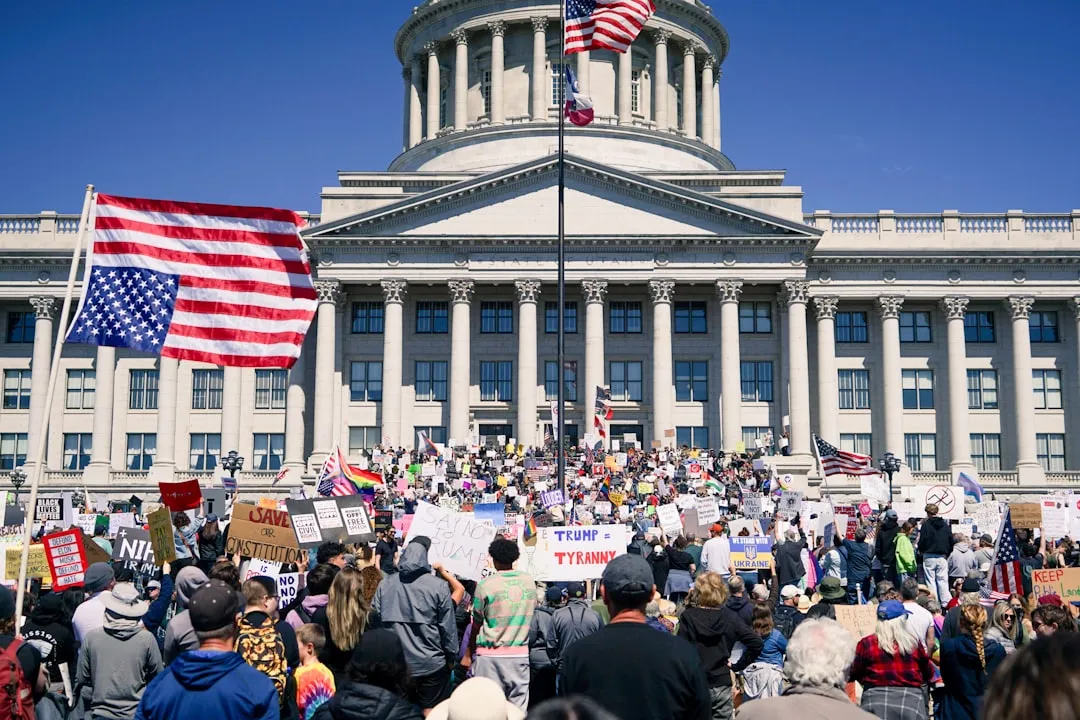
Divided House Sets Tense Tone (Image Credits: Unsplash)
Washington, D.C. – President Donald Trump addressed a joint session of Congress on February 24, 2026, in a speech that stretched nearly two hours and shifted between formal honors and pointed political jabs amid reports of his lowest approval ratings yet.[1][2]
Divided House Sets Tense Tone
Democratic lawmakers largely boycotted the event, thinning the chamber’s usual balance and creating an atmosphere more akin to a campaign rally than a bipartisan address. Texas Representative Al Green held a placard protesting a Truth Social post by Trump before security removed him, prompting Republican chants of “USA!” as the president began.[1]
Trump opened with a bold claim: “I can say with dignity and pride that we have achieved a transformation like no one has ever seen before, and a turnaround for the ages.” The response underscored the partisan divide, with many Democrats absent to highlight concerns over the administration’s direction.[1]
Medal Ceremonies Punctuate the Address
The speech featured repeated presentations of honors to military veterans and civilians, reinforcing themes of national pride and Trump’s role as their champion. A highlight came near the end when he awarded the Congressional Medal of Honor to 100-year-old Navy aviator Royce Williams.
Trump ad-libbed that he had “always wanted a Congressional Medal of Honor” but lacked the qualifications, drawing awkward attention to his personal cravings amid the solemn occasion. These moments bookended invocations of American exceptionalism tied to the nation’s 250th anniversary, portraying the country as chosen by “Providence.”[1]
Sparse Policy Agenda Draws Scrutiny
Domestic proposals remained limited, with Trump highlighting the elimination of taxes on tips and a small deduction for auto loan interest. He pushed for the SAVE America Act, a voter ID measure passed by the House, urging Senate action and alleging widespread election fraud by Democrats and immigrants – claims lacking evidence.[1]
On health care, he described redirecting subsidies from insurers to individuals, despite rising premiums following subsidy cuts. Foreign policy touched on Iran, favoring diplomacy to curb nuclear ambitions but ready for force, without referencing past actions like canceling the Obama-era deal. Economic boasts sidestepped flat GDP growth and minimal AI sector impact.[1]
- No taxes on tips as a worker relief measure.
- Auto loan interest deduction for buyers.
- SAVE America Act to combat alleged voter fraud.
- ACA subsidy shift amid doubling premiums for millions.
- Diplomatic preference on Iran with military option.
Rally Tactics Target Opponents
Off-script remarks energized the crowd, as Trump labeled Democratic positions a “dirty rotten lie” and revived unsubstantiated fraud accusations against Minnesota’s Somali community. A signature moment urged lawmakers to stand for prioritizing citizens over “illegal aliens,” shaming seated Democrats with “Isn’t it a shame? You should be ashamed.”
His delivery faltered on teleprompter – described as plodding – before igniting in sneers and mob appeals. Polls showed 37 percent approval and 61 percent viewing him as erratic with age, including many Republicans, amid scandals from Epstein files to ambassador gaffes.[1][3]
Key Takeaways
- Approval at 37 percent amid economic and scandal pressures.[1]
- Boycott thinned Democratic presence, amplifying rally vibe.
- Medals and exceptionalism framed optimistic narrative.
The address highlighted Trump’s bid to rally supporters despite headwinds, turning tradition into theater. As challenges mount, such spectacles may define his term’s path forward. What moments stood out to you? Share in the comments.