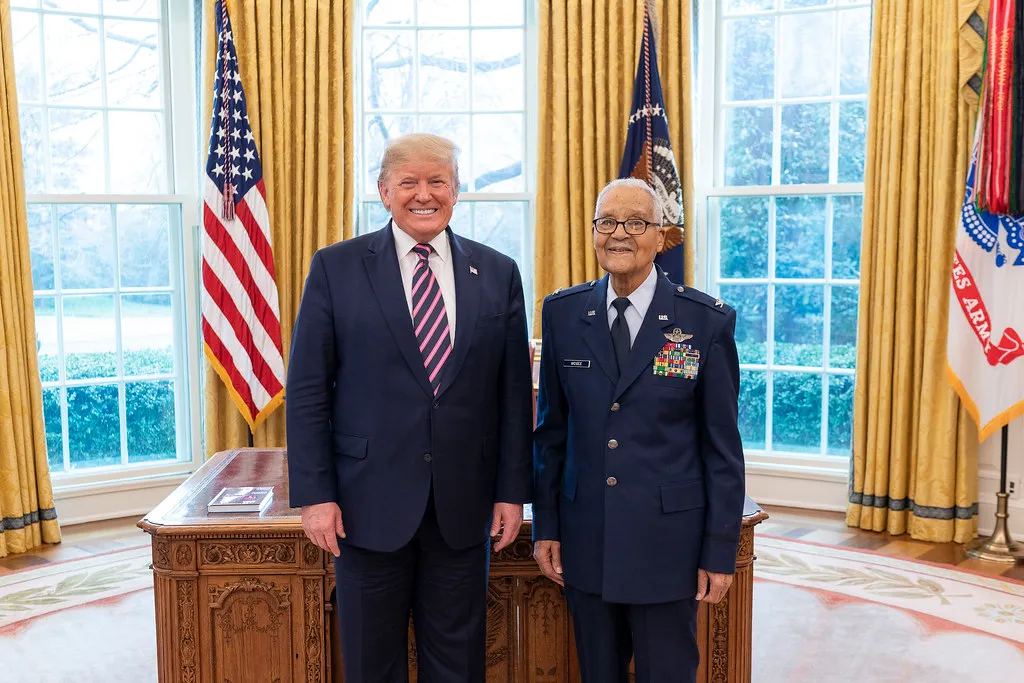
Spotlighting a Surging Economy (Image Credits: Flickr)
Washington, D.C. – President Donald Trump used his State of the Union speech to highlight robust economic progress and defend his tariff strategy following a recent Supreme Court decision.[1][2]
Spotlighting a Surging Economy
Trump opened his economic discussion by pointing to falling inflation rates and declining consumer prices. Core inflation had reached its lowest level in more than five years under his administration, he noted. Egg prices dropped significantly over the past year, easing household budgets.[2]
The president also celebrated policy innovations like Trump accounts, tax-deferred savings plans for newborns seeded with $1,000 from the Treasury. Millions of children had enrolled, with projections that modest contributions could grow to over $100,000 by age 18. He credited these measures, along with no taxes on tips and deductions for auto loan interest, for restoring affordability.[3][2]
Mortgage rates had fallen, unemployment stayed low, and gasoline prices dipped below $2.30 per gallon in most states. Trump positioned these developments as evidence of a golden age for America, bigger and stronger than before.[3]
Addressing the Supreme Court Tariff Ruling
Just four days before the February 24 address, the Supreme Court issued a 6-3 ruling striking down Trump’s sweeping tariffs imposed under the International Emergency Economic Powers Act. Chief Justice John Roberts wrote the majority opinion, arguing the law did not authorize such duties and violated the major questions doctrine by expanding executive power over Congress’s domain.[4][1]
Trump described the decision as a “very unfortunate ruling from the United States Supreme Court.” The tariffs, including 10% reciprocal rates on most imports and higher ones targeting trade deficits, had generated over $124 billion in the fiscal year to date, triple the previous pace. Justices Clarence Thomas, Samuel Alito, and Brett Kavanaugh dissented, defending the president’s authority in foreign affairs.[4][1]
Despite the setback, Trump framed tariffs as essential for national security and revenue, paid by foreign countries that had long exploited U.S. trade imbalances.
New Tariff Strategies and Bold Visions
The president vowed to implement stronger tariffs through alternative legal paths, including Section 122 of the Trade Act of 1974 for a 10% global levy, potentially rising to 15%. He had already announced such measures post-ruling. These would fund debt reduction on the $38 trillion national burden and possibly deliver $2,000 dividends to Americans.[3][1]
- Tariffs to generate hundreds of billions for economic deals and security.
- Potential replacement of income taxes: “As time goes by, I believe the tariffs paid for by foreign countries will, like in the past, substantially replace the modern day system of income tax.”[3]
- Bans on corporate home buying and congressional stock trading.
- Health care shifts to savings accounts over insurance subsidies.
- Tech firms building their own power plants for AI data centers.
Trump urged Congress to codify these priorities, blaming opponents for past price hikes.
Reactions from the Capitol
Several Supreme Court justices attended, though five skipped the event. Trump shook hands with Chief Justice Roberts, Justices Kagan, Kavanaugh, and Barrett. Barrett and Kavanaugh applauded at times, while Roberts and Kagan remained reserved. Republicans cheered the economic boasts, underscoring partisan divides.[3]
Key Takeaways
- Supreme Court limits presidential tariff power under emergency laws, but other statutes remain available.
- Tariff revenue hit record highs before the ruling, fueling Trump’s persistence.
- Economy-focused speech signals priorities for tax cuts and trade reforms ahead.
Trump’s address reinforced his commitment to an America-first economy, undeterred by judicial checks. As policies evolve, the tariff debate will shape fiscal battles. What aspects of his economic plan resonate most with you? Share in the comments.