Something remarkable has been happening across the United States, quietly reshaping entire industries, entire states, and the lives of millions of workers. While economic headlines have swung between optimism and alarm, a collection of powerful job-creating forces has been building steadily below the surface – in semiconductor plants in Arizona, solar fields in Texas, hospital corridors everywhere, and home offices from Maine to Montana.
Most people only see a fraction of this picture. The full story is far more interesting, and honestly, a little surprising. Let’s dive in.
1. Millions of Jobs Added – But the Story Is More Complicated Than It Looks
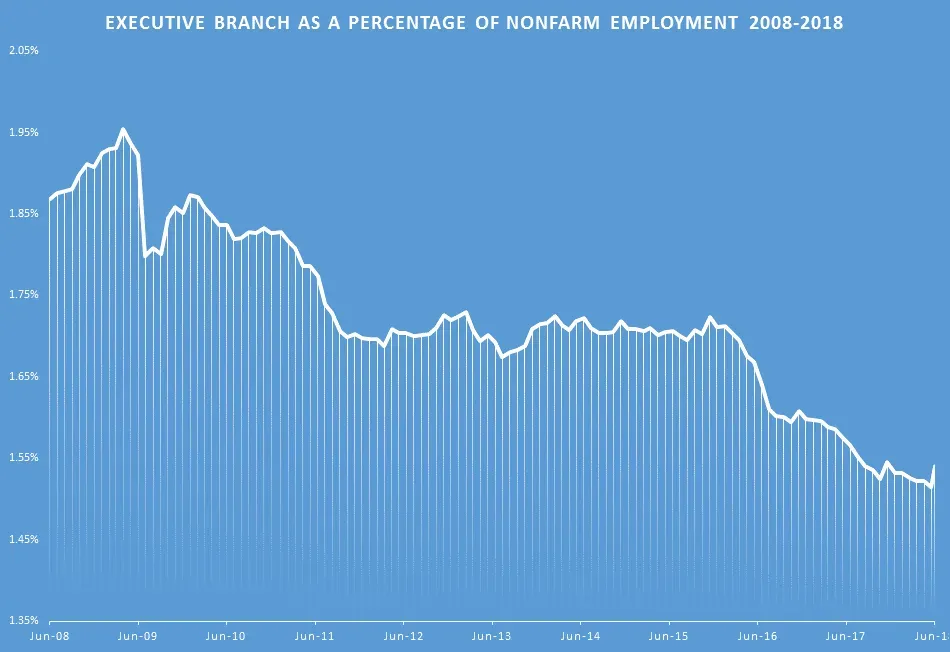
Here’s the thing about American job numbers: they are almost always revised after the fact, and those revisions can be dramatic. The labor market added 1.46 million jobs in all of 2024, but after receiving additional state data, the Bureau of Labor Statistics found the labor market had added only 181,000 jobs in all of 2025 – far fewer than earlier reports suggested.
The Bureau of Labor Statistics’ preliminary benchmark revision showed the U.S. economy added 911,000 fewer jobs than previously reported from April 2024 to March 2025. That is a massive downward correction, the kind that quietly reshapes the entire economic narrative.
It sounds discouraging, but context matters enormously. The U.S. economy is still projected to add 5.2 million jobs from 2024 to 2034, with total employment growing 3.1 percent to reach 175.2 million. The job boom is real. It just requires a longer lens to fully appreciate.
2. Healthcare: The Unstoppable Giant of American Employment

Health care was the largest contributor to job gains in January 2026, adding a net 137,000 jobs – and over the course of the last year, the sector has been the driving force behind job gains. That is not a fluke or a one-month spike. It is a deeply rooted structural trend.
Healthcare and social assistance is projected to have the largest job growth and be the fastest-growing industry sector, growing 8.4 percent, with growth driven by the aging population and the growing prevalence of chronic conditions such as heart disease, cancer, and diabetes.
Healthcare support occupations and healthcare practitioners and technical occupations are projected to be among the fastest-growing occupational groups, growing 12.4 percent and 7.2 percent respectively from 2024 to 2034. If you are looking for job security, healthcare is about as close to a sure thing as the labor market offers right now.
3. Clean Energy: The Sector That Grew Faster Than Almost Everything Else

Clean energy jobs grew more than three times faster than the rest of the U.S. economy in 2024, adding almost 100,000 new jobs and bringing the total number of clean energy workers in the U.S. to 3.56 million, according to E2’s annual Clean Jobs America report. Think about that for a second – more people now work in clean energy than work as nurses or restaurant servers nationwide.
Clean energy employment increased by 142,000 jobs in 2023, accounting for more than half of new energy sector jobs and growing at a rate more than twice as large as that for the rest of the energy sector and the U.S. economy overall. That kind of growth is extraordinary by any measure.
The number of Americans working in clean energy-related occupations today now exceeds the number of jobs in oil, gas and coal by more than three to one. That statistic genuinely surprises most people. Honestly, it surprised me too. According to the Bureau of Labor Statistics, wind turbine technician and solar installer are now the fastest-growing jobs in America.
4. The CHIPS Act: Rewiring America’s Manufacturing Map

Semiconductors – those tiny chips that power everything from smartphones to fighter jets – became a national obsession after pandemic-era shortages exposed how dangerously dependent the U.S. had become on foreign production. The response was legislation on a scale rarely seen in modern history.
According to the Semiconductor Industry Association, companies in the semiconductor industry have announced over 100 projects across the country totaling $540 billion in private sector investments. That is not government spending alone. The private sector followed the federal signal with extraordinary force.
CHIPS for America has awarded over $33 billion of the over $36 billion in proposed incentives funding, with announcements across 21 states expected to create over 125,000 jobs. The CHIPS Act is catalyzing the creation of regional semiconductor talent hubs – Arizona, with TSMC’s expanding operations, is becoming a major center for advanced semiconductor manufacturing talent, with educational institutions rapidly scaling programs to meet the estimated 26,000 jobs that TSMC’s project alone will create.
5. Advanced Manufacturing Rises Again
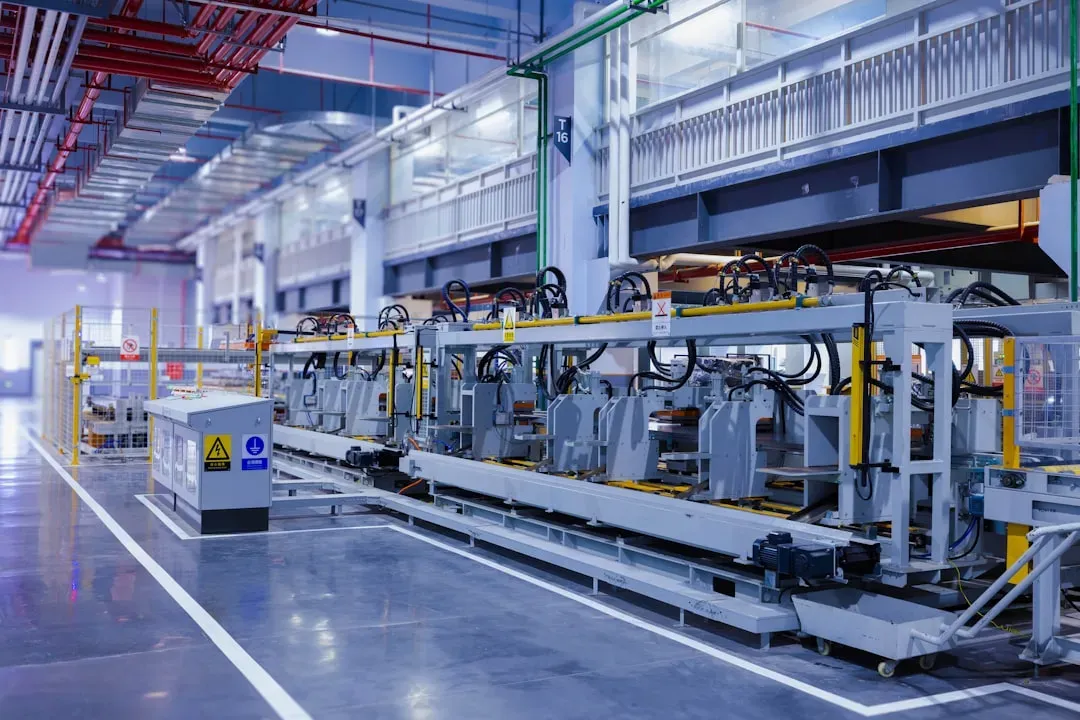
For decades, manufacturing seemed like America’s great lost industry – something that belonged to a different era, shipped overseas, never coming back. That narrative has been cracking open in recent years, and the data is telling a more optimistic story now.
After two decades of declining or flat employment demand in the U.S. semiconductor industry, job creation in U.S. semiconductor manufacturing is growing again, with CHIPS and Science Act funding and incentives likely to spur continued growth in the sector. Since 2021, semiconductor employment has increased an average of 4.3 percent per year to over 203,000 workers in 2023.
Nearly 10,000 clean energy manufacturing jobs were added in 2024, with a growth rate of 1.8 percent – in contrast, manufacturing overall lost more than 55,000 jobs between 2023 and 2024. Clean and advanced manufacturing is not just surviving; it is actively bucking the broader trend. Ohio’s emergence as a semiconductor manufacturing center, anchored by Intel’s massive investment, is driving semiconductor workforce development initiatives across the Midwest.
6. Construction Is Booming – And Few People Are Talking About It

Construction gets overlooked in conversations about the “future of work,” partly because it does not fit the clean narrative of tech-driven disruption. Yet construction employment has surged in a very meaningful way, driven by federal infrastructure investments and the physical demands of building America’s new industrial base.
BLS construction employment growth trends are resulting from the expansion of renewable energy, the increasing need for AI data centers, and an expanding electric vehicle infrastructure. Every new semiconductor fab, every new solar field, every new battery storage facility requires thousands of construction workers before a single product rolls off the line.
Nearly 30 percent of electricians are near retirement age, and training and apprenticeships for these jobs can take three to five years – yet these jobs pay higher than average and do not require college degrees, with electrical repair workers and line workers earning median incomes of $71,270 and $92,560 annually respectively, according to 2024 BLS data. That is a compelling combination for anyone re-evaluating career options.
7. The Wage Story: Lower-Earners Finally Gaining Ground
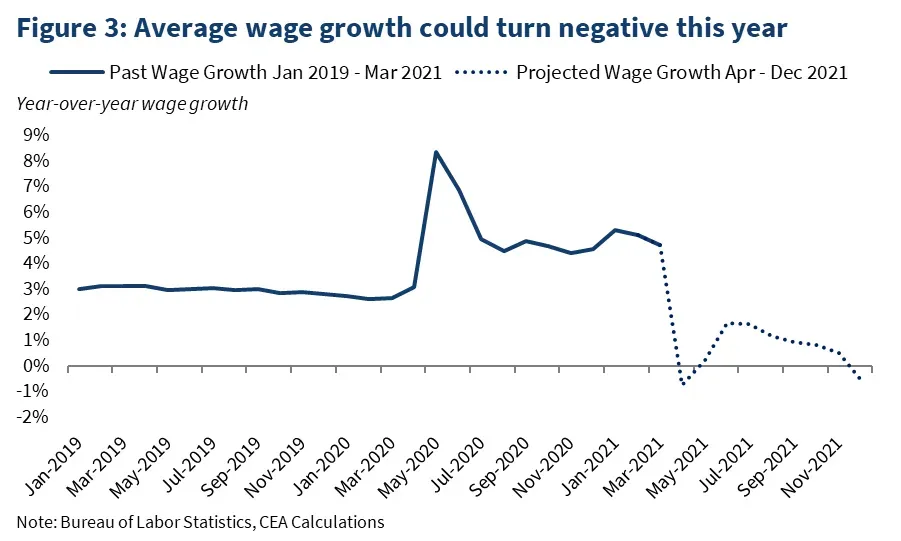
Let’s be real – wage growth is one of the most politically charged topics in any economic discussion. Still, the underlying data from recent years tells a story worth paying attention to, especially for workers at the lower end of the income spectrum who historically got left behind during recoveries.
Wages in many sectors grew faster than inflation at points during 2024 and into 2025, particularly in industries that struggled to attract workers in the post-pandemic period. These jobs pay higher than average and do not require college degrees, which matters enormously for workers who cannot afford or do not want a four-year university path.
Workers’ top reasons for job-seeking in 2025 include better pay at 49 percent, improved work-life balance at 48 percent, and stronger career growth opportunities at 44 percent, according to Owl Labs’ State of Hybrid Work Report. This signals that workers are actively shopping for better offers – and in many sectors, those better offers exist right now.
8. Remote and Hybrid Work: The New Geography of Opportunity

Remote work changed something fundamental about where jobs exist in America. For the first time in modern history, a worker in rural Nebraska or suburban Mississippi could compete for a job based in San Francisco or New York without moving. That is not a small thing.
Nearly 80 percent of employees whose jobs can be done remotely are working either hybrid at 52 percent or fully remote at 26 percent as of early 2025. Over the course of 2024 and 2025, the rates of hybrid and remote work have stabilized, reinforcing that flexible work arrangements are here to stay, with many employers continuing to see value in offering their employees flexible work options.
Remote or hybrid roles make up 20 percent of postings but attract 60 percent of all applications, according to LinkedIn data. That gap – between how many flexible jobs exist and how many people want them – is one of the defining tensions of the 2025 labor market. If flexible work were taken away, almost 40 percent of workers would start job hunting, 22 percent would expect a raise, and 5 percent would outright quit, according to Owl Labs.
9. The Labor Force Is Recovering – Workers Are Re-Entering

One underreported dimension of the job boom is the simple fact that more Americans have been returning to the workforce. The pandemic caused millions to exit employment, retire early, or step away for caregiving – and not all of them came back at once.
The gradual recovery in labor force participation through 2024 is meaningful precisely because it represents real people reconnecting with economic opportunity. The unemployment rate fell from 4.4 percent to 4.3 percent in January 2026, reflecting ongoing stability despite the cooling environment.
Total employment is projected to grow 3.1 percent between 2024 and 2034, increasing from 170.0 million to 175.2 million, for a total of 5.2 million additional new jobs. Workers re-entering the labor force are doing so into a market that, despite its complications, still offers more sectors of genuine growth than at almost any point in recent memory.
10. The Talent Gap: The Hidden Risk Inside the Boom

Here is the uncomfortable flip side of everything we have discussed. A job boom is only as good as the available talent to fill those jobs. Across several of the fastest-growing sectors – semiconductors, clean energy, healthcare, construction – a serious talent shortage is already forming, and it is getting worse.
The semiconductor industry faces an unprecedented talent shortage that threatens to undermine the CHIPS Act’s ambitious goals, with approximately 67,000 jobs for technicians, computer scientists, and engineers at risk of going unfilled by 2030 – representing roughly 22 percent of the total semiconductor industry workforce.
Nearly 30 percent of electricians are near retirement age, and training and apprenticeships for these jobs can take three to five years. That timeline is a genuine structural problem. In addition to recent federal policy changes threatening the momentum of the clean energy industry, construction and manufacturing industries are facing significant worker shortages as a significant portion of the current workforce is nearing retirement age. The jobs exist. The pipeline of qualified workers is lagging dangerously behind.
Conclusion: The Boom Is Real – But It Won’t Wait for You

America’s job market is not a single story. It is dozens of stories unfolding simultaneously – some inspiring, some cautionary, some wildly underreported. The clean energy surge, the semiconductor renaissance, healthcare’s relentless growth, and the reshaping of work itself through remote and hybrid arrangements are not abstract trends. They represent real choices, real careers, and real opportunities for workers willing to look beyond the standard headlines.
The talent gap is perhaps the most important signal of all. A boom is only transformative if workers are positioned to claim their share of it. That means retraining, reskilling, and sometimes a willingness to move toward the sectors that are actually growing rather than the ones we are most familiar with.
The hidden job boom is real – and it is happening right now, in industries, states, and roles that most people are not yet paying attention to. The question is simply whether you are looking in the right direction. What sector of this economic transformation surprises you most?