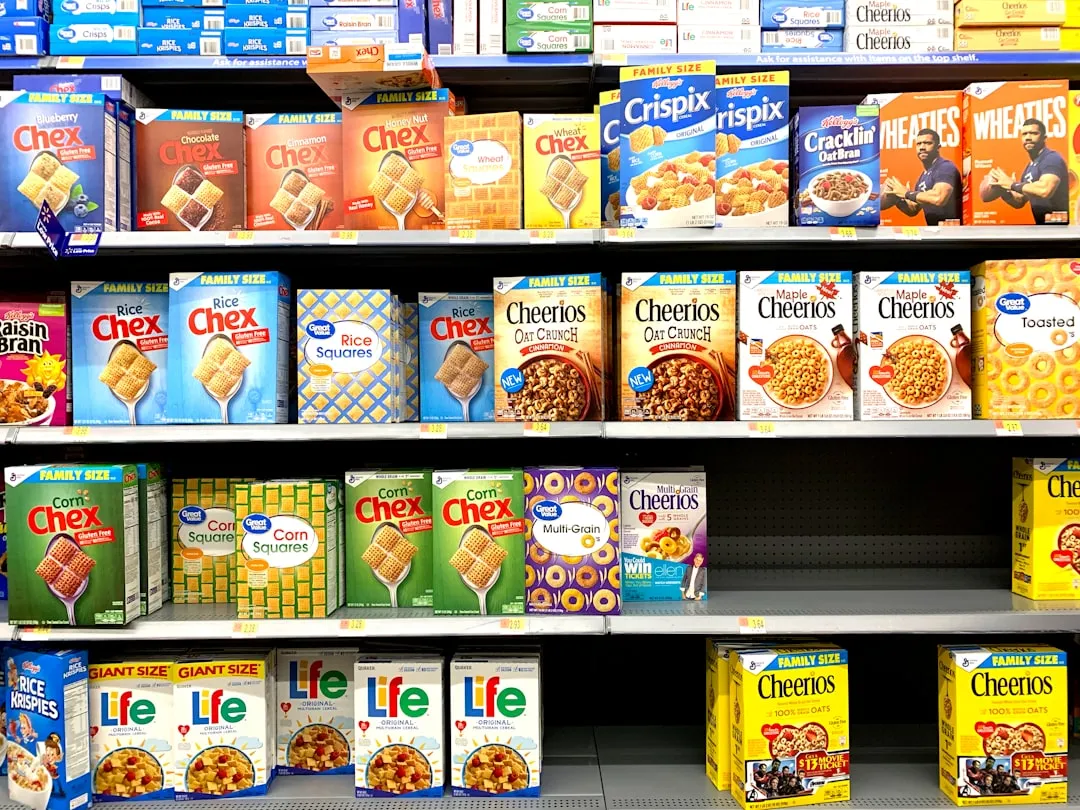
Swift Progress Meets Growing Demand (Image Credits: Unsplash)
Target committed to fully eliminating cereals with synthetic colors from its shelves by the end of May, capping years of gradual changes in response to consumer preferences.
Swift Progress Meets Growing Demand
Already, 85 percent of Target’s cereal sales featured products without synthetic dyes. The retailer accelerated its efforts after observing heightened interest in cleaner ingredients among shoppers. National brands and Target’s own lines reformulated recipes to comply. Cereals like Trix and Lucky Charms from General Mills received updates to align with the policy.
Target made clear it would discontinue any brands refusing to adapt. This stance reflects broader shifts in the grocery sector. Consumers increasingly scrutinize labels for artificial additives. The move positions Target ahead of some competitors still lagging on timelines.
FDA Actions Fuel Retailer Reforms
The U.S. Food and Drug Administration banned Red No. 3 last January, targeting petroleum-based dyes. Months later, the agency encouraged food manufacturers to phase out such colors by the end of 2026. Regulators continue evaluating others, including Red No. 40, Yellow Nos. 5 and 6, and Blue No. 1.
Recently, the FDA eased labeling restrictions, allowing “no artificial colors” claims for products free of synthetic dyes even if they use plant-derived alternatives. These steps heightened pressure on retailers. Target’s decision underscores compliance with evolving standards. Government involvement has prompted widespread industry reviews.
Retail Peers Join the Shift
Whole Foods prohibited artificial colors from its inception in 1980. Trader Joe’s maintains a similar policy across its offerings. Walmart pledged to remove synthetic dyes and dozens of other additives from store brands by January 2027.
General Mills aims to clear artificial dyes from U.S. cereals by summer 2026. WK Kellogg targets the end of 2027 for its lineup, including Froot Loops and Apple Jacks. Kraft Heinz, Nestle, and Conagra Brands also committed to eliminating petroleum-based synthetics in the coming years.
Target’s Private Label Sets Example
Good & Gather, Target’s private brand launched in 2019, avoids artificial flavors, sweeteners, synthetic colors, and high-fructose corn syrup. It spans over 2,500 items in categories like dairy, produce, pasta, meat, and baby food. This foundation supported the cereal transition.
“We know consumers are increasingly prioritizing healthier lifestyles, and we’re moving quickly to evolve our offerings to meet their needs,” said Cara Sylvester, Target’s executive vice president and chief merchandising officer.
Key Takeaways
- Target achieves 85% dye-free cereal sales now, full compliance by May’s end.
- FDA bans and reviews drive industry-wide dye reductions by 2026-2027.
- Private brands like Good & Gather exemplify additive-free innovation.
Target’s initiative highlights a pivotal moment for breakfast foods, where health-conscious choices reshape store aisles. Retailers prioritizing natural ingredients gain an edge in a competitive market. Shoppers benefit from clearer options amid regulatory momentum. What changes have you noticed on grocery shelves? Share your thoughts in the comments.