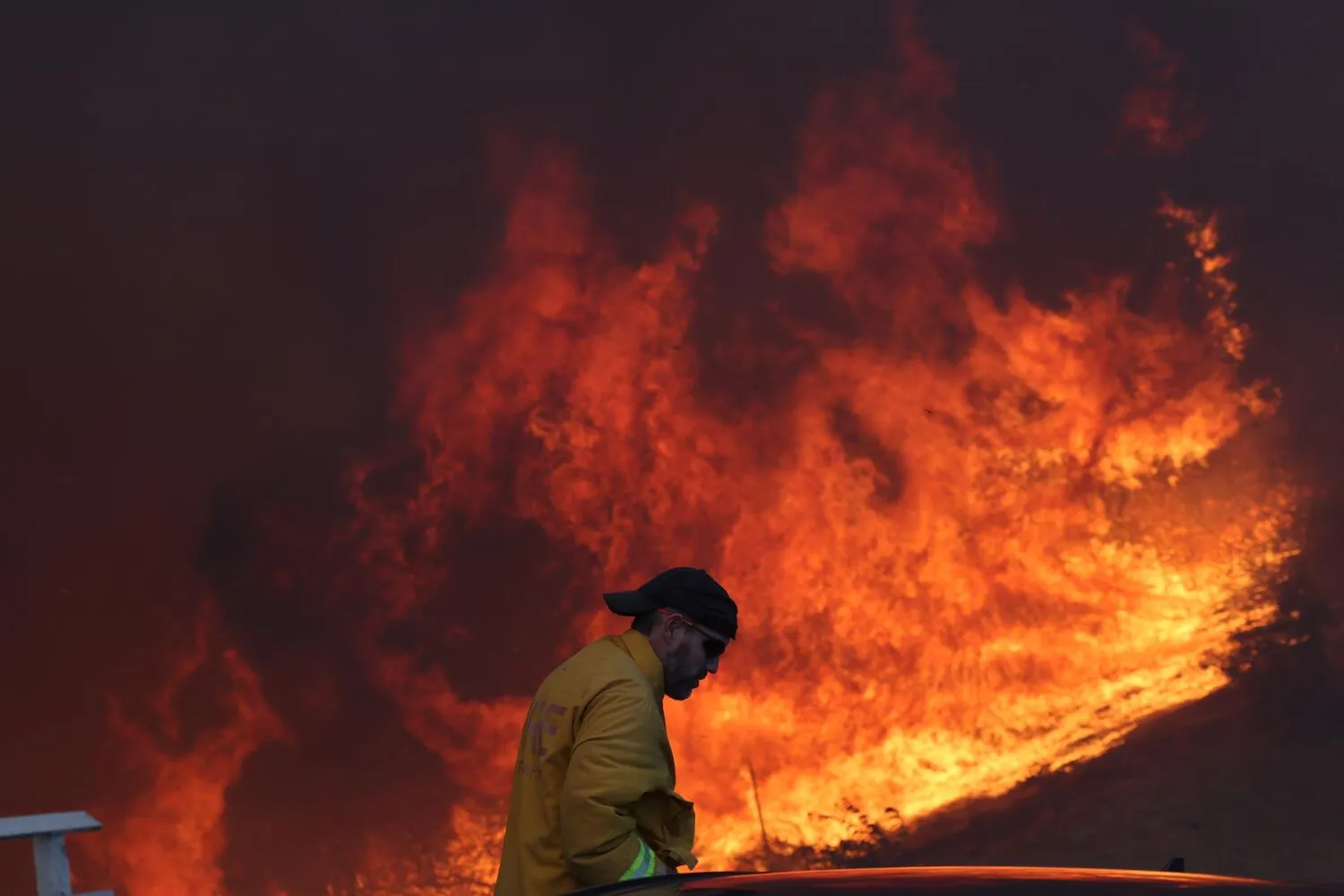
Early Warnings from the Front Lines (Image Credits: Ca-times.brightspotcdn.com)
Pacific Palisades — Sworn depositions from Los Angeles Fire Department personnel highlighted confusion and deflection over the decision to remove crews from the Lachman fire site despite reports of persistent hazards.[1][2]
Early Warnings from the Front Lines
Firefighter Scott Pike, a 23-year veteran working overtime on January 2, 2025, spotted multiple trouble spots while tasked with retrieving hoses from the burn area. He observed about five smoking patches and ash pits, one so intense that he avoided touching it with his gloved hand.
Pike kicked at the debris with his boot, revealing “red hot, like, coals” that crackled and smoldered. He alerted a captain from Engine 69 and fellow firefighters, stating, “Hey, Cap… We have hot spots in general. We have some ash pits.”[2] No further instructions followed, leaving Pike with a sense that his input fell on deaf ears. “It kind of sits heavy with me that nobody listened to me,” he later testified.[3]
Captain Michael McIndoe from Fire Station 69 echoed similar unease. After reviewing weather forecasts predicting warmer conditions, he contacted Battalion Chief Mario Garcia to argue against pulling the hoses so soon. Garcia responded, “OK. Let me go check it out, and then I’ll get back to you.”[1]
Leadership Accounts Fail to Pinpoint the Decision
Battalion Chief Mario Garcia, who oversaw operations that day, maintained that no one raised alarms with him about the site’s condition. He described the order to depart as a “collaborative decision” formed prior to his shift starting around midday. By 1:35 p.m., Garcia texted superiors confirming all equipment had been cleared.[1]
Preceding chief Martin Mullen had patrolled the perimeter four times overnight and left hoses in place as a safeguard. He notified Garcia and assistants Vinny Alvarado and Joseph Everett, but played no role in the final pullout. Meanwhile, text messages from January 1 showed planning for hose removal, with Chief Deputy Phillip Fligiel noting it could take all day.[2]
Garcia walked the area himself and saw no smoke or issues, insisting, “Nobody mentioned anything about there being any concerns of any sort.”[1] Higher-ups like Assistant Chief Joseph Everett distanced themselves, stating they made no command decisions on site.
From Contained Blaze to Devastating Rekindle
The Lachman fire erupted shortly after midnight on January 1, 2025, in Pacific Palisades and was declared fully contained at eight acres by 4:46 a.m. Federal investigators suspect arson. Crews departed the next day amid overlooked risks like hot rocks, tree stumps, and incomplete containment lines.[2]
Six days later, on January 7, Santa Ana winds fanned embers from the site into the Palisades fire. The blaze scorched over 23,000 acres across Pacific Palisades, Malibu, and the Santa Monica Mountains, claiming 12 lives and razing thousands of homes.[3]
- January 1: Fire contained; mop-up begins.
- January 2: Hoses removed despite hotspots.
- January 7: Palisades fire erupts from rekindle.
- January 2026: Key depositions in victims’ lawsuit.
Scrutiny Mounts Amid Lawsuit and Probes
Transcripts from a dozen firefighters emerged last week as part of a lawsuit by Palisades fire victims against Los Angeles and California. Plaintiffs contend the city botched mop-up while the state neglected burn scar monitoring in Topanga State Park.[1]
LAFD spokesperson Stephanie Bishop declined to identify who issued the withdrawal order, citing an active investigation. Mayor Karen Bass has pushed for independent reviews, including one by the Fire Safety Research Institute. New protocols now address such extinguishment lapses.[2]
Key Takeaways
- Multiple firefighters flagged smoldering risks, but no escalation occurred.
- No single leader claimed final authority for pulling crews.
- Ongoing probes aim to prevent repeats of the Palisades tragedy.
As investigations continue, the testimonies underscore a breakdown in communication that amplified a minor incident into catastrophe. What steps should fire departments take to ensure ignored warnings never lead to disaster again? Share your thoughts in the comments.