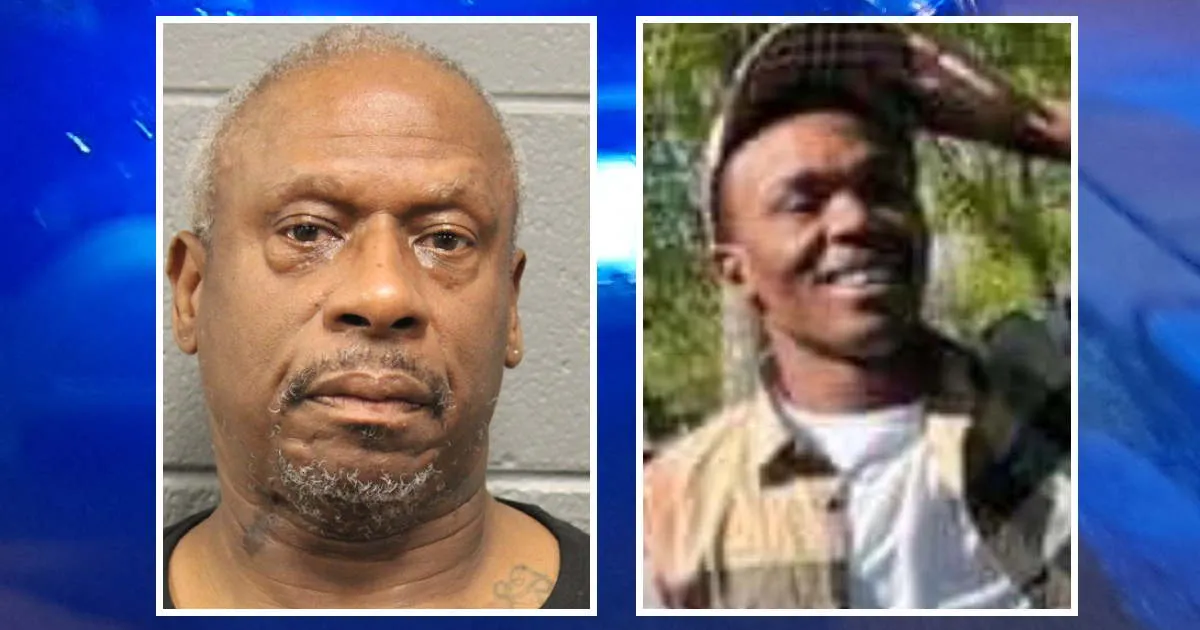
A Long Drive Fueled by Deadly Intent (Image Credits: Cwbchicago.com)
Chicago – Prosecutors charged a 61-year-old Georgia resident, who had served time twice for attempted murder, with traveling hundreds of miles to help carry out the fatal shooting of a 28-year-old man on the city’s West Side last summer.[1]
A Long Drive Fueled by Deadly Intent
Donnell Simmons left Lithonia, Georgia, around 4 p.m. on August 15, 2025, behind the wheel of his black 2019 Kia Sportage. He arrived in Chicago roughly 10 hours later, near 2 a.m. the following day. Court records show he communicated by phone at least five times with James Taylor, an alleged accomplice already charged in the case.[1]
Simmons faced first-degree murder charges in the death of Navell Morris. The incident unfolded on August 17 in the 4900 block of West Adams Street, near the corner of Lavergne and Monroe streets. Prosecutors portrayed Simmons as a willing participant in a calculated act of violence.[1]
The Moment Guns Blazed on Adams Street
Surveillance video captured Morris standing alone just before 11:39 a.m. Simmons allegedly pulled the Kia alongside him. Taylor emerged from the rear passenger door and gave chase as Morris fled. Taylor fired multiple rounds from a 10mm semi-automatic pistol.[1]
A witness recorded the pursuit on her phone. She reported seeing Simmons step out of the driver’s seat, possibly armed, before limping into an alley. Additional gunshots echoed from that direction while he remained out of sight. Morris succumbed to multiple gunshot wounds at the scene. Investigators later recovered 9mm and 10mm shell casings nearby.[1]
Trail of Evidence Spans Highways and Cities
Chicago police camera footage showed the Kia circling the area several times in the hour leading up to the shooting. Cellphone location data and license plate readers traced the vehicle’s path along interstate highways from Georgia.[1]
Key evidence included:
- Phone records linking Simmons and Taylor before the crime.
- Surveillance video of the Kia at the scene and on patrol cameras.
- License plate data confirming the cross-state journey.
- Witness video and statements describing Simmons’ actions.
- Shell casings matching weapons later tied to the vehicle.
These elements formed a web that prosecutors presented in court to secure Simmons’ detention.[1]
Flight to Rockford and Eventual Arrest
The Kia headed north to Rockford immediately after the shooting. Ring doorbell footage there showed Taylor and Simmons at a residence. Simmons appeared carrying a spray bottle and a weighted black plastic bag, which he placed in the vehicle’s rear door.[1]
Rockford officers, tipped off by Chicago police about the wanted SUV, stopped it soon after. Simmons sat alone inside. A search uncovered the bag with disassembled ghost guns – a 9mm and a 10mm – their slides and barrels missing. A fingerprint on the 9mm receiver matched Simmons.[1]
Authorities released him at the scene without immediate charges. Months later, witnesses identified him from video evidence. Police arrested him in Georgia. Judge John Hock called Simmons an “extreme threat” and approved the state’s request to hold him without bail.[1]
This interstate case highlights how technology and persistent investigation bridged distances to connect a suspect to a local crime. It raises questions about the mobility of those with violent histories. For more details, see the full CWB Chicago report.[1]
Key Takeaways
- Simmons’ prior convictions did not deter his alleged involvement in a fatal Chicago shooting.
- Digital evidence like cell data and cameras proved crucial in tracking the suspects.
- Ghost gun parts found in the vehicle directly implicated Simmons through fingerprints.
What do you think about the role of technology in solving such cases? Tell us in the comments.