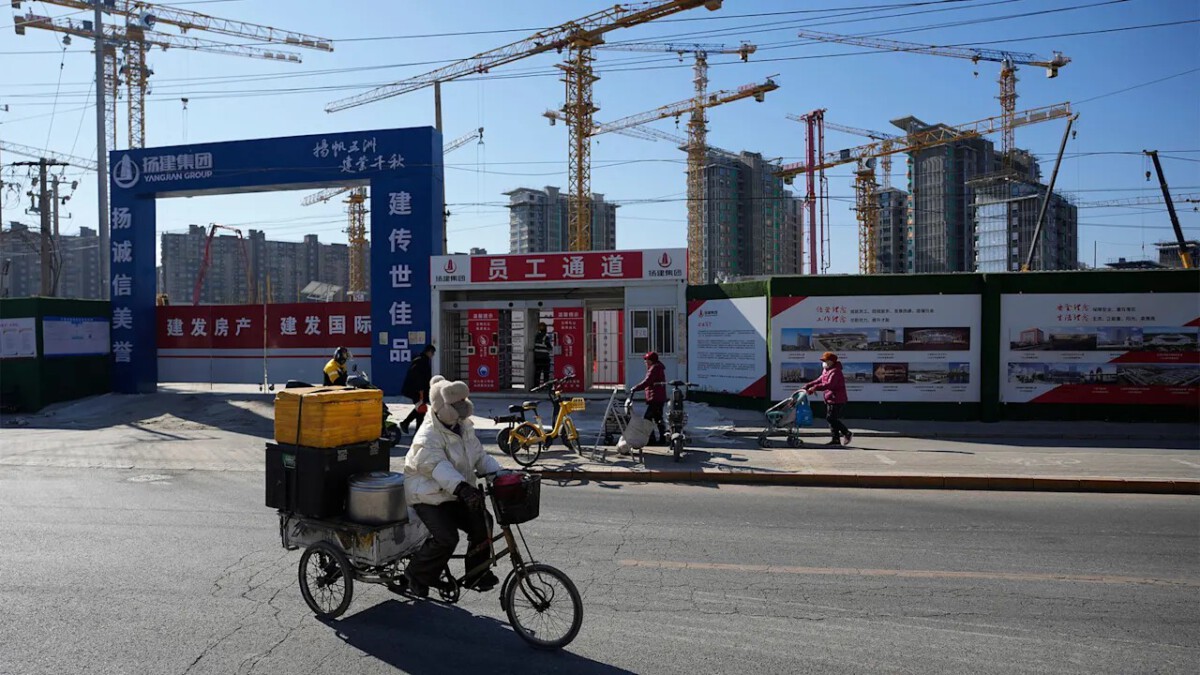
Momentum Wanes Despite Official Gains (Image Credits: Images.fastcompany.com)
Beijing – The National People’s Congress convened amid signs of fading economic vigor, with leaders set to address growth targets and a new five-year plan through 2030.
Momentum Wanes Despite Official Gains
China achieved roughly 5% growth in 2025, a figure propped up by robust exports even as U.S. tariffs posed hurdles. Factories hummed with overseas orders, yielding a $1.2 trillion trade surplus. Yet economists highlighted deeper troubles, including rising imbalances masked by this export reliance.
Families trimmed spending during Lunar New Year, slashing prices on symbols of prosperity like orchids by up to 40%. Small businesses voiced frustration over lean times. “Hitting the 2025 growth target is hardly reassuring as the Chinese economy is losing growth momentum,” Eswar Prasad, a Cornell University economics professor, noted in comments to the Associated Press.
Housing Crisis Deepens Job Woes
The property sector’s slump, underway for years, showed no quick end. Developers faced defaults after regulators curbed excessive debt, sending home prices down more than 20% since 2021. This collapse erased countless jobs in a key industry.
With 12.7 million graduates flooding the market, youth unemployment topped 16%. Many young people disengaged entirely, embracing a “lying flat” mindset. Households, often tied to home values, held back on spending, undermining shifts toward consumer-led growth. Policymakers eyed welfare boosts as a potential remedy during the congress.
Tech Ambitions Clash with Overcapacity
Leader Xi Jinping pursued high-tech dominance in AI, robotics, chips, electric vehicles, and renewables. State subsidies fueled output surges, often exceeding domestic and global needs. Trading partners raised alarms over unfair edges.
Analysts anticipated continued support for these sectors in the five-year blueprint. “What we’ll see is the trade-off between whether it’s going to be industry and tech, or looking after domestic demand,” observed Alexander Davey of the Mercator Institute for China Studies. The International Monetary Fund called for subsidy reductions to ease tensions. Meanwhile, advanced industries offered fewer jobs than traditional construction once did.
Xi’s Grip Tightens Amid Purges
The congress unfolded as a grand display in Beijing’s Great Hall of the People, complete with military bands and delegates in ethnic attire. Votes overwhelmingly ratified preordained decisions, underscoring party unity under Xi.
Since 2012, Xi centralized authority, prompting speculation of lifelong rule. Anti-corruption drives ousted rivals, including military figures. Just before the session, nine officers lost seats, extending a purge capped by the removal of Gen. Zhang Youxia. Such moves aimed for loyalty, though they risked short-term readiness, according to a Center for Strategic and International Studies report.
- Exports drove 2025’s 5% growth, but housing and unemployment signal vulnerabilities.
- Tech subsidies risk overcapacity and trade friction.
- Congress endorsed priorities balancing innovation with domestic support.
China’s path forward hinges on reconciling export strength with internal revival. Leaders must navigate these tensions to sustain progress. What steps should policymakers prioritize next? Share your views in the comments.