
There is something almost heartbreaking about the way a restaurant can disappear. Not just the food, but the smell of the parking lot, the sticky menus, the booths that felt like home. For millions of Americans, certain chains were not just places to eat. They were rituals. Family landmarks. The kind of places tied to summer road trips or birthday dinners that you still think about decades later.
Some of these chains closed slowly, bled dry by changing tastes and bad management. Others went out in shocking, almost surreal ways. A few are even attempting ghost-like comebacks. So before we raise a glass of iced tea to the dining rooms of the past, let’s revisit five legendary chains that are either gone, or so diminished they barely resemble what they once were. What they left behind says a lot about America, and about us. Let’s dive in.
Howard Johnson’s: The Orange Roof That Defined American Travel
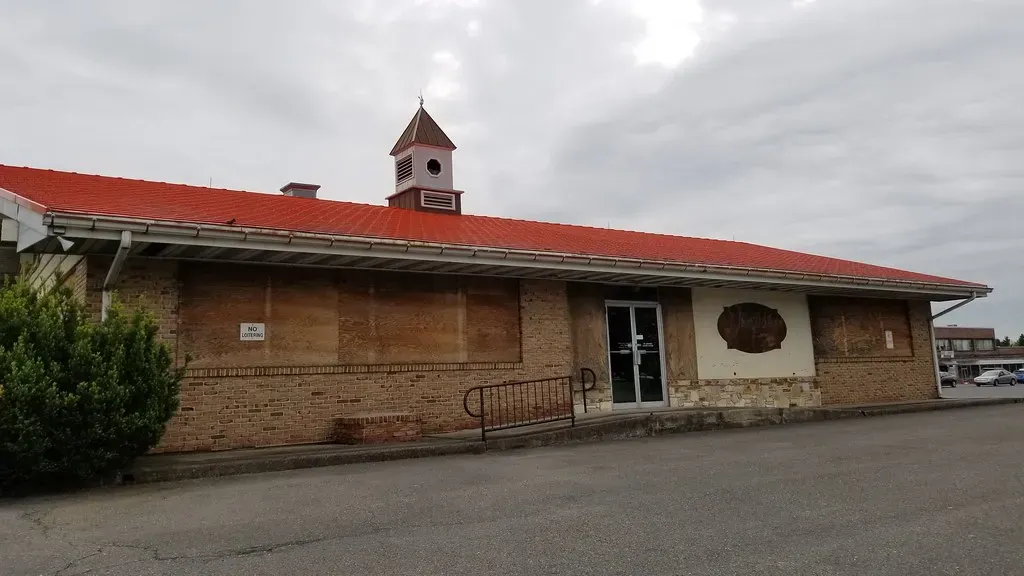
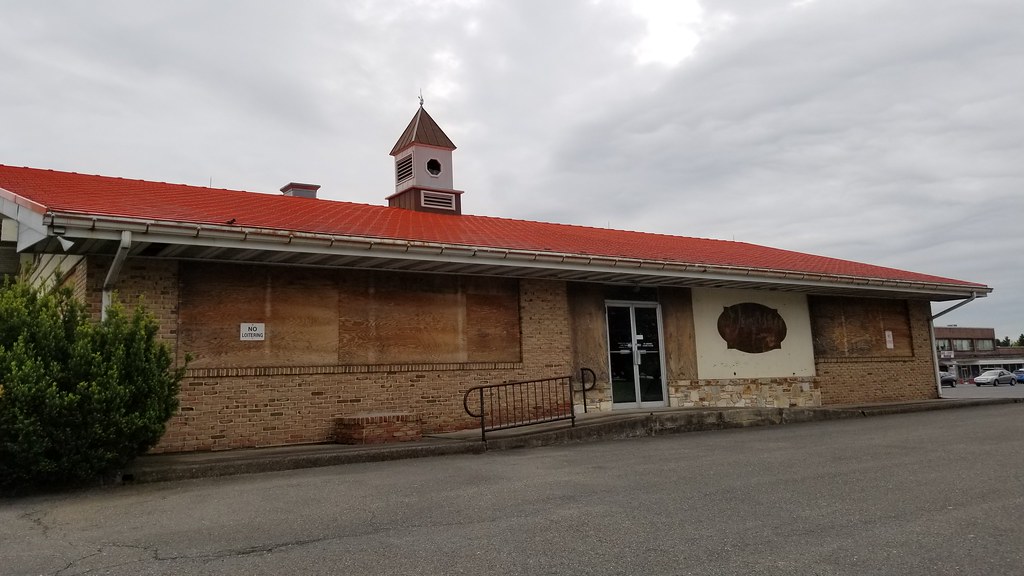
Here’s the thing: if you want one symbol for the golden age of American road-trip dining, it was never a golden arch. It was an orange roof. The longtime roadside staple had about 1,000 restaurants in the 1960s and 1970s, and was once America’s largest restaurant chain, instantly recognizable for its orange roofs and famous for serving 28 types of ice cream. That is not a small detail. At its absolute peak, Howard Johnson’s fed more Americans than anyone except the U.S. Army.
Throughout the 1960s and 1970s, it had become the largest restaurant chain in the U.S., but following its franchise split in 1986, the brand severely dwindled in number until eventually disappearing altogether. The decline was slow, brutal, and entirely avoidable in hindsight. Ownership changed hands multiple times, revival plans came and went, and the restaurants kept closing one by one.
The last surviving Howard Johnson’s restaurant, located in Lake George, New York, a popular summer vacation spot near the Adirondack Mountains, closed its doors in 2022, with the property going up for lease. A Facebook post from a fan captured the moment perfectly. “Lake George is officially dead,” the fan wrote, sharing pictures of the abandoned restaurant. Cobwebs on the door. An era over.
Chi-Chi’s: A Festive Legacy Destroyed by One Tragic Outbreak
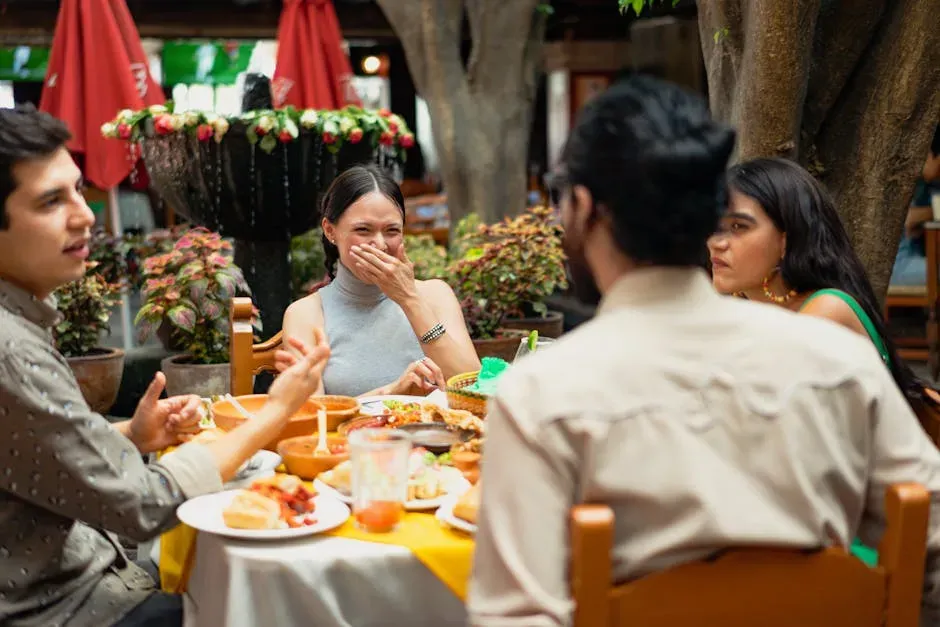
For anyone who grew up in the 1980s or early 1990s, Chi-Chi’s was a revelation. Sizzling fajitas, free chips and salsa, frozen margaritas, festive décor that made a Tuesday feel like a fiesta. Chi-Chi’s was originally the name of an American chain of Mexican restaurants, founded in 1975 by Marno McDermott and former Green Bay Packers player Max McGee. Honestly, it had the kind of energy that modern “fast casual” chains have spent fortunes trying to recreate.
In November 2003, a month after filing for Chapter 11 bankruptcy, Chi-Chi’s was hit with the largest hepatitis A outbreak in American history, with at least four deaths and 660 other victims of illness in the Pittsburgh area. The hepatitis was traced back to green onions at the Chi-Chi’s at Beaver Valley Mall near Monaca, Pennsylvania. The timing could not have been more devastating. The chain was already financially fragile.
The chain closed its remaining restaurants on the weekend of September 18, 2004. The Chi-Chi’s hepatitis A outbreak served as a wake-up call for the food industry, and Chi-Chi’s was compelled to pay $800,000 in class action compensations along with an over $6 million settlement to a man whose hepatitis had caused him to require a liver transplant. Still, there is a postscript worth mentioning. The first restaurant in the revived Chi-Chi’s chain opened in St. Louis Park, Minnesota on October 6, 2025. Whether it can truly rebuild what was lost remains very much an open question.
Friendly’s: A Slow-Motion Farewell to the Ice Cream Booth
If you grew up on the East Coast, the mention of Friendly’s probably triggers something visceral. The Fribble milkshake. The “Happy Ending” sundae. The clown cone. Friendly’s has been serving up tasty sundaes, Fribbles, burgers and more since 1935, with the chain having a strong hold on children especially in the 80s and early 2000s, and at its peak, there were over 850 Friendly’s restaurants across the United States. That’s a massive footprint for what was essentially a regional comfort brand.
The fall has been genuinely painful to watch. Friendly’s filed for Chapter 11 bankruptcy again in 2020 and was purchased in 2021 by Amici Partner Group and Brix Holdings, which then announced a Friendly’s comeback in 2024 after the closure of 23 more restaurants. The comeback included new branding, remodeled locations, and menu changes. Plans included opening locations in Texas and Florida, and while some Orlando locations did open, additional restaurants also closed, leaving only 89 total locations as of March 2025.
The situation has since deteriorated further. Following years of multiple restaurant closures, Friendly’s now operates only four restaurants across two states, including three in New Jersey and one in New York. From over 850 locations to four. That is not a decline. That is near-extinction. The ice cream still exists in grocery stores, but it is owned separately now, and those sales no longer directly benefit the restaurant chain, as Dairy Farmers of America now owns the ice cream rights.
Steak and Ale: Tudor Walls, Salad Bars, and a Second Chance
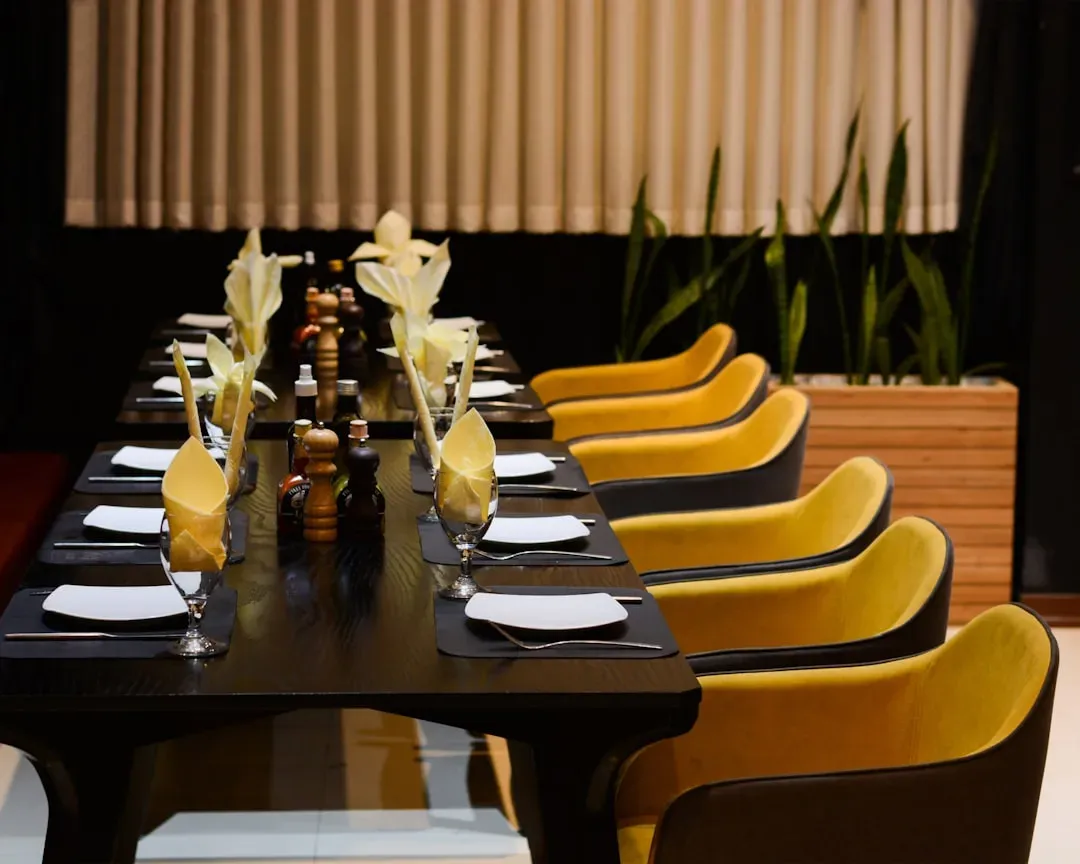
There are chains you miss, and then there is Steak and Ale. Something about the Tudor-style architecture, the dim lighting, the affordable prime rib, and that iconic salad bar felt genuinely special. Steak and Ale was an American chain of restaurants that was influential in the growth of casual dining, founded in 1966, achieving major success in the 1970s and 1980s before declaring Chapter 7 bankruptcy and closing its remaining 58 locations on July 29, 2008.
The closure was sudden and total. No gradual wind-down, no restructuring. Just gone overnight. Steak and Ale, founded in 1966 by the late Norman Brinker, left the map with a Chapter 7 bankruptcy in 2008, at a time when the brand had grown as large as 280 units in the 1980s. For years, a devoted Facebook group titled “Steak and Ale’s Comeback” quietly accumulated tens of thousands of followers, a strange little monument to nostalgia for a place no longer standing.
Then something remarkable happened. On July 8, 2024, the first new Steak and Ale location opened as a franchised restaurant inside a Wyndham hotel in Burnsville, Minnesota, with separate entrance, patio, and seating for 225, marking the brand’s official comeback after a 16-year hiatus. Under the “new Steak and Ale,” the chain is marketed as a “polished casual” concept blending classic brand heritage with updated service, and as of 2025, it is once again accepting franchise applications and appears to be actively rebuilding. I think it’s worth rooting for, even cautiously.
Burger Chef: The Ghost That McDonald’s Erased
Most people under 40 have never heard of Burger Chef. That is, in itself, the tragedy. Despite reaching over 1,000 restaurants, with over 500 attached motels into the 1970s, the proliferation of fast food chains was starting to have an impact on HoJo’s bottom line, much like fast-casual dining has contributed to sit-down restaurant struggles today. Burger Chef faced a similar competitive extinction. At its peak in the 1970s, it operated more than 1,000 locations across the U.S., making it one of McDonald’s most serious rivals at the time.
The chain was sold to Hardee’s in 1982, and locations were gradually rebranded and absorbed. By the mid-1980s, Burger Chef had essentially ceased to exist as an independent entity. It was not a dramatic collapse with bankruptcy headlines. It was a quiet erasure, the corporate equivalent of painting over a mural. Whole communities watched their local Burger Chef get a new sign and a different menu, and the brand simply vanished without ceremony.
What makes Burger Chef genuinely fascinating is how fondly people still remember it. The “Funmeal” predated McDonald’s Happy Meal. The flame-broiled burgers had a distinct flavor that fans still describe with unusual precision. While the economy has struggled, Americans still value restaurants, and according to the National Restaurant Association’s State of the Restaurant Industry 2025, the food service industry is forecast to reach $1.5 trillion in sales in 2025. Nostalgia is real currency in that market, which makes Burger Chef’s continued absence all the more puzzling given how passionately people remember it.
Why We Keep Grieving These Places
It’s hard to say for sure exactly why these closures hit differently than, say, a clothing store going out of business. Maybe it’s because restaurants are tied to time in a way nothing else quite is. They anchor memories. Howard Johnson’s left an indelible mark on American history, most notably on the highway system that crisscrosses the country, and in many minds as a distinctive orange roof seen on family road trips. That is not just nostalgia. That is geography. That is identity.
The broader industry context matters too. Casual dining chains have faced declining foot traffic compared to pre-2019 levels, as consumers increasingly choose convenience and fast-casual options over sit-down experiences. The Chi-Chi’s outbreak and other foodborne illness cases throughout the early 2000s led to the adoption of the Food Safety Modernization Act in 2011, which reshaped how the entire restaurant industry operates. Sometimes the loss of a single chain reverberates far beyond its own menu.
What these five chains shared, beyond their declines, was a genuine emotional connection with customers that most modern brands spend millions trying to manufacture artificially. The orange roofs, the salad bars, the clown cones, the fried clams. These were not just products. They were experiences that people carried with them for decades. Some of these chains are attempting comebacks in 2025 and beyond, with ghost kitchens, smaller footprints, and franchise deals. Whether any of them can truly recapture the feeling is another question entirely.
Perhaps the most honest takeaway here is this: we often don’t realize what something meant to us until we can no longer have it. These restaurants were not perfect. Some were poorly managed, some fell victim to tragedy, some simply could not adapt. But they mattered. And for those of us who remember them, they always will.
Which of these chains do you miss the most? Tell us in the comments.