
There is a particular kind of moment that sneaks up on you. You are walking through a familiar neighborhood, you round a corner, and suddenly the playground you spent entire summers conquering is right there in front of you. It is exactly where you remembered it. Except somehow, it is also completely different. Smaller. Quieter. Oddly manageable.
I had that moment recently. The climbing frame I once thought of as a small mountain barely reaches my shoulders. The “huge” open field behind it looked like something you could cross in about twelve steps. It was disorienting in the most fascinating way. So what is actually happening in your brain when you revisit a place from childhood? And why do these spaces feel both shrunken and strangely safer now? Let’s dive in.
Your Body Was the Measuring Stick All Along

Here’s the thing – as a child, you were never really measuring the world in feet or meters. You were measuring it in body lengths, reach, and effort. Environmental psychology research, including foundational work by Proffitt (2006) published in Psychological Science, established that perception is shaped by body-based scaling. When you were small, a six-foot climbing structure genuinely required enormous physical effort and courage. Your brain encoded it as large because, relative to your body, it was.
As you grow, your frame of reference shifts entirely. The structure hasn’t changed. You have. Think of it like using a different ruler – a child’s ruler shows the world in large units, and an adult’s ruler measures everything with smaller, more manageable increments. Both affordance theory and behavior setting theory highlight that human perception is fundamentally about the dynamic relationship between an individual and their environment, though the focus differs depending on the framework applied. In short, environmental perception is always personal. Always embodied.
Memory Is Not a Recording – It Is a Reconstruction
I know it sounds crazy, but your memory of that playground was never perfectly accurate to begin with. The American Psychological Association has documented how early childhood memories are inherently fragmented, a phenomenon known as “childhood amnesia.” The availability of encoding mechanisms for episodic memory during a period of human life that is later lost from our autobiographical record implies that postencoding mechanisms, whereby memories from infancy become inaccessible for retrieval, may be more responsible for infantile amnesia.
What happens, then? Your brain fills in the gaps. When children store incomplete memories, the mind reconstructs them later with details that often exaggerate scale, emotion, and drama. Cognitive development researchers have described this in ongoing work, with Harvard Memory Lab summaries from 2023 noting how memory reconstruction regularly distorts physical size. Your mental image of the jungle gym grew taller each time you revisited it in memory. The actual jungle gym never moved an inch.
The Hippocampus Has Been Quietly Remodeling Your Past

Your brain’s memory center, the hippocampus, does not simply archive experiences like files on a hard drive. Finding one’s way around an environment and remembering the events that occur within it are crucial cognitive abilities that have been linked to the hippocampus and medial temporal lobes. What’s fascinating is that spatial memories don’t stay fixed. While processing of spatial scenes involves the parahippocampus, the right hippocampus appears particularly involved in memory for locations within an environment, with the left hippocampus more involved in context-dependent episodic or autobiographical memory.
Every time you recall a memory, the hippocampus reconstructs it slightly differently. Over years and decades, emotional weight, imagination, and new context all subtly reshape what you “remember.” A 2024 study published in Nature Neuroscience on hippocampal memory formation found that both the number of place cells maintaining a stable place field and the stability of individual place cells progressively changed over time, with stable cells disproportionately representing task-related learned information. In other words, the memories that feel most vivid are the ones your brain has practiced and reshaped the most. That enormous slide in your memory? A collaborative fiction between past and present.
Nostalgia Puts a Warm Filter on Physical Space
Honestly, nostalgia might be one of the most powerful architects of spatial distortion there is. Neuroscientific research shows that nostalgia activates multiple brain regions, including areas associated with self-reflection, emotion regulation, and reward processing. When you stand at the edge of your old playground, your brain is not only processing physical space. It is simultaneously retrieving emotionally saturated autobiographical memories, flooding the scene with warmth.
Nostalgia is linked with the hippocampus, medial prefrontal cortex, posterior cingulate cortex, and precuneus – areas associated with autobiographical and episodic memory – and this type of memory is related to personal experience for events in a spatio-temporal context. In particular, the involvement of the hippocampus in nostalgia may explain why place and time are so intertwined in nostalgic experience. This is why revisiting a childhood space never feels entirely neutral. The playground is being processed simultaneously as a physical location and as an emotional chapter of your life story.
Time Changes Our Emotional Relationship With Place
It is not just the size that shifts. The entire emotional texture of a familiar place gets reinterpreted as years pass. As time passes, life events, cultural changes, and physical transformation to the environment affect individuals’ interactions with place, and thus their relationship with it. Continued inhabitation – or in this case, continued memory – leads to an accumulation of emotional salience. Ultimately, time interacts with human memory, offering individuals multiple perspectives through which to make sense of their present environment.
Present-day perceptions of a place’s past are often viewed through a prism of nostalgia, with implications for the person-place bond. What this means practically is that when you return to a childhood playground, you are not just seeing the physical space. You are also seeing every version of it you have ever imagined since you left. The gap between that imagined place and the real one is exactly what creates that surreal “shrinking” sensation. It is bittersweet. It is real. It is deeply human.
The Playground That Felt Dangerous Was Probably Just… Unregulated
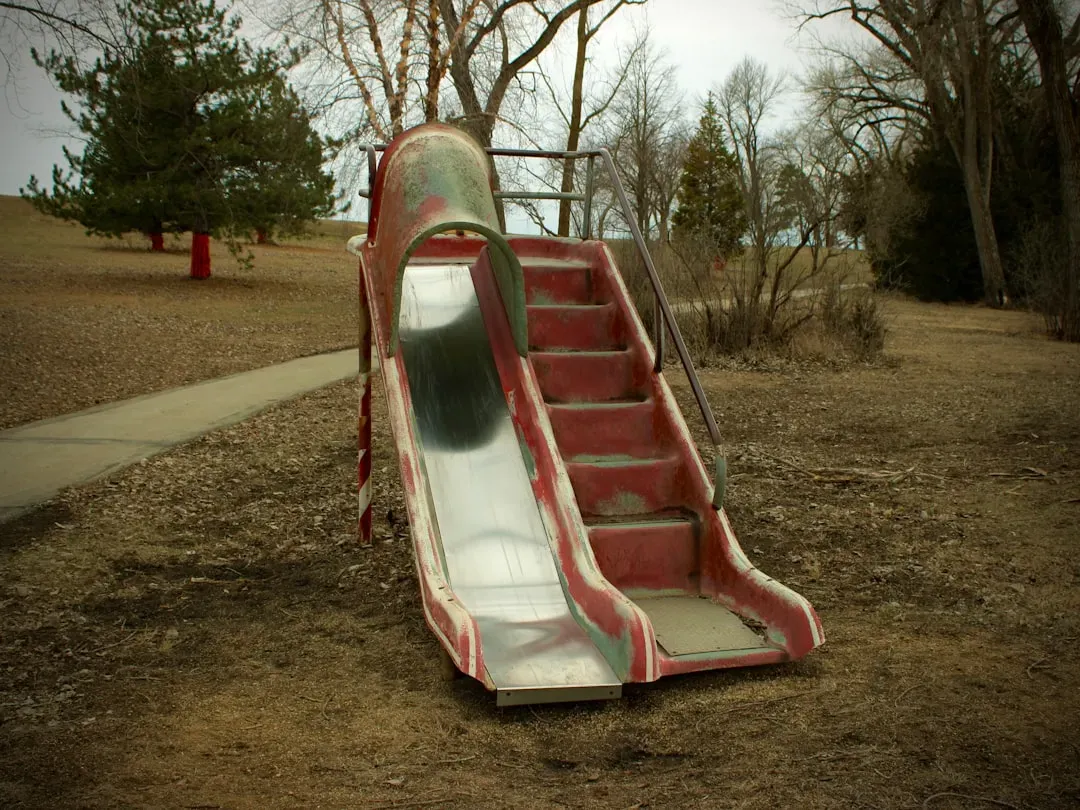
Let’s be real – some of the playgrounds many of us grew up on were genuinely hazardous. Those old metal climbing frames sitting on concrete, the rusted merry-go-rounds that could launch a child like a slingshot, the swings bolted to frames that wobbled alarmingly. Since the first edition of the CPSC safety handbook, the Commission has included recommendations that playgrounds not be installed over concrete, asphalt, or paved surfaces to address serious head injuries due to falls from equipment.
The U.S. Consumer Product Safety Commission released an updated Public Playground Safety Handbook in 2025 – its first major revision since 2010 – and the new edition incorporates updated ASTM playground standards and the latest national injury data. Key updates include expanded recommendations for surfacing materials and strengthened guidelines for fencing, gates, signage, supervision, and prevention of strangulation hazards. The playground of your childhood memories and today’s playground are, in many cases, quite literally different machines.
The Injury Numbers Are Still Sobering

Despite decades of safety improvements, playgrounds are not risk-free. The CPSC notes that over 190,000 playground injuries requiring emergency treatment still occur annually, based on 2021 to 2023 data. That is a number that deserves some serious attention. The majority – roughly four in five – of those injuries reported from hospital emergency rooms resulted from falls from equipment.
Decades of injury studies conducted by the CPSC’s National Electronic Surveillance System have shown that the frequency and severity of injuries continue to occur at broadly similar annual levels, and nobody has been able to explain why, with all the playground standards and guideline development efforts over the past 50 years, there has been no noticeable reduction in these injury statistics. Yet there is a brighter side: those same standards have mitigated many of the causes of the most serious playground injuries, with some categories eliminated altogether. The nature of injuries has changed, even if the count hasn’t dropped dramatically.
Modern Design Has Genuinely Changed the Game
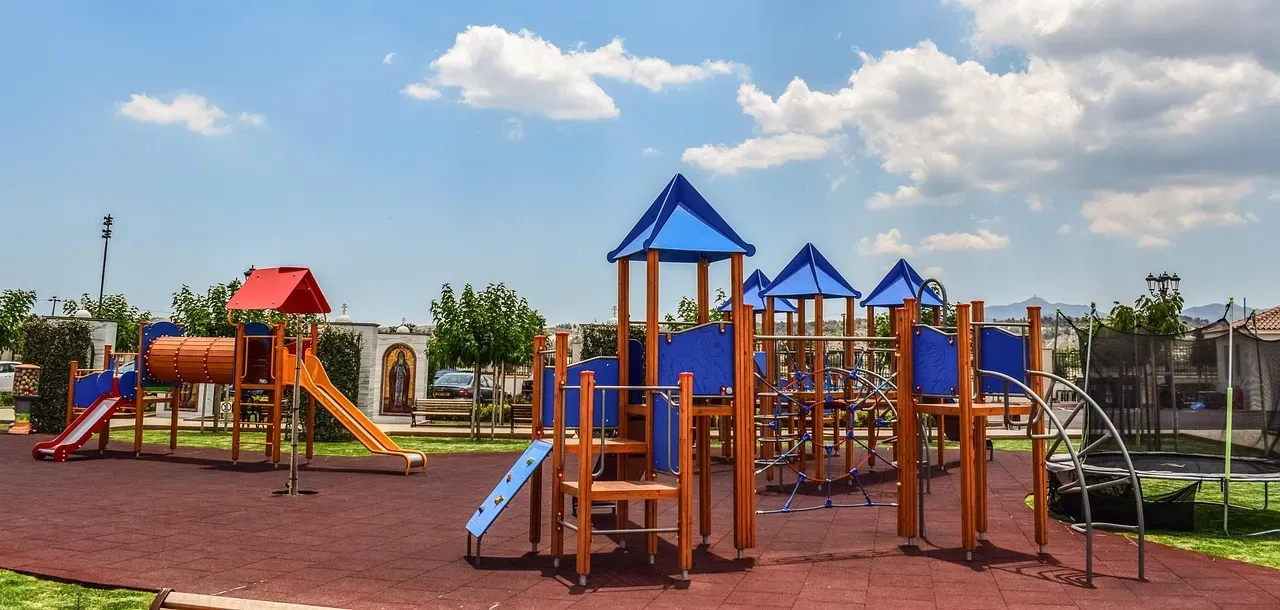
The shift from bare concrete to energy-absorbing surfaces is one of the most consequential changes in playground safety history. The CPSC has made specific suggestions for commonly used loose-fill and unitary surfacing materials – including wood mulch, pea gravel, sand, gym mats, and shredded rubber mulch – that provide head impact attenuation and can mitigate the hazard presented by falls from playground equipment, with the handbook’s surfacing recommendations based on the material’s energy-absorbing effectiveness.
Beyond surfaces, a playground should allow children to develop gradually and test their skills by providing a series of graduated challenges, and the challenges presented should be appropriate for age-related abilities and should be ones that children can perceive and choose to undertake. That philosophy represents a genuinely significant shift. The old model was essentially: build something, install it on pavement, and hope for the best. Modern design thinks carefully about developmental stages, visibility, supervision, and the kind of risk children actually benefit from.
Why Adults Perceive Risk So Differently Than Children Do
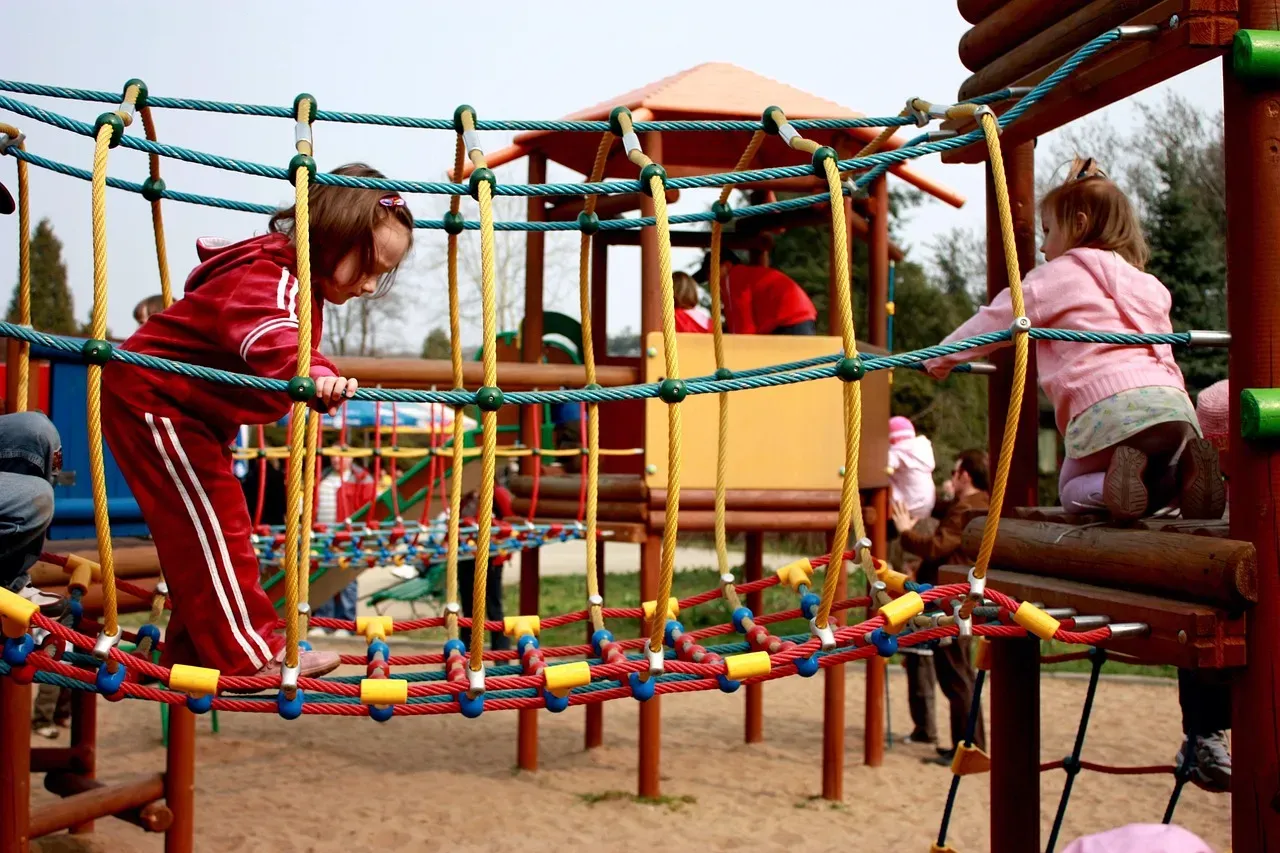
Here is something worth sitting with. Research in behavioral science confirms that risk perception genuinely decreases with age. What once felt terrifying – the top of a slide, the swinging bridge, the highest rung – now reads to the adult brain as simply… manageable. In addition to providing fun and enjoyment, playing outdoors allows children to take and assess risks, promotes collaboration with peers and adults, helps problem-solving, and enhances social interaction and skills development. Children aren’t being reckless. They are doing important developmental work.
The one factor contributing to injuries that playground standards cannot seem to address is what happens when a child sees a new challenge to conquer. Children will continue to take on almost any challenge along with all the risks or personal harm that come with it just for the fun of it. As adults, we have simply already conquered those challenges. The monkey bars are no longer a test of courage. They are just monkey bars. The fear that once made them enormous is gone, and so, in a way, is their size.
What This Visit Actually Reveals About You
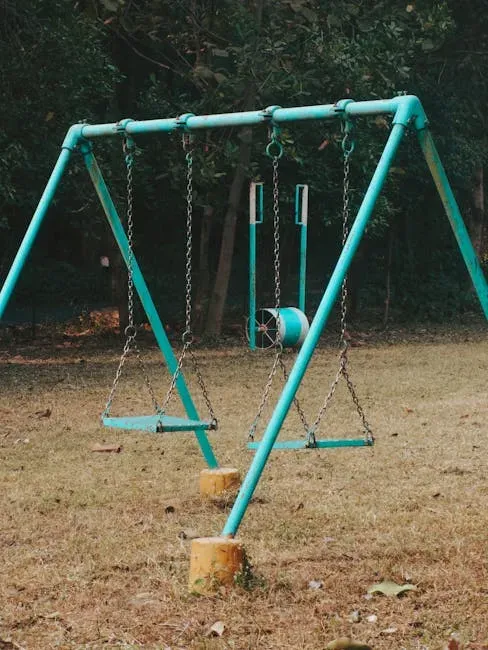
Walking back into a childhood playground is not really about the playground at all. It is about standing at the intersection of who you were and who you have become. Remembering a nostalgic event from one’s life will lead to different psychological consequences – affective, cognitive, and behavioral – than remembering an ordinary autobiographical event. Your childhood self experienced that space with every nerve firing. It was adventure, risk, friendship, and freedom bundled into a few square meters of asphalt and steel.
Most of the central features that people ascribe to nostalgia are positive – rose-tinted memory, personal meaning, happiness – and individuals consistently appraise nostalgia as positive compared to other self-conscious emotions. That warmth you feel is not a trick. It is real. The playground was always smaller than you remembered, but what it meant to you was enormous. Research has shown that nostalgia can have genuine psychological benefits, for example by recreating comforting memories from the past, memories that often unfold in mental space where one recreates events, people, and objects. In that sense, returning to a small corner of your neighborhood gives you access to something much larger: yourself.
Conclusion: The World Didn’t Shrink – You Grew
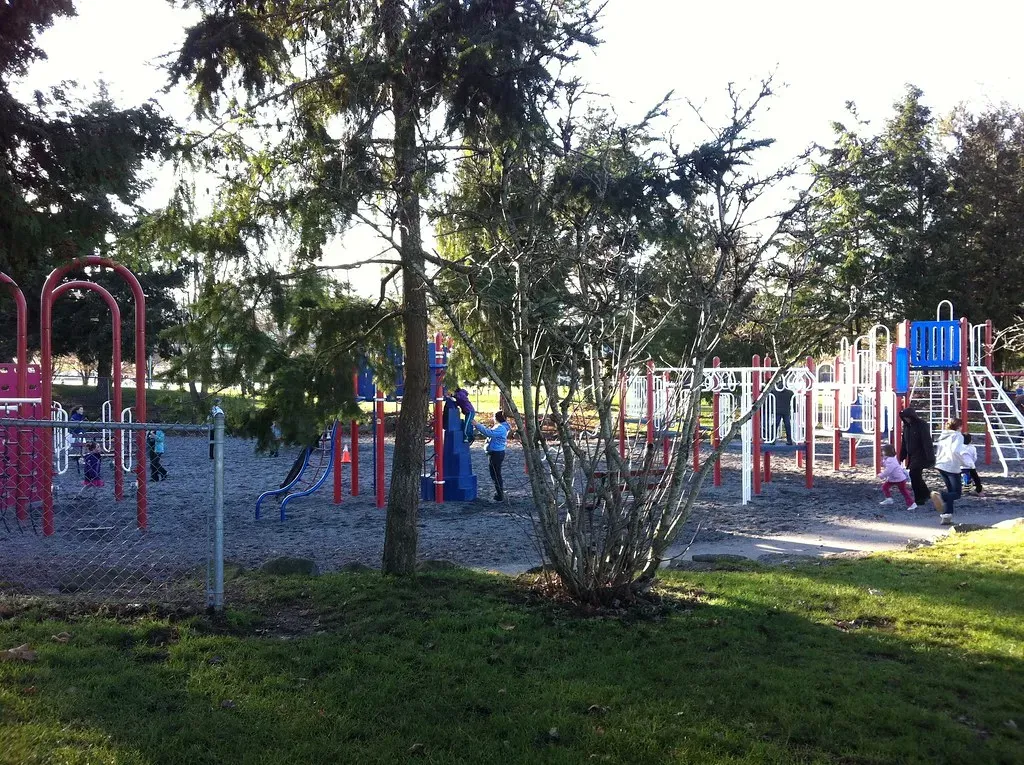
That childhood playground feels smaller today because you are bigger – not just physically, but in every sense of the word. Your brain has grown, your risk tolerance has matured, your sense of scale has been recalibrated by decades of larger experiences. The climbing frame was always that height. The field was always that size. What changed is the lens you’re looking through.
The safety improvements are real and meaningful. The emotional distortion of memory is real and fascinating. The nostalgia is real and worth honoring. What strikes me most, honestly, is how much the science validates something you already feel intuitively when you stand there. That playground gave you something important. It built a version of you that grew large enough to look back down at it.
What would you see if you went back to yours today? Would it surprise you?