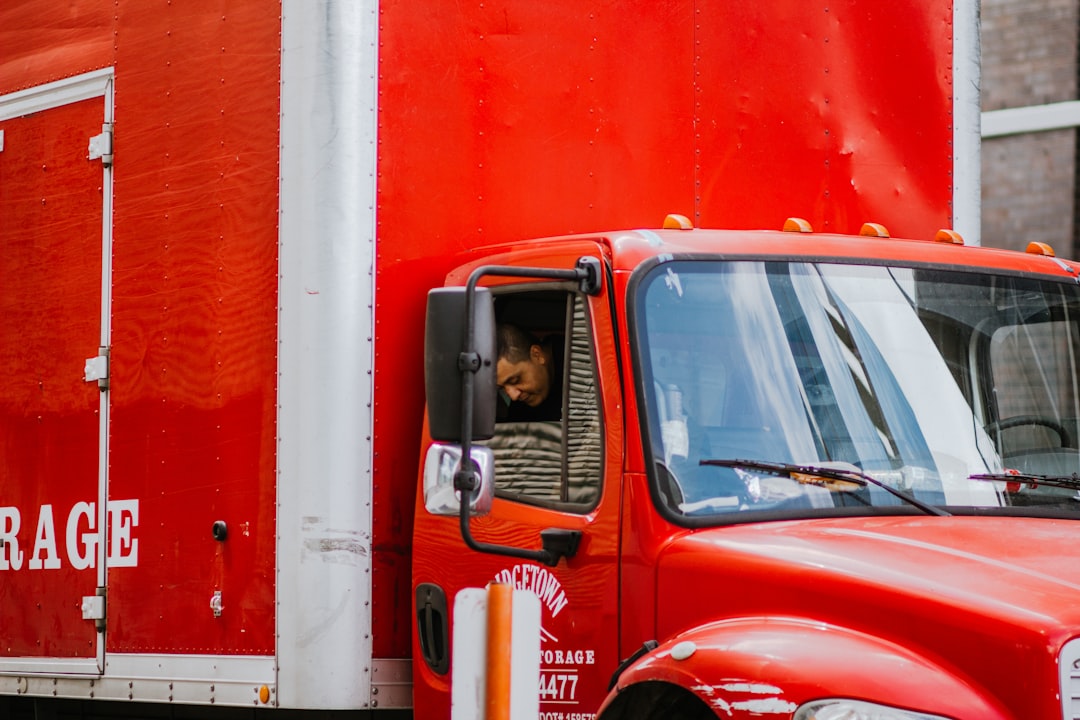
Sudden Revocation Shocks the Trucking Workforce (Image Credits: Unsplash)
California – The federal government compelled the California Department of Motor Vehicles to cancel roughly 13,000 non-domiciled commercial driver’s licenses effective March 6. This action stranded thousands of immigrant truck drivers, many holding valid work authorizations and legal U.S. presence. The cancellations arose from errors in setting license expiration dates beyond drivers’ authorized stays, prompting a prolonged standoff between state and federal authorities.[1][2]
Sudden Revocation Shocks the Trucking Workforce
Nearly 13,000 drivers discovered their commercial privileges erased overnight. These individuals, primarily immigrants on visas, refugee status, or asylum with employment authorization, could no longer operate heavy trucks legally. The California DMV notified affected holders in advance, yet the scale amplified the disruption across the state’s vast logistics network.[1]
DMV Director Steve Gordon criticized the move sharply. He argued that qualified drivers meeting safety and language standards faced removal due to federal immigration policies. Gordon urged immediate steps for alternatives, such as obtaining Class C licenses for lighter vehicles.[1][2]
Federal Audit Uncovers Compliance Failures
A Federal Motor Carrier Safety Administration review in August 2025 exposed issues. Roughly 25 percent of sampled non-domiciled licenses violated rules by extending past lawful presence periods. One case involved a Brazilian driver’s credential valid months after his status expired, complete with passenger and school bus endorsements.[3]
California missed initial deadlines to rectify the violations. Federal officials responded by withholding about $160 million in highway funding. Despite state efforts for an emergency court stay, a federal appeals court denied relief, enforcing the cancellations.[1]
Not every non-domiciled license faced revocation. Unaffected ones remain valid until expiry, though renewals, replacements, or modifications stand prohibited under federal pauses.[1]
Drivers Navigate Uncertainty and Limited Options
Affected truckers now pursue Class C licenses to drive passenger cars or light-duty trucks. The DMV offers priority appointments via phone at (916) 306-5153. Applicants must submit fees, pass vision tests, provide new photos, and present required documents listed on the agency website.[1]
Reapplying for CDLs remains possible following an Alameda County Superior Court ruling in Doe v. Department of Motor Vehicles on March 2. Applications enter a pending status for up to one year, with temporary Class C licenses issued meanwhile. Fees prove non-refundable amid the federal block on processing.[1]
- Verify eligibility documents online before applying.
- Opt for paperless notifications through a secure DMV account.
- Schedule appointments promptly to avoid delays.
- Explore online services for faster handling where available.
- Contact Service Advisor for guidance on next steps.
Ripples Through California’s Supply Chain
The trucking sector already grapples with shortages, needing nearly 80,000 drivers nationwide. California losses compound local pressures, potentially raising freight costs and delaying goods. Organizations like the Freedom Drivers Coalition decried the outcome for lawful workers who earned their credentials legitimately.[2]
Bhupinder Kaur of the coalition highlighted the injustice. She noted that drivers in the country lawfully, with work permits and passed tests, saw their efforts undermined. Industry observers anticipate statewide effects as haulers scramble for replacements.[2]
A National Overhaul Approaches
Broader changes loom with a FMCSA final rule effective March 16. It confines non-domiciled CDLs to holders of H-2A, H-2B, or E-2 visas, demanding SAVE system verifications for all transactions. States must mark credentials clearly, limit terms to one year or I-94 expiry, and downgrade invalid ones swiftly.[4]
Prior non-compliant licenses require revocation and reissuance. The policy aims to bolster safety through rigorous checks, though it narrows the pool of eligible foreign workers. California sought unsuccessfully to align via corrected issuances before this deadline.[3]
This episode underscores clashing priorities between state flexibility and federal uniformity in driver licensing. Truckers and carriers adapt amid limbo, while supply chains brace for strain. What impacts do you foresee for California’s roads and economy? Share your views in the comments.