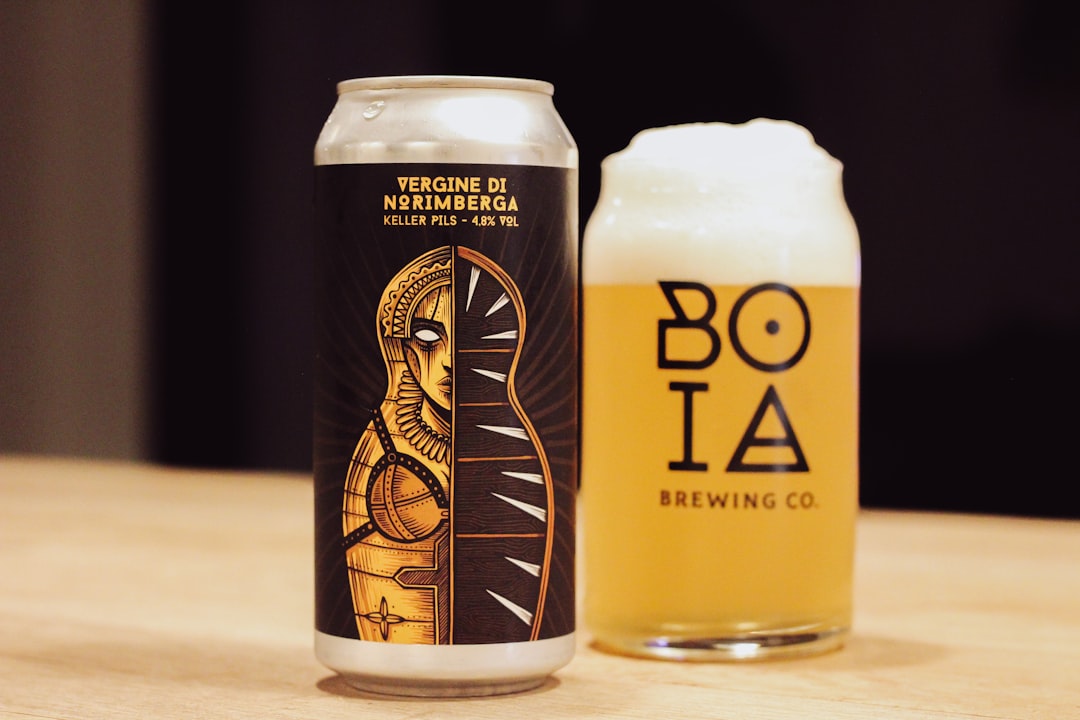
Early Passion Fuels Scientific Curiosity (Image Credits: Unsplash)
Butte College, California — A student’s bold use of a chemistry lab sparked the creation of Sierra Nevada Brewing Co., transforming home experiments into a craft beer juggernaut.
Early Passion Fuels Scientific Curiosity
Ken Grossman discovered homebrewing as a high schooler in the late 1960s. He purchased his first kit and mixed batches in secret, hiding them from his mother.[1][2]
Grossman pursued chemistry and physics at Butte College, a junior college in Oroville. He served as a teaching assistant in the chemistry lab, gaining hands-on expertise. Those skills later proved essential when he sought to perfect his brews. By age 21, he channeled his knowledge into opening a home brew supply shop in Chico in 1976.[2][3]
Intensive recipe testing followed. Grossman archived experiments in bankers’ boxes, refining flavors through trial and error. His scientific background set him apart in an era when flavorful American ales remained rare.
The Chemistry Lab Breakthrough
Grossman returned to his old stomping grounds at Butte College’s chemistry lab for advanced tests. He convinced professors to let him analyze samples for issues like sluggish fermentations in higher-gravity beers. “In reality, I went back to the chemistry lab where I had TA’d at junior college, talked to the professors to allow me to do a bunch of higher level analysis. I was looking at calcium levels, I was looking at nitrogen,” he recalled.[4]
The experiments revealed poor wort aeration as the culprit. By improving oxygenation, Grossman achieved consistent results. He also consulted the Siebel Institute and adjusted water chemistry. This ‘weird’ idea bridged amateur brewing with professional precision, laying the foundation for his signature Pale Ale.
Those lab sessions marked a turning point. Grossman dumped early production batches until reproducibility emerged around the 11th or 12th try. The fix ensured the hoppy bitterness and aroma that defined Sierra Nevada Pale Ale.
Founding a Brewery from Scrap
In 1980, Grossman launched Sierra Nevada Brewing Co. in Chico with $50,000, scrap metal, and used dairy tanks. The first commercial batch brewed on November 15 in a 10-barrel system pieced together by hand.[1][3]
He walked Chico’s streets with an ice chest, selling bottles for 85 cents to local spots. Quality drove demand – no formal marketing plan existed. Grossman insisted on whole-cone hops for superior flavor, despite extra costs. “We’re big advocates of using only whole-cone hops as opposed to hop pellets or extracts… It means more ingredients and more labor, but it’s the right way for us,” he said.[3]
Expansion and Enduring Legacy
Sierra Nevada grew rapidly amid the craft beer boom it helped ignite. From one of America’s first microbreweries, it became the third-largest craft brewer. The company now produces over half a million barrels of Pale Ale yearly and operates facilities beyond California, including North Carolina.[4]
Valuation soared past $1 billion by 2015, crowning Grossman a billionaire. Sustainability marked its path: over 60% of Chico’s electricity comes from on-site solar and fuel cells, with 99.8% waste diversion. Grossman gave back, donating $1 million to Butte College scholarships in 2018.[5][2]
- 1976: Home brew shop opens.
- 1980: Brewery founded; first Pale Ale batch.
- 2013: Among top craft brewers with innovative practices.
- 2015: Company valued over $1 billion.
- 2018: Major donation to alma mater.
Key Takeaways
- Scientific rigor turns hobbies into empires – leverage education creatively.
- Product quality trumps marketing; brew what you love.
- Sustainability and reinvestment build lasting success.
Grossman’s journey proves persistence and innovation brew more than beer – they create industries. What do you think about this craft beer origin story? Tell us in the comments.