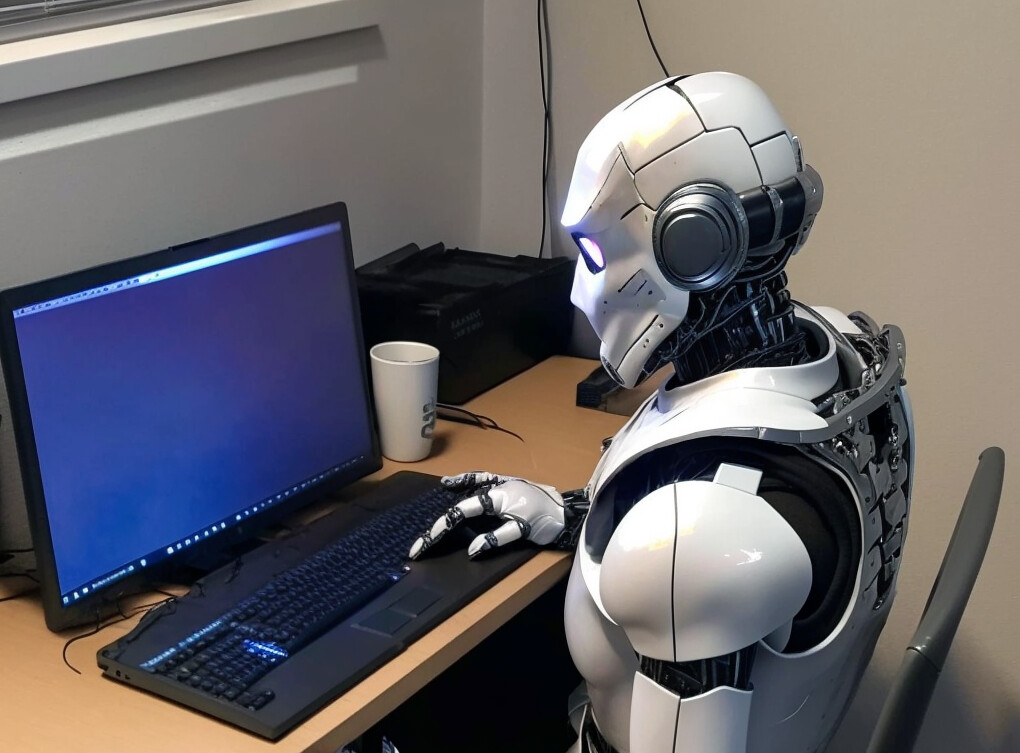
HR Evolves Beyond Basic Automation (Image Credits: Flickr)
The technology sector has long harnessed artificial intelligence to boost productivity in areas like coding and customer support. Companies now turn that focus toward human resources, where AI agents handle candidate screening, attrition forecasts, and career guidance. This shift promises reduced paperwork and uniform decisions, yet it challenges the essence of HR’s personal touch.
HR Evolves Beyond Basic Automation
Agentic AI marks a pivotal leap in HR operations, moving from simple task automation to sophisticated execution. Leaders at platforms like Phenom describe this as a phase shift, where roles deconstruct and rebuild rather than vanish outright. Phenom’s WorkOps platform exemplifies this, orchestrating workflows with a central engine that applies policies and flags issues for human review.
Challenges persist due to HR data’s sensitivity. Fragmented legacy systems complicate integration, as noted by Karat’s cofounder and CEO Mohit Bhende. He observed that AI struggles with context, history, and subtle team value indicators. Still, platforms like Phenom incorporate models from Claude, OpenAI, and Gemini, fine-tuned with enterprise data for better accuracy. Adoption varies widely, with studies indicating AI use in HR from 21% to 45% globally, hampered often by data quality issues.
Key Players Driving AI Integration in HR
A vibrant market emerges around AI-native HR solutions. Startups such as Eightfold AI, Beamery, and Gloat emphasize skills analysis and internal mobility. Larger incumbents like Workday, SAP SuccessFactors, and Oracle Cloud HCM weave generative AI into core processes.
Salesforce’s Agentforce for HR Service stands out, enabling conversational handling of requests like time-off approvals via unified data. Kishan Chetan, GM of Agentforce Service at Salesforce, highlighted that 41% of HR time goes to low-value tasks, per a Deloitte study. He positioned agents as tools to end the outdated portal-to-ticket model, allowing focus on culture and strategy. Phenom, an HR tech unicorn, leads with its agentic setup, as detailed on its site at Phenom.
- Phenom WorkOps: Centralizes agent control with policy enforcement.
- Salesforce Agentforce: Manages employee queries autonomously.
- Eightfold AI and peers: Prioritize skills-based matching.
- Enterprise giants: Embed AI in existing workflows.
Risks Emerge in the Push for Autonomy
Transitioning to autonomous AI introduces scrutiny, particularly amid new U.S. and European laws targeting hiring bias and transparency. High-profile 2025 cases involving Workday and Amazon amplified calls for regulation. Experts like Dr. Helen Gu of InsightFinder AI warn of hidden biases and over-reliance, stressing AI’s limits in grasping culture and collaboration.
Hemant Kapadia, CFO at Anaplan, cautioned that AI might amplify flawed strategies efficiently. Phenom COO Hari Bayireddy emphasized building semantic layers from structured data to enable reliable results. Mahe Bayireddi, Phenom’s CEO, acknowledged valid concerns since HR impacts lives directly, demanding high trust standards. He noted tensions between C-suite speed pushes and HR caution.
Maintaining Human Oversight in AI-Driven HR
Vendors stress collaboration over replacement. Bhende pointed to the gap between AI vision and reality, while Bayireddi affirmed final decisions stay human. Chetan described agentic AI as an amplifier of judgment, countering burnout in overburdened teams. Platforms escalate complex cases, ensuring traceability.
New roles arise to monitor agents, intervene as needed, and refine systems. Bayireddi predicted evolution in HR toward decision intelligence with accountability. This hybrid model aims to enhance outcomes through data-driven transparency.
Key Takeaways
- AI agents cut administrative burdens but require robust data foundations to avoid biases.
- Hybrid human-AI teams preserve judgment for high-stakes choices like hiring.
- Emerging regulations and oversight roles will shape HR’s tech future.
AI’s entry into HR signals efficient, scalable talent management, yet success hinges on blending technology with empathy. Organizations must invest in quality data and governance to unlock benefits without eroding trust. What steps should companies take to integrate AI responsibly in HR? Share your thoughts in the comments.