

The Visionary Behind America’s Last Colony
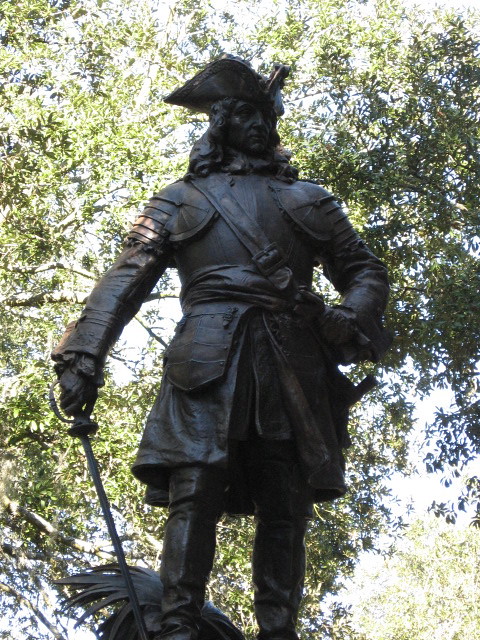
Picture yourself in a London prison in the 1720s, locked up not for a violent crime but simply because you couldn’t pay your debts. This nightmarish reality haunted thousands of people when Castell’s death from the disease led Oglethorpe to launch a national campaign to reform England’s prisons. Named chairman of a parliamentary committee to investigate the jails, Oglethorpe saw firsthand the horrible conditions, abuses, and extortion prisoners faced. He also was alarmed that so many British citizens faced jail for no other reason than indebtedness. He headed a parliamentary caucus devoted to reversing the hideous practices of the imprisonment of debtors and succeeded in getting at least 10,000 prisoners freed. His idea of the Georgia colony was to bring many of those debtors to North America, where they could develop the land and lead a productive life. The man who would change their fate forever was James Edward Oglethorpe, and his radical idea would create the last of America’s thirteen original colonies. Established in 1732, with settlement in Savannah in 1733, Georgia was the last of the thirteen colonies to be founded. Its formation came a half-century after the twelfth British colony, Pennsylvania, was chartered (in 1681) and seventy years after South Carolina’s founding (in 1663).
The Bold Vision That Shocked the British Empire

The English colony of Georgia was planned as utopian society with an integrated physical, economic and social design influenced by the ideals of James Harrington. Oglethorpe envisioned a colony which would serve as a haven for English subjects who had been imprisoned for debt and “the worthy poor.” What made this colony absolutely revolutionary was its founding principles – it was the only one of the North American colonies in which slavery was explicitly banned at the outset, along with rum, lawyers, and Catholics. Think about that for a moment: in an era when every other colony relied heavily on enslaved labor, Georgia dared to be different. Between 1735 and 1750 Georgia was the only British American colony to attempt to prohibit Black slavery as a matter of public policy. The decision to ban slavery was made by the founders of Georgia, the Trustees. This wasn’t just about moral principles – it was about creating a completely new type of society in the New World.
The First Settlers: A Diverse Mix of Dreamers
After years of planning and two months crossing the Atlantic, James Oglethorpe and 114 colonists climbed 40 feet up the bluff from the Savannah River on this day in 1733 and founded the colony of Georgia. But here’s the shocking truth that might surprise you – The initial impetus behind Georgia’s founding came from James Oglethorpe, who envisioned the new colony as a refuge for the debtors who crowded London prisons; however, no such prisoners were among the initial settlers. By this time any ideas of Georgia’s being a haven for debtors in English prisons had long vanished—and not one formerly jailed debtor was among the first colonists selected. Instead, As the Trustees began interviewing potential colonists, they looked for carpenters, tailors, bakers, farmers, merchants, and others with the skills necessary for the colony’s success. The reality was that the Trustees needed skilled workers, not just desperate people seeking a second chance.
Three Revolutionary Laws That Defined Georgia

Georgia operated under three groundbreaking laws that set it apart from every other British colony. Three major laws governed the colony: the first dealt with the distribution of land, the second and third reflected Enlightened ideals. No slavery was permitted in Georgia, and the possession of alcohol was prohibited. Each debtor was to receive 50 acres of land to farm. But there was a catch – This land could not be sold. The Trustees believed this would prevent the concentration of wealth that plagued other colonies. Third, the trustees prohibited the import and manufacture of rum, for rum would lead to idleness. Finally, the trustees prohibited Negro slavery, for they believed that this ban would encourage the settlement of “English and Christian” people. These weren’t just rules – they were the foundation of a social experiment designed to create a more egalitarian society.
The Military Buffer Zone Strategy

While the humanitarian goals grabbed headlines, Military concerns were a far more motivating force for the British government, which wanted Georgia (named for King George II) as a buffer zone to protect South Carolina and its other southern colonies against incursions from Florida by the Spanish, Britain’s greatest rival for North American territory. Georgia wasn’t just about helping the poor – it was a strategic military outpost. Although the Georgia Trustees originally envisioned the new Georgia colony as a second chance for debtors in British jails, the geographic location was also ideal to defend the British colonies from Spain, which occupied Florida to the south. As a result, a series of fortifications was built along the coast, and on several occasions, most notably the Battle of Bloody Marsh on St. Simons Island, British troops that were commanded and financed by Oglethorpe kept the Spanish at bay. The colony had to be both compassionate and militarily effective.
The Slavery Ban: More Than Just Moral Principles

The decision to ban slavery wasn’t purely about ethics – it was strategic and practical. They banned slavery in Georgia because it was inconsistent with their social and economic intentions. Given the Spanish presence in Florida, slavery also seemed certain to threaten the military security of the colony. Spain offered freedom in exchange for military service, so any African captive brought to Georgia could be expected to help the Spanish in their efforts to destroy the still-fragile English colony. Imagine having enslaved people on your border with an enemy that promised them freedom – it was a recipe for disaster. The Spanish tactic of recruiting American slaves to military service in exchange for their emancipation buoyed Oglethorpe’s experiment by providing a strategic incentive to minimize the slave presence in Georgia. “If we allow slaves, we act against the very Principles by which we associated together, which was to relieve the distressed. Slavery is against the gospel, as well as fundamental law of England,” he said in response to those who opposed this restriction. This was revolutionary thinking for its time.
The Silk Dream That Never Materialized

One of Georgia’s most ambitious economic plans was silk production, a scheme that seemed brilliant on paper but failed miserably in practice. Silkworms were transported from Europe with the hope of developing a silk industry in Georgia’s mulberry trees. Unfortunately, the plan was a failure. The mulberry tree plan failed, because the trees in Georgia were the wrong type for cultivating silk. Georgia’s founders thought that the colony’s climate would be suitable to the production of valuable silk, wine, and other Mediterranean-type commodities. The Trustees imagined the colony as a place where settlers could achieve a comfortable living rather than an enormous personal fortune, which was associated with plantation life in other parts of British America. It’s almost comical how this grand economic vision crashed into botanical reality – they had the wrong trees!
The Unique Governing Structure

Georgia was the only colony founded and ruled by a Board of Trustees, which was based in London, England, with no governor or governing body within the colony itself for the first two decades of its existence. This wasn’t democracy – it was paternalistic control taken to an extreme. The undertaking was paternalistic through and through. For example, the trustees did not trust the colonists to make their own laws. They therefore did not establish a representative assembly, although every other mainland colony had one. The trustees made all laws for the colony. Think about it – every single law governing your daily life was made by people sitting in London who had never set foot in Georgia. Twenty trustees received funding from Parliament and a charter from the King, issued in June 1732. The charter granted the trustees the powers of a corporation; they could elect their own governing body, make land grants, and enact their own laws and taxes.
The Malcontents and Their Growing Rebellion

Not everyone was happy with Oglethorpe’s utopian vision, and by the late 1730s, a group called the Malcontents was making serious trouble. The fiercest opponents of the Georgia Experiment were a group known as the Malcontents, led by Patrick Tailfer and Thomas Stephens. Unlike those rescued from the English debtors’ prison for the colonial proprietors, the Malcontents were overwhelmingly Scottish and received no financial assistance from the trustees to aid their relocation to Georgia. Georgians’ campaign to overturn the parliamentary ban on slavery was soon under way and grew in intensity during the late 1730s. Its two most important leaders were a Lowland Scot named Patrick Tailfer and Thomas Stephens, the son of William Stephens, the Trustees’ secretary in Georgia. They and their band of supporters bombarded the Trustees with letters and petitions demanding that slavery be permitted in Georgia. These weren’t just idle complaints – they represented a fundamental challenge to everything Georgia stood for.
The Deadly Summer of 1733

Georgia’s first year brought an unexpected and devastating challenge that nearly destroyed the colony before it could establish itself. First, the kill rate of the epidemic was extraordinarily high (13%). July 1733 was indeed the most deadly month, by far, for the early colonists. Fourteen colonists out of 109 alive as of 30 June 1733 died in July for an extremely high mortality rate of 12.8%. This was likely an influenza pandemic that had swept through Europe. What’s fascinating is that the pandemic flu did not come to England until late December 1732 – after the English colonists had left for North America on the Anne. So the English colonists would not have had immunity to the pandemic virus. The timing was catastrophic – they sailed before the epidemic hit England, so they had no natural immunity when it reached Georgia.
The Battle That Changed Everything

The moment that sealed Georgia’s fate as a utopian experiment came during a military confrontation that few people remember today. In 1742, Oglethorpe won a resounding victory over the Spanish of the Battle of Bloody Marsh, effectively ending Spanish expansionism in North America. It was Oglethorpe’s greatest military victory that sealed the fate of his prized Georgia Experiment, as the removal of the Spanish threats substantially decreased incentive for the House of Commons to continue the promulgation of an increasingly unpopular ban on slavery. In July 1742, ships with thousands of Spanish troops landed on St. Simons Island, but the British forces turned back an advance force at Fort Frederica using the location of the fort to their advantage. They then proceeded to defeat the Spanish at the Battle of Bloody Marsh, which caused the Spanish to retreat for good. The Spanish never attacked the British colonies on the east coast again thanks to the efforts of Oglethorpe and his troops. Ironically, Oglethorpe’s military success destroyed his social experiment.
The Economic Reality Check

Despite all the noble intentions, Georgia’s economy struggled under the weight of its restrictions. Georgia residents complained that some citizens received fertile land while others were forced onto uncooperative soil. They felt trapped since they could not buy or sell their land. These settlers viewed restrictions on the size of individual land holdings as a sure pathway to poverty. They also opposed restrictions on land sales and the prohibition against slavery for the same reason. They certainly did not like the fact that they were deprived of any self-government and their rights as Englishmen. The colonists weren’t just being stubborn – they were watching their South Carolina neighbors get rich while they remained poor. Cries to permit slavery followed as the Georgians envied the success of their neighbors. Eventually many simply fled the colony for the Carolinas.
The Rapid Collapse of the Great Experiment

By the 1740s, the writing was on the wall for Georgia’s utopian experiment. By the early 1740s, the trustees slowly gave way on most of the colonists’ grievances. Rum was eventually legalized in 1742 and slavery in 1751, marking the weakening of Trustee rule. By 1750, the trustees acquiesced to Georgia’s demand for slave labor and in that year Parliament revised the act of 1735 to allow slavery as of January 1, 1751. Once the Georgia experiment was formally abandoned, the colony quickly caught up to the regional neighbors in the acquisition of slaves. The transformation was breathtakingly fast – within a decade, Georgia went from being the only colony to ban slavery to embracing it wholeheartedly. King George revoked the charter in 1752 and Georgia became a royal colony. One of the world’s best organized utopian experiments came to an abrupt end.
The Bitter Irony of Georgia’s Legacy
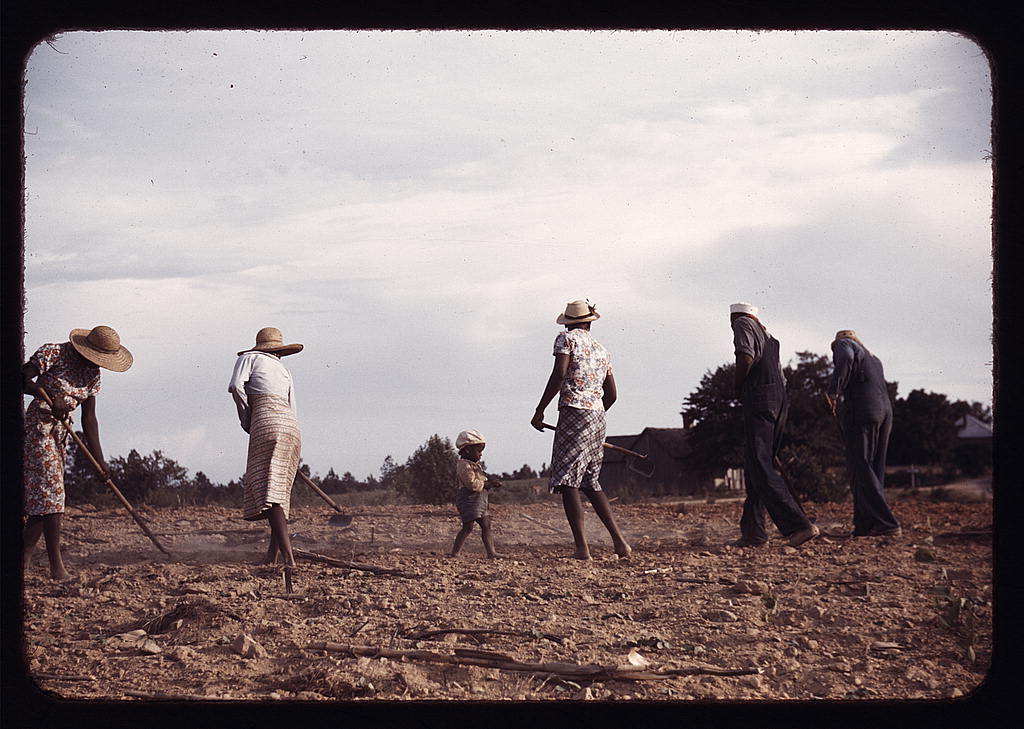
The final chapter of Georgia’s story reveals one of history’s most bitter ironies. A decade after the repeal, Georgia boasted one slave for every two free persons, and slaves made up about one-half of the colony’s population on the eve of the American Revolution. By virtue of increased production of staple products (particularly rice and indigo) as a result of the importation of slave labor, Georgia had the economic luxury to support a dramatically growing population: between 1751 and 1776, the colony’s population increase more than tenfold, to a total of about 33,000 (including 15,000 slaves). By the mid-19th century, Georgia had more plantations than any other state in the South and epitomized plantation culture and economic dependence on slavery. The colony that began as a beacon of hope for the poor and enslaved became one of the most slave-dependent states in America. What started as a utopian refuge for British debtors ended as the epitome of everything Oglethorpe fought against.
What would you have chosen if you’d been there – the noble experiment with its restrictions, or the profitable plantation system that followed?